
Why Chess Openings Matter: The Foundation of Every Game
Every chess game begins with the opening. The moves you choose in the first 10 to 15 turns shape the entire battle ahead. Understanding why openings matter is the first step to playing them well.
Practice Openings with ChessHelperThe First Moves Set Everything Up
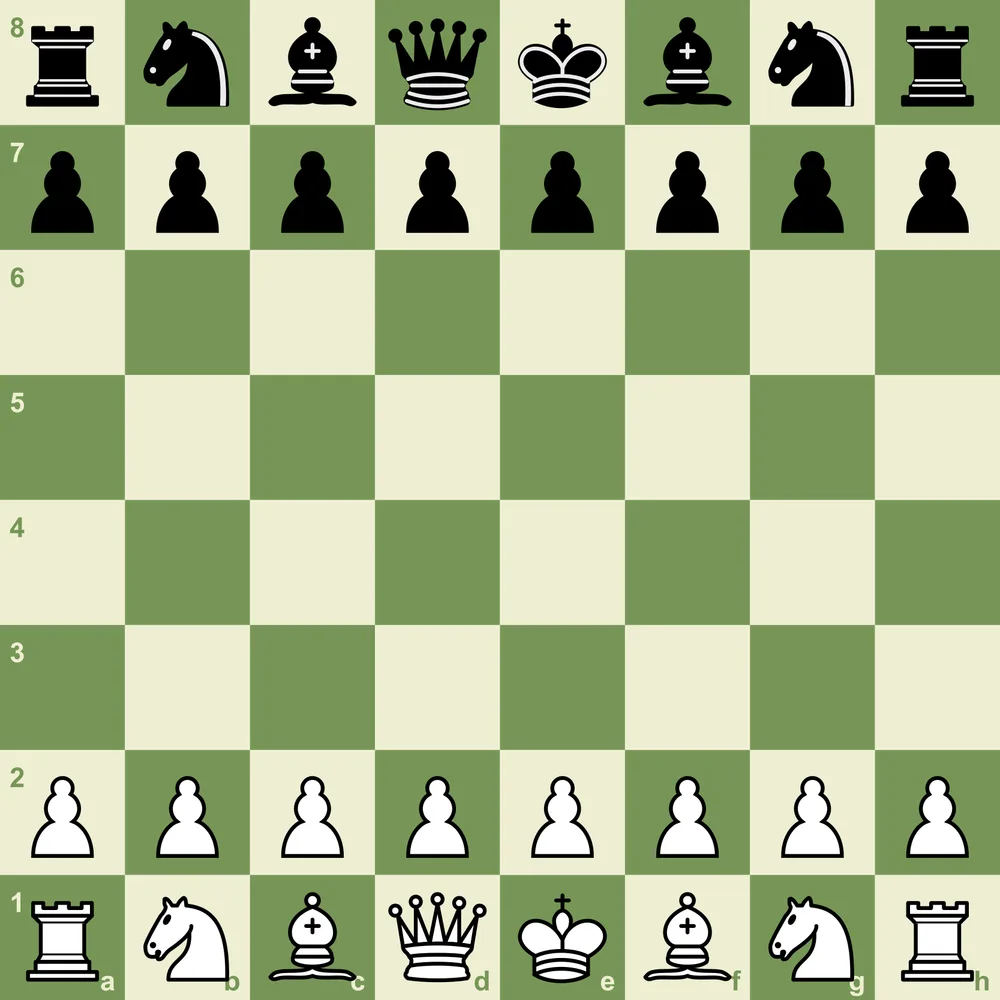
Chess is often described as a game of three phases: opening, middlegame, and endgame. While all three matter, the opening is unique because it determines the character of everything that follows. The pawn structure you create in the first dozen moves dictates the strategic plans available in the middlegame. The pieces you develop and where you place them define your attacking and defensive capabilities. A good opening does not win the game by itself, but it gives you a position where your plans make sense and your pieces are working together.
Consider the difference between a player who emerges from the opening with a solid pawn center, a castled king, and actively placed pieces versus one whose king is still in the center, with undeveloped pieces and weak pawns. The first player can focus entirely on strategy and tactics. The second player spends the middlegame trying to survive problems that were created by poor opening play. This is not hypothetical; it is the reason most games between beginners are effectively decided in the first 15 moves.
The opening also sets the psychological tone. When you play a line you understand and trust, you feel confident. You know the typical plans, the common tactical patterns, and the positions that tend to arise. That confidence translates into better decision-making throughout the game. Conversely, when you wander into an opening you do not know, every move feels uncertain, and that hesitation compounds into mistakes. Building a reliable opening repertoire is as much about psychological comfort as it is about objective evaluation.
But Don't Openings Just Lead to Memorization?
This is the most common objection to studying openings, and it is understandable. When you watch grandmasters rattle off 20 moves of theory from memory, it looks like the opening phase is nothing more than a memory contest. But this is a misconception that confuses how professionals use openings with how the rest of us should approach them.
At the amateur level, understanding the ideas behind an opening is far more valuable than memorizing specific move orders. If you understand that the Italian Game aims to develop pieces quickly and create pressure on f7, you will find good moves naturally even if you forget the exact theory. If you know the French Defense aims to challenge the center with ...d5 and often leads to a pawn chain where Black attacks on the queenside, you can play sensible moves in any variation.
Principles always come before specific moves. Control the center, develop your pieces toward active squares, castle early, and avoid moving the same piece twice without a good reason. These principles guide you through any opening, even ones you have never seen before. Memorization becomes important only at higher levels where opponents punish you for not knowing specific theoretical lines. For most players, understanding the plans and themes of two or three openings per color is more than enough.
When Should You Start Studying Openings?
The right time to study openings depends entirely on your current rating and experience. Spending hours on opening theory when you are still hanging pieces to basic tactics is putting the cart before the horse. Here is a general guideline for when to invest in opening study at each level.
Under 800 ELO
Focus entirely on opening principles, not specific openings. Learn to control the center with pawns, develop knights before bishops, castle within the first 10 moves, and avoid bringing your queen out early. These fundamentals matter more than any specific opening line.
800 - 1200 ELO
Pick one opening as White (the Italian Game or London System are excellent choices) and one defense against 1.e4 and 1.d4 as Black. Learn the first 5 to 8 moves and the typical plans for each. This gives you enough structure to emerge from the opening with a playable position every game.
1200+ ELO
Develop a full repertoire. This means having prepared responses for every major opening your opponent can play. Start adding secondary options and deeper theoretical knowledge. At this level, opponents will exploit opening mistakes, so knowing your lines to move 10 or beyond gives you a meaningful edge.
The 3 Things Every Opening Should Give You
Regardless of which opening you play, your setup should achieve these three goals by the time you reach the middlegame.
A Safe King
Castle early and get your king behind a wall of pawns. An exposed king is a target, and defending it consumes resources you could use for attacking. In most openings, you should aim to castle within the first 8 to 10 moves.
Active Pieces
Develop your knights and bishops to squares where they control the center and have future mobility. A piece sitting on its starting square is doing nothing. By move 10, all your minor pieces should be developed and your rooks should be connected.
Central Control
Control the center with pawns on e4/d4 (or e5/d5 as Black) or with pieces aiming at central squares. The center is the crossroads of the board. Pieces placed in or near the center have maximum influence over the rest of the game.
How to Choose Your First Opening
Choosing your first opening can feel overwhelming with hundreds of named systems to pick from. The good news is that at the beginner and intermediate level, the specific opening you choose matters far less than how well you understand it. A player who deeply knows the London System will outperform someone who has surface-level knowledge of ten different openings.
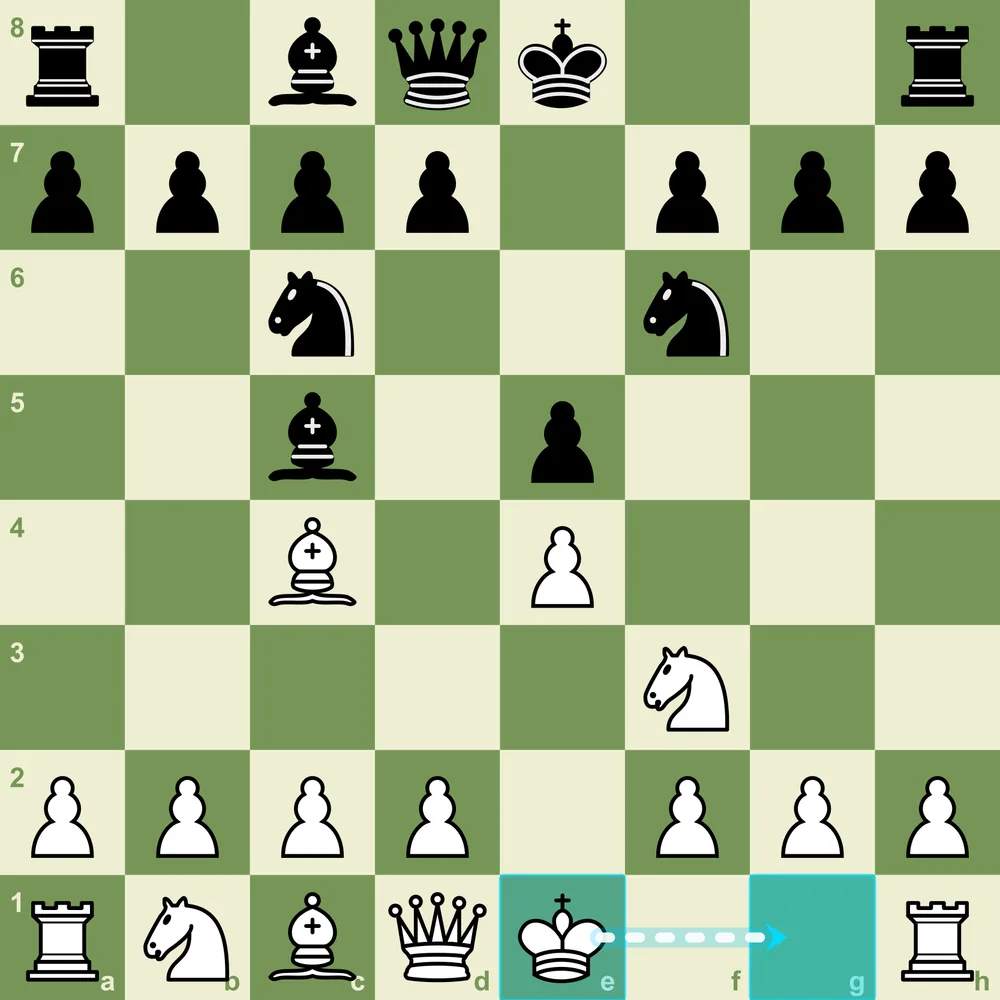
Start with openings that are principled, meaning they follow the basic rules of development and center control naturally. The Italian Game (1.e4 e5 2.Nf3 Nc6 3.Bc4) is a classic choice for White because it develops a piece to an active square and creates immediate pressure. The Caro-Kann Defense (1.e4 c6) is a solid choice for Black because it fights for the center while keeping a flexible pawn structure.
Avoid highly tactical or gambit-heavy openings when you are starting out. Systems like the King's Gambit or the Sicilian Dragon are exciting but require precise theoretical knowledge to play correctly. Save those for later when your tactical vision is sharper and you have the fundamentals down.
Our comprehensive guide walks you through the best opening choices for every skill level, with explanations of why each opening works and what plans to follow.
The ChessHelper Advantage
Learning opening theory is one thing. Applying it under pressure is another. ChessHelper bridges that gap.
Practice Openings Interactively
The opening trainer lets you drill your repertoire with spaced repetition. You play through your lines and get corrected when you deviate, building the muscle memory you need to play accurately in real games.
Get Real-Time Feedback
When you try a new opening in a real game, ChessHelper shows you if you are following theory or drifting into dangerous territory. This real-time guidance helps you learn new openings faster without the risk of losing rating points.
Train at Your Level
ChessHelper adjusts its suggestions to your ELO level. Instead of showing grandmaster-level sidelines, it focuses on the moves and plans that matter most for players at your specific rating, making the learning process efficient and relevant.
Explore More
Best Openings for Beginners
The most effective chess openings for players just starting their journey.
Best Openings for Intermediate Players
Ready for more complex openings? Explore options for players rated 1200-1800.
Opening Trainer
Practice your opening repertoire with interactive drills and spaced repetition.
Master Your Openings with ChessHelper
Stop guessing in the opening. Practice interactively, get real-time feedback, and build a repertoire that wins games.
Start Practicing FreeJoin 10,000+ chess players building better opening repertoires
Related Reading
Best Openings for Beginners
A curated guide to the most beginner-friendly openings for White and Black.
Browse Chess Openings
Explore our complete database of chess openings with interactive analysis.
Move Analyzer Feature
Learn how real-time move analysis helps you improve faster during games.
Opening Trainer Feature
Practice your repertoire with spaced repetition and interactive drills.