
Best Chess Openings for Beginners: Start Your Journey Right
You do not need to memorize 20 moves of theory to play good chess. The best openings for beginners are simple, principled, and teach you how the game really works. Here are our top picks for White and Black, plus the key principles that matter more than any specific move order.
Analyze Your Openings FreeDo Beginners Really Need to Study Openings?
There is a common debate in the chess world: should beginners study openings at all, or just focus on tactics? The truth is somewhere in the middle. You do not need to memorize long theoretical lines, but you absolutely need to understand opening principles. Without them, you will consistently end up in bad positions before the real game even begins.
The goal of opening study at the beginner level is not memorization. It is understanding. When you learn a beginner-friendly opening, you are really learning how to develop your pieces efficiently, fight for the center, and keep your king safe. These skills carry over to every single game you play, regardless of what your opponent does. Think of openings as a vehicle for learning principles, not a list of moves to memorize.
The openings we recommend below were chosen specifically because they teach good habits. They naturally guide you toward strong positions without requiring you to navigate complicated tactical minefields or remember precise move orders. Play them, understand the ideas behind them, and your rating will climb.
What Makes an Opening “Beginner-Friendly”?
Not all openings are created equal for new players. Here are the five criteria we use to evaluate whether an opening belongs in a beginner's repertoire:
- 1
Easy-to-Understand Plans
The opening should lead to middlegame positions with clear, straightforward plans. You should know what you are trying to accomplish after the first 5 to 7 moves without needing a grandmaster's intuition.
- 2
Few Critical Lines to Memorize
Beginner openings should not require you to memorize 15 moves of theory just to survive. The fewer “must-know” sequences, the better. Your understanding of principles should carry you through unfamiliar positions.
- 3
Teaches Fundamental Principles
The best beginner openings naturally reinforce good habits: developing pieces toward the center, castling early, and avoiding premature attacks. Playing these openings is itself a lesson in how chess works.
- 4
Forgiving of Small Mistakes
Some openings punish inaccuracies ruthlessly. A beginner opening should give you a playable position even if you do not find the absolute best move on every turn. The margin for error matters enormously when you are still learning.
- 5
Remains Playable at Higher Levels
You do not want to invest time learning an opening you will have to abandon as you improve. The openings below are played at every level, including by grandmasters, so the knowledge you build now will serve you for years.
Best Openings for White
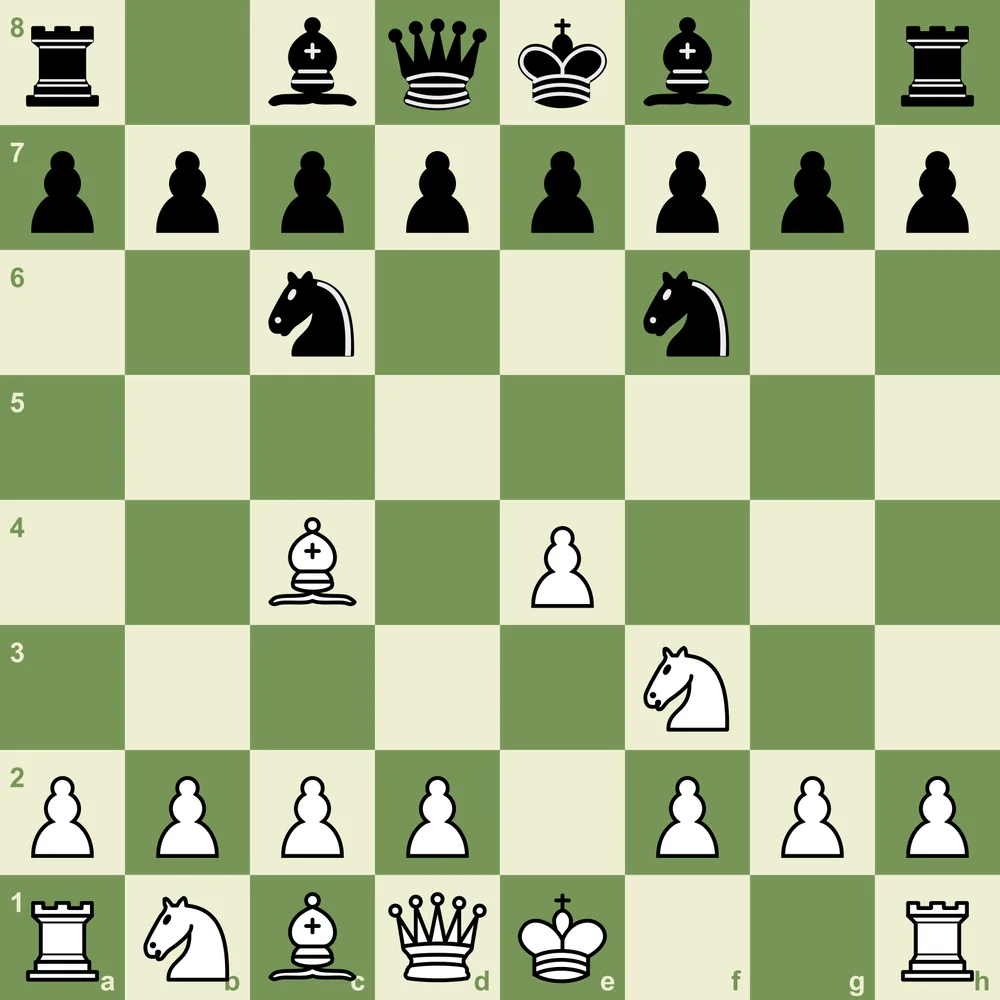
Italian Game (1.e4 e5 2.Nf3 Nc6 3.Bc4)
The Italian Game is the single best opening for a beginner to learn as White. Every move follows a clear, logical principle: you occupy the center with 1.e4, develop your knight to its best square with 2.Nf3, and then place your bishop on the aggressive c4 square where it eyes the vulnerable f7 pawn. Within three moves, you have a developed piece, a knight controlling the center, and a bishop aiming at Black's king.
What makes the Italian Game perfect for beginners is that the plans are intuitive. You castle kingside, bring your other pieces into the game, and look for tactical opportunities in the center and on the kingside. You do not need to memorize deep theory because the positions you reach are natural and straightforward. Even if your opponent surprises you, sticking to development principles will give you a fine position.
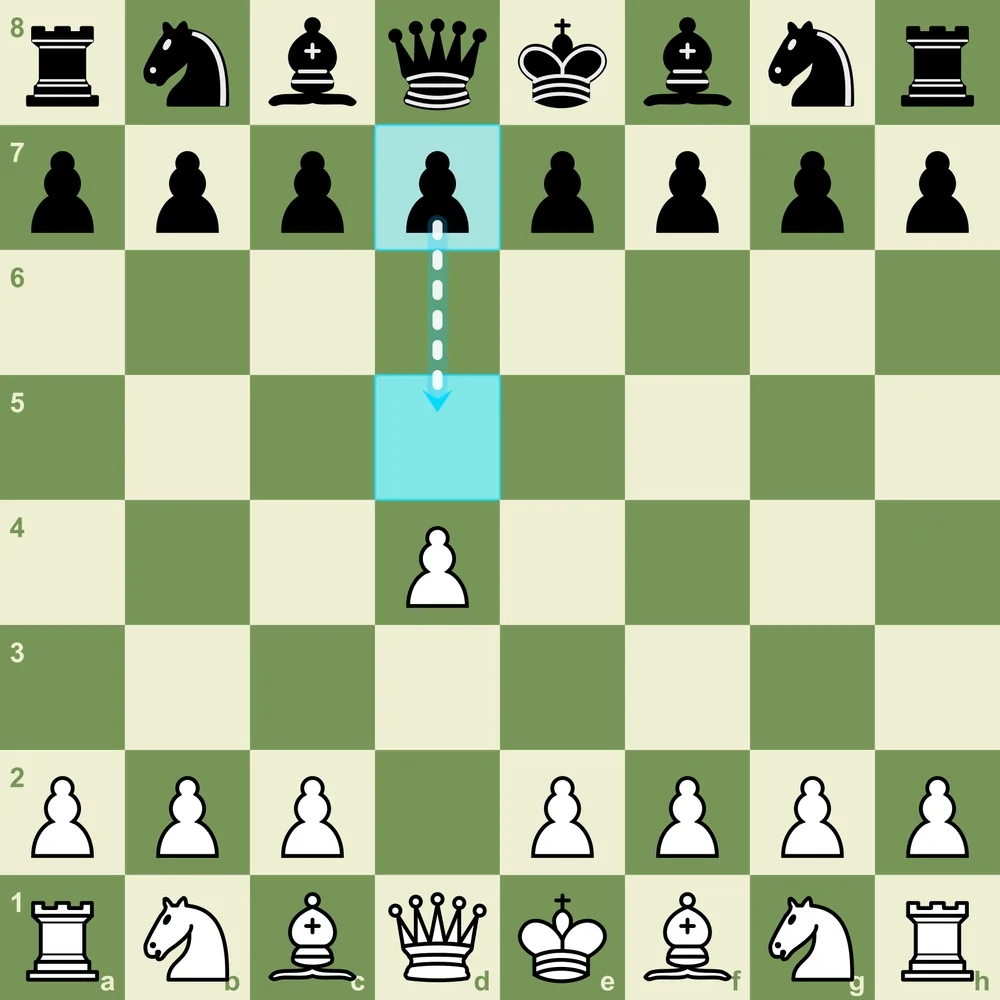
London System (1.d4 d5 2.Nf3 Nf6 3.Bf4)
If you prefer a more solid, systematic approach, the London System is your answer. The beauty of the London is its consistency: you play the same setup almost regardless of what Black does. You develop your dark-squared bishop to f4 early, place your pawns on d4 and e3, develop your knights to f3 and d2, and castle kingside. The plan is the same every game, which means you can focus on learning general chess principles rather than worrying about what your opponent might throw at you.
The London System does not aim for a crushing attack out of the opening. Instead, it gives you a rock-solid, well-coordinated position with no weaknesses. From there, you can play for the middlegame and outplay your opponents with better piece coordination and strategic understanding. It is the perfect “set it and forget it” opening for beginners who want to spend their energy on improving their overall game rather than memorizing theory.
Read our full London System guideBest Openings for Black Against 1.e4
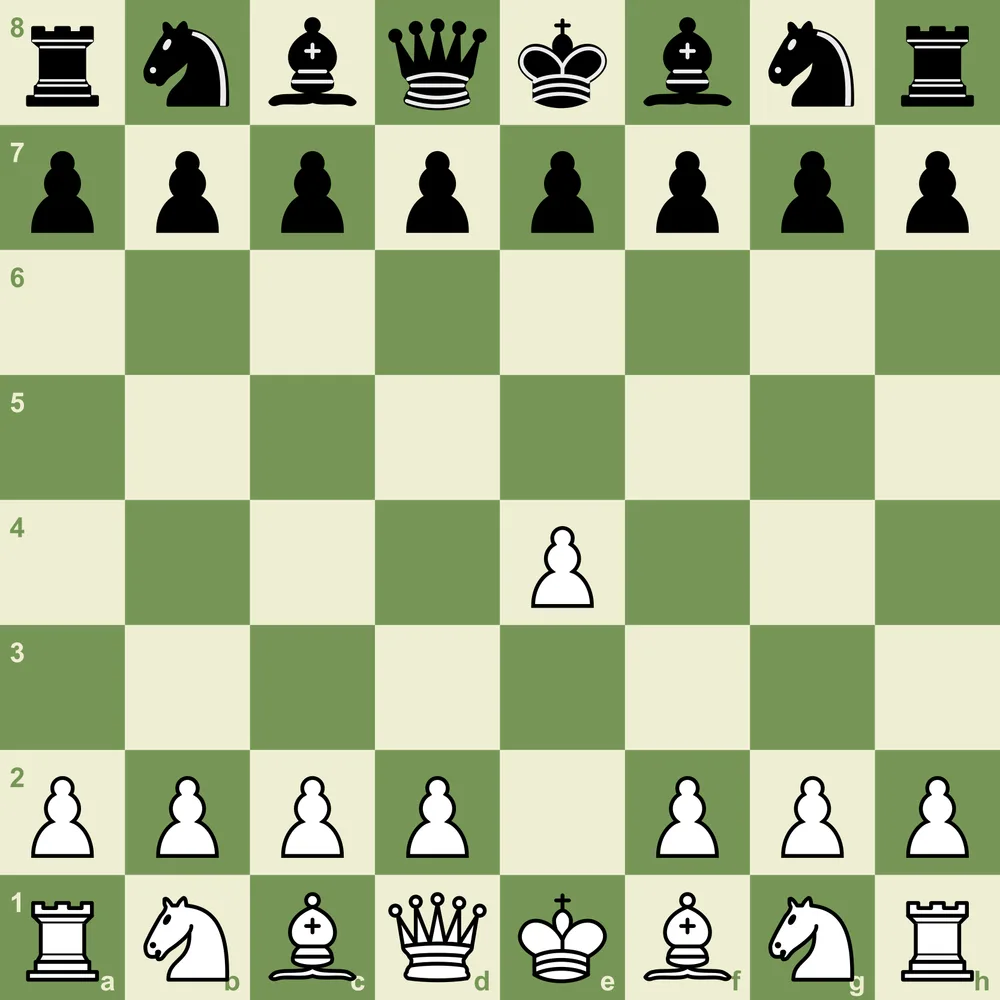
French Defense (1.e4 e6)
The French Defense is one of the most reliable and instructive openings for beginners playing as Black. After 1.e4 e6, you prepare to challenge White's center with d7-d5 on the very next move. This leads to a solid pawn structure where Black has a clear plan: undermine White's center, develop pieces to natural squares, and launch a counterattack when the time is right.
What makes the French particularly beginner-friendly is its resilience. Even if you play a suboptimal move, your solid pawn chain on e6-d5 protects your position and prevents White from breaking through easily. The French teaches you how to play on both sides of the board, how to handle pawn structures, and when to time pawn breaks like c7-c5. These are skills that will serve you at every level of chess.
The main downside beginners hear about is the “bad bishop” on c8, blocked by the e6 pawn. But learning how to activate this bishop is itself a valuable lesson in strategic thinking. And at the beginner level, your opponents will rarely know how to exploit this issue anyway.
Read our full French Defense guideCaro-Kann Defense (1.e4 c6)
The Caro-Kann is another excellent choice for beginners who want a solid, low-risk defense against 1.e4. Like the French, you challenge White's center with d7-d5, but the Caro-Kann avoids the “bad bishop” problem entirely. After 1.e4 c6 2.d4 d5, Black's light-squared bishop has a clear path to develop outside the pawn chain, which leads to simple, comfortable positions.
The Caro-Kann is slightly more passive than the French in some lines, but its rock-solid nature makes it almost impossible for White to launch a successful kingside attack in the early stages. If you are the kind of player who prefers safety and clarity over sharp complications, the Caro-Kann is your ideal weapon against 1.e4.
Read our full Caro-Kann guideBest Opening for Black Against 1.d4
King's Indian Setup (1.d4 Nf6 2.c4 g6)
Against 1.d4, we recommend the King's Indian Setup for beginners. The idea is beautifully simple: you fianchetto your dark-squared bishop to g7 where it controls the long diagonal, castle kingside quickly, and then look for the right moment to strike in the center with either e7-e5 or d7-d6 followed by e5. The setup is the same against almost any White system, which means you can play it reliably without needing to study dozens of different responses.
The King's Indian teaches beginners important concepts like fianchettoing bishops, playing for pawn breaks, and understanding when to counterattack. The positions are dynamic and give Black real winning chances, unlike some more passive systems. While the full King's Indian Defense has deep theory at the top levels, the basic setup is straightforward and effective at the beginner level.
Openings Beginners Should Avoid
Some openings are genuinely powerful in the right hands, but they demand precise knowledge that beginners simply do not have yet. Playing these too early can actually hurt your development by teaching bad habits or leading to positions you cannot understand.
Sicilian Najdorf
The Sicilian Najdorf is one of the most theoretically dense openings in chess. It leads to razor-sharp positions where a single inaccuracy can be fatal. Grandmasters spend years mastering its nuances. As a beginner, you will constantly find yourself in unfamiliar territory without the tactical skills to navigate it. Save this one for when you are rated above 1400.
Grunfeld Defense
The Grunfeld deliberately gives White a massive pawn center, and then Black tries to destroy it. This requires deep concrete knowledge and precise calculation. If you do not know the specific tactical resources in each line, you will simply end up with a worse position and no way back. The strategic concepts are too advanced for the beginner level.
King's Gambit
The King's Gambit (1.e4 e5 2.f4) sacrifices a pawn for fast development and an open f-file. While it looks exciting, it creates weaknesses around your own king that require precise play to manage. At the beginner level, you are more likely to lose because of those weaknesses than to win because of the initiative. Stick to solid openings until your tactical skills are sharp enough to handle the complications.
Opening Principles Every Beginner Must Know
These five principles are more important than any specific opening moves. If you follow these guidelines, you will get a decent position out of the opening against any opponent at the beginner level, even if they play something you have never seen before.
Control the Center
The four center squares (e4, d4, e5, d5) are the most important real estate on the board. Pieces placed in or near the center control more squares and have more mobility. Start with 1.e4 or 1.d4 as White, and always look to challenge your opponent's central pawns as Black.
Develop Your Pieces
Get your knights and bishops off their starting squares and into the game as quickly as possible. Every move you spend not developing a piece is a move where your opponent can get ahead. Aim to have all your minor pieces developed before making any pawn moves beyond your first two or three.
Castle Early
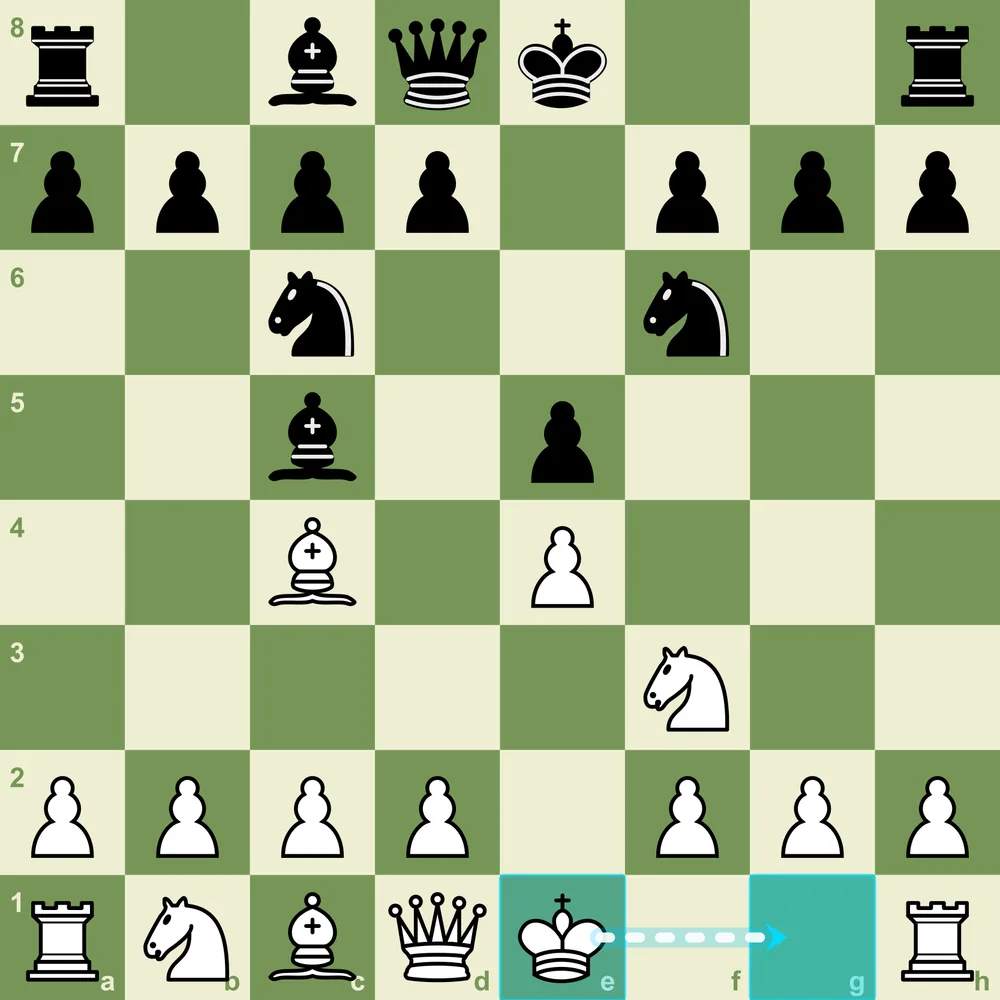
Castling gets your king out of the center and into safety behind a wall of pawns. It also activates your rook by moving it closer to the center. Aim to castle within your first 8 to 10 moves in most games. Delaying castling gives your opponent opportunities to launch attacks against your exposed king.
Do Not Move the Same Piece Twice
Unless there is a very good reason (like avoiding a threat or capturing a free piece), avoid moving a piece that has already been developed. Each unnecessary repeat move is a development tempo you are giving to your opponent. Get all your pieces into the game before repositioning any of them.
Do Not Bring Your Queen Out Early
Beginners love to bring the queen out on move two or three, chasing cheap threats. The problem is that your opponent will develop their pieces with tempo by attacking your queen, and you will end up wasting moves retreating it. Keep the queen at home until you have finished developing your minor pieces and castled.
Explore More
Best Openings for Intermediate Players
Ready for more complex openings? Explore options for players rated 1200-1800.
How to Improve at Chess
A complete roadmap for getting better at chess, from tactics to strategy.
Opening Trainer
Practice your opening repertoire with interactive drills and spaced repetition.
Start Practicing Your First Opening
ChessHelper analyzes your games in real time and shows you the best moves in your chosen opening. Build good habits from day one.
Get Started FreeJoin 10,000+ beginners improving their opening play
Beginner Openings FAQ
Start with just one opening for White and one for Black against each of White's main first moves (1.e4 and 1.d4). That means three openings total. Trying to learn more than that will spread your study time too thin and slow down your improvement. Once you can play those three openings confidently and understand the ideas behind them, you can gradually add more weapons to your repertoire.
Tactics should take priority. At the beginner level, most games are decided by simple tactical mistakes rather than opening theory. However, you still need to know basic opening principles so you do not end up in a losing position before the middlegame even starts. Spend about 70 percent of your study time on tactics and 30 percent on learning the ideas behind your chosen openings.
Once you are consistently rated above 1000 on Chess.com or 1200 on Lichess and feel comfortable in the positions your openings create, you are ready to explore more complex systems. Signs you are ready include rarely getting a bad position out of the opening, understanding common middlegame plans, and wanting more dynamic or challenging positions. At that point, check out our guide on the best openings for intermediate players.