
What is the Sicilian Defense?
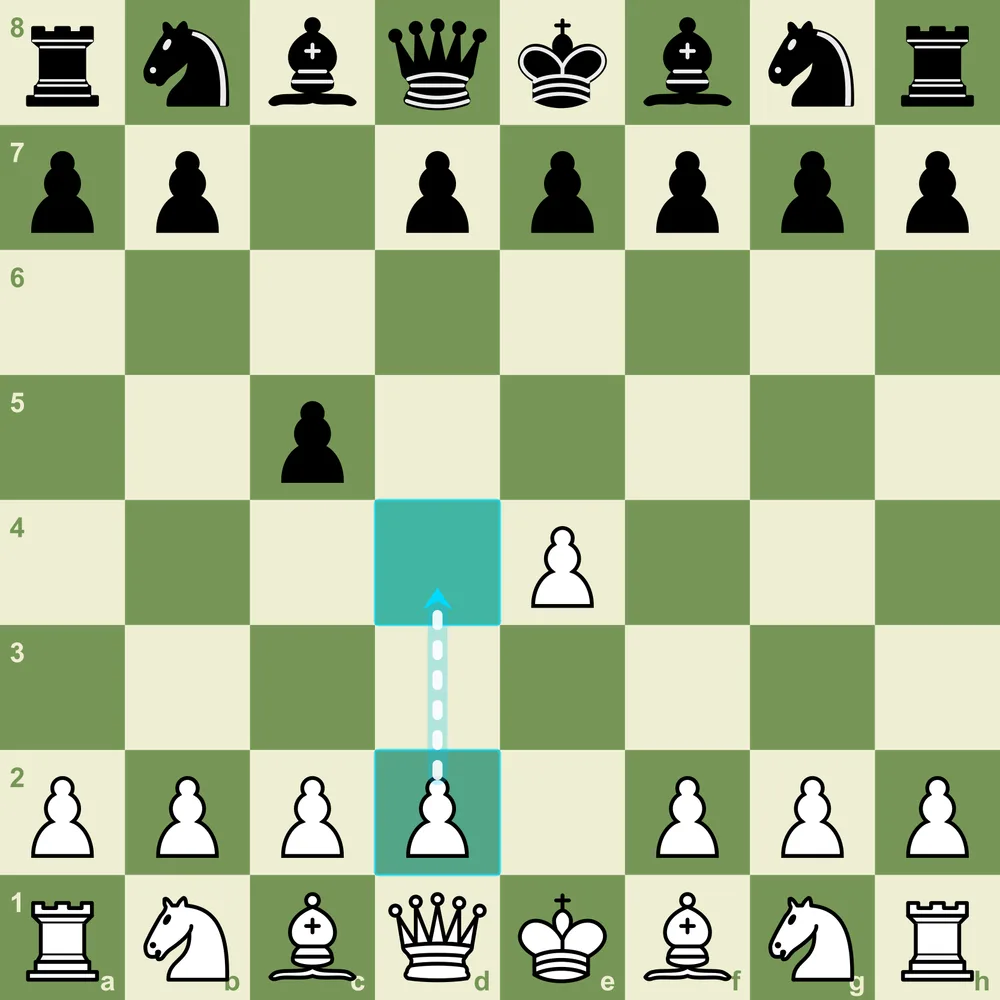
The Sicilian Defense arises after the moves 1.e4 c5 and is by far the most popular and statistically successful defense against 1.e4 at the highest levels of chess. Rather than mirroring White's central advance with 1...e5, Black immediately attacks the d4 square from the flank, signaling an intent to fight for the initiative from the very first move.
The opening takes its name from an analysis published in 1617 by the Italian chess player Gioachino Greco, though the defense's modern theoretical framework was shaped in the 20th century by world champions including Bobby Fischer, Garry Kasparov, and Magnus Carlsen. Fischer famously called the Sicilian "the best scoring defense against 1.e4" and employed it throughout his career, most notably in his 1972 World Championship match against Boris Spassky.
The key strategic idea behind 1...c5 is the creation of an asymmetrical pawn structure. After the typical continuation 2.Nf3 followed by 3.d4 cxd4 4.Nxd4, Black has exchanged a flank pawn (the c-pawn) for White's central d-pawn. This gives White a central pawn majority with e4 versus Black's d-pawn, but Black gains a queenside pawn majority and the open c-file for counterplay. The resulting imbalance leads to rich, combative positions where both sides have genuine chances to play for a win.
The Sicilian Defense accounts for roughly 25% of all games in master-level databases and consistently scores between 45-48% for Black, significantly higher than most other responses to 1.e4. This statistical edge, combined with the rich variety of playable sub-variations, explains why the Sicilian has dominated competitive chess for over half a century. Whether you prefer tactical fireworks in the Najdorf or solid positional play in the Scheveningen, the Sicilian has a variation to match your style.
How to Play the Sicilian Defense
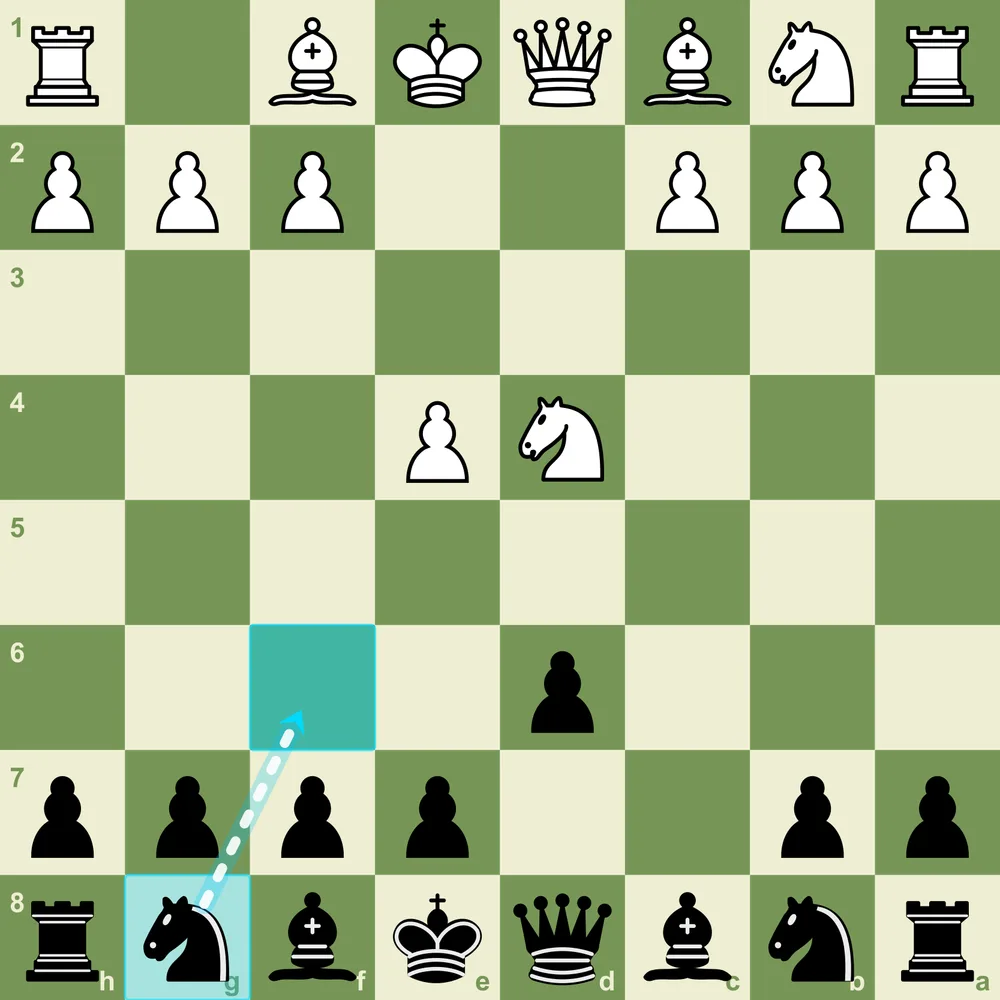
After 1.e4 c5, Black's first move accomplishes several important goals simultaneously. The c5 pawn directly contests White's control of the d4 square, preventing White from establishing an ideal two-pawn center with d4 for free. Unlike 1...e5, the move does not block Black's d-pawn, which remains free to advance to d6 or d5 depending on the variation. This flexibility is a hallmark of the Sicilian.
White's most principled response is 2.Nf3, preparing to play d4 and open the center. After 2...d6 3.d4 cxd4 4.Nxd4, we reach the tabiya of the Open Sicilian. From here, Black chooses a setup based on the desired variation: 4...Nf6 5.Nc3 leads to the major sub-systems where Black plays 5...a6 (Najdorf), 5...g6 (Dragon), 5...e6 (Scheveningen), 5...Nc6 (Classical), or 5...e5 (Sveshnikov).
The resulting positions are fundamentally unbalanced. White typically aims for a kingside attack, leveraging the spatial advantage from the e4 pawn and the natural aggressiveness of a knight on d4. Black counters on the queenside and along the half-open c-file, often advancing ...a5-a4 or ...b5-b4 to create threats against White's king or to win queenside space. Understanding this strategic tension is the key to mastering any Sicilian variation.
Main Sicilian Defense Variations
The Sicilian branches into dozens of named variations, each with distinct strategic themes. Here are the four most important sub-systems you need to know.
The Najdorf Variation
5...a6Advanced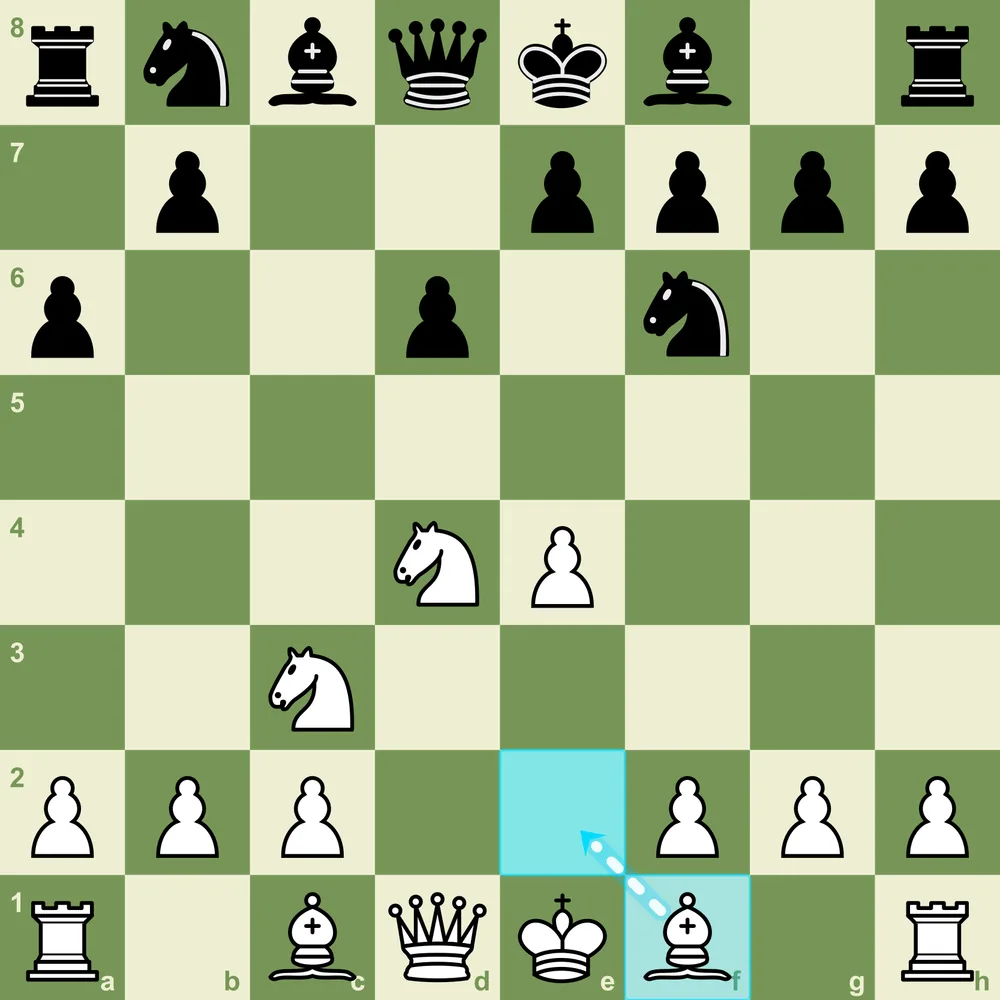
Named after the Argentine grandmaster Miguel Najdorf, this is the most popular and deeply analyzed variation in all of chess. The quiet move 5...a6 is deceptively ambitious: it prepares an eventual ...e5 or ...b5 advance while controlling the b5 square to prevent White's pieces from landing there. The Najdorf leads to incredibly complex positions where both sides must play precisely from the opening through the endgame.
Bobby Fischer relied on the Najdorf throughout his career, and Garry Kasparov made it his primary weapon as Black for over two decades. Magnus Carlsen has also employed it in crucial games. White can respond with 6.Bg5 (the Poisoned Pawn and English Attack), 6.Be2 (the Classical), 6.Be3 (the English Attack), or 6.f3 (preparing Be3 and Qd2). Each leads to dramatically different types of positions, giving the Najdorf unparalleled depth and variety.
Famous practitioners: Kasparov, Fischer, Carlsen, Nakamura, Giri
The Dragon Variation
5...g6Intermediate-Advanced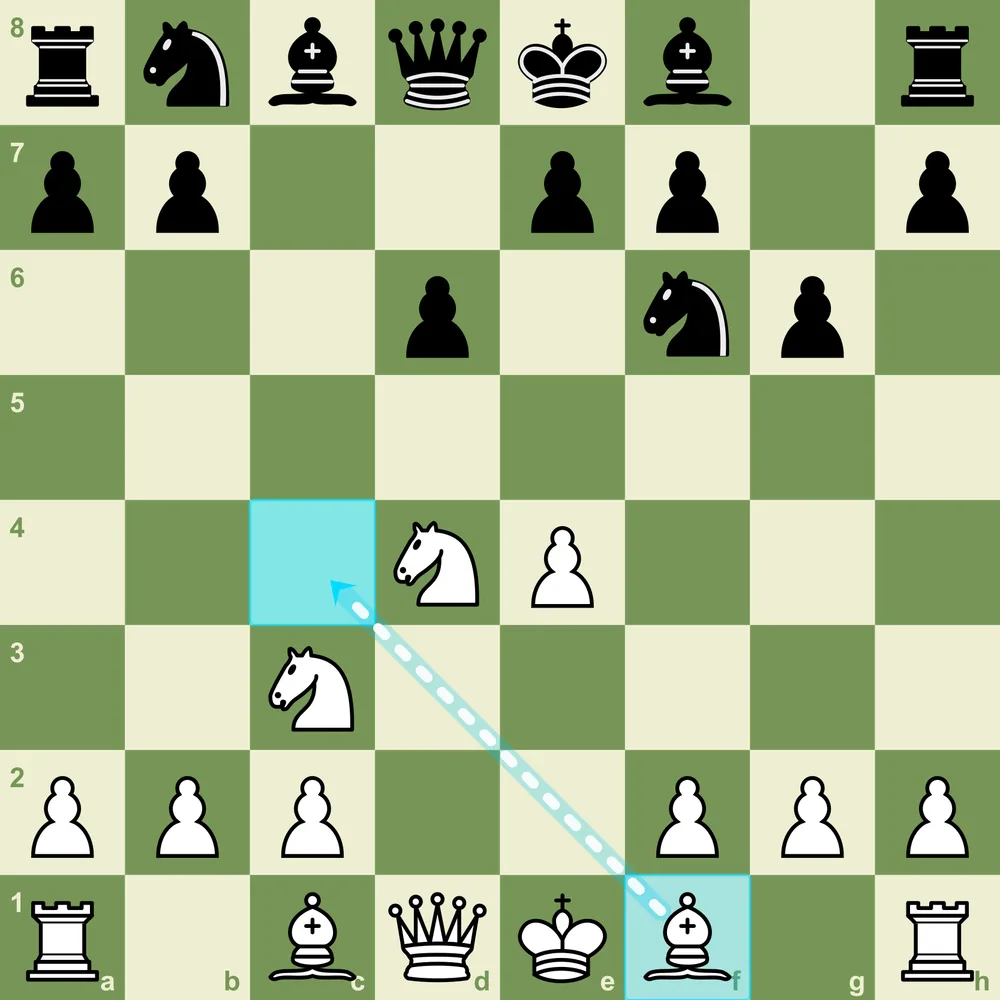
The Dragon is one of the sharpest and most exciting variations in chess. Black fianchettoes the dark-squared bishop to g7, where it exerts tremendous pressure along the long diagonal toward White's queenside. The name "Dragon" comes from the shape of Black's pawn chain (h7-g6-d6-e7), which was said to resemble the constellation Draco.
The critical test is the Yugoslav Attack (6.Be3 Bg7 7.f3 O-O 8.Qd2 Nc6 9.Bc4), where White castles queenside and launches a pawn storm against Black's king. Black counters with ...Rxc3 sacrifices, queenside pawn advances, and tactical shots along the c-file and long diagonal. These positions are razor-sharp and often decided by whoever gets their attack in first. Precise theoretical knowledge is essential in the Yugoslav Attack, but players who enjoy tactical complexity will find the Dragon immensely rewarding.
Famous practitioners: Radjabov, Carlsen, Topalov, Jones
The Classical / Scheveningen Variation
5...e6Intermediate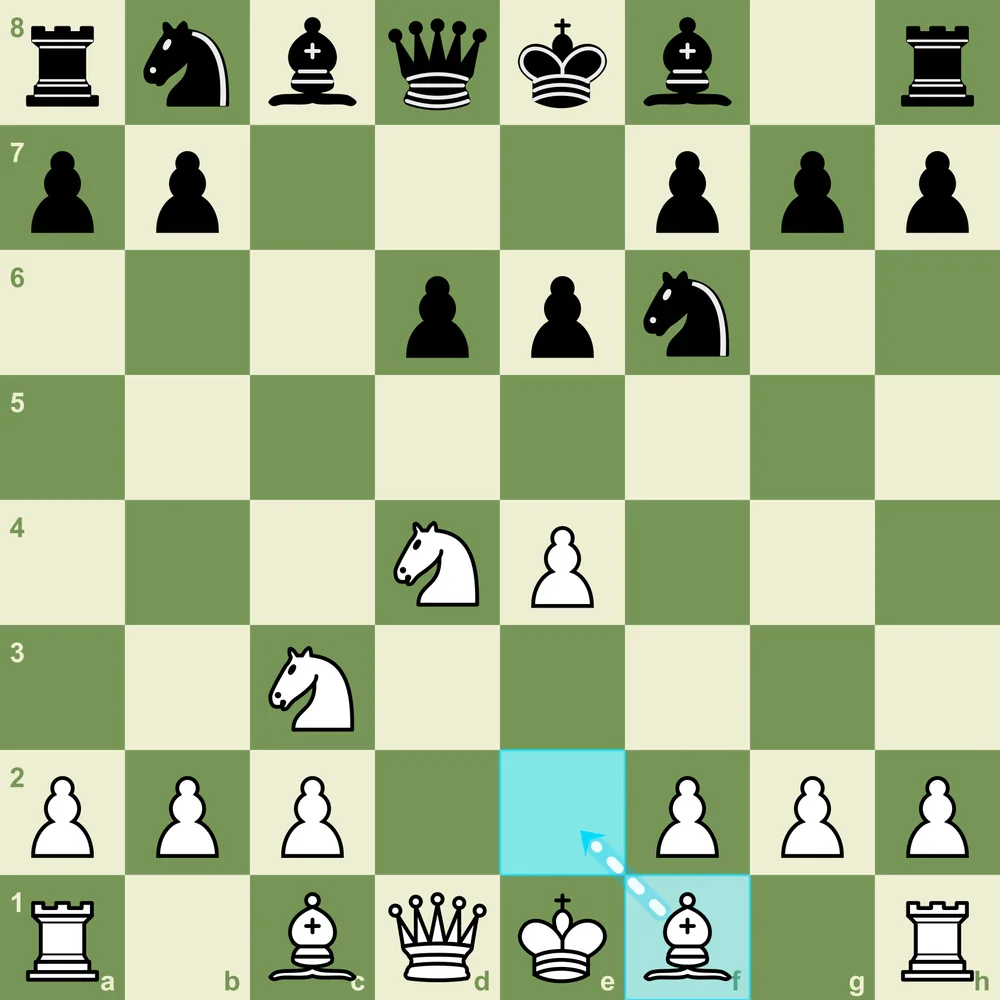
The Scheveningen (pronounced "SKEH-veh-ning-en"), named after the Dutch seaside town where it was first played in a 1923 tournament, features the "small center" with pawns on d6 and e6. This compact pawn structure is remarkably solid and flexible, allowing Black to develop pieces harmoniously before choosing a plan based on White's setup.
Black typically develops with ...Be7, ...O-O, ...Nc6 or ...Nbd7, and then decides between queenside play with ...a6 and ...b5, or a central break with ...d5. The Scheveningen is an excellent choice for players who prefer strategic complexity over tactical fireworks, though the Keres Attack (6.g4) ensures that sharp play is always possible. Kasparov, Anand, and Kramnik have all used the Scheveningen in world championship matches.
Famous practitioners: Kasparov, Anand, Kramnik, Van der Wiel
The Sveshnikov Variation
5...e5Advanced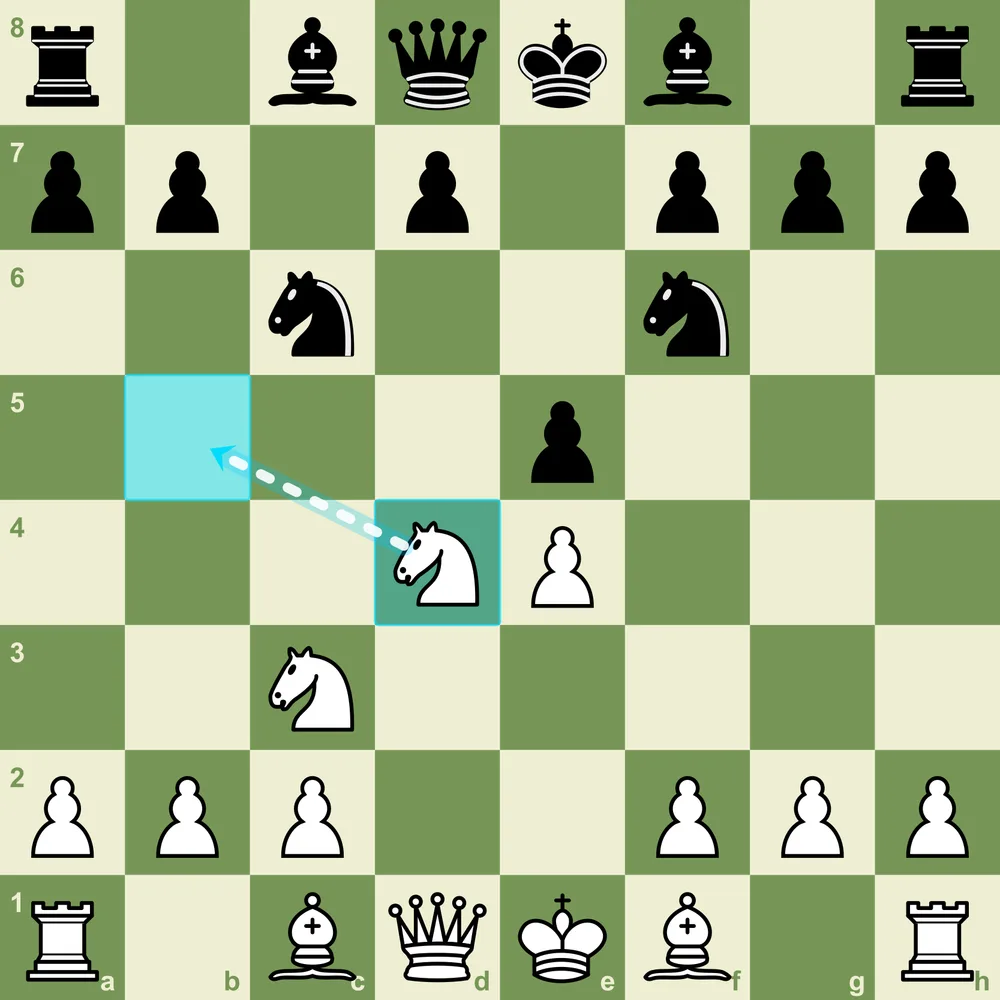
The Sveshnikov, popularized by the Russian grandmaster Evgeny Sveshnikov in the 1970s, is one of the most dynamic and modern Sicilian variations. The aggressive 5...e5 stakes an immediate claim in the center, driving the knight from d4 and gaining space. The trade-off is a permanent weakness on d5, which White can occupy with a knight, and a backward pawn on d6.
Despite these apparent structural concessions, Black obtains powerful piece activity, particularly with the dark-squared bishop on e7 or b4. After the typical continuation 6.Ndb5 d6 7.Bg5 a6 8.Na3 b5, Black seizes space on the queenside and creates dynamic counterplay. The Sveshnikov requires precise knowledge of the critical lines, but it rewards players with fighting, double-edged positions. Magnus Carlsen used it to great effect in several world championship matches.
Famous practitioners: Carlsen, Caruana, Leinier Dominguez, Sveshnikov
How to Handle Anti-Sicilians
Not every White player will enter the Open Sicilian with 2.Nf3 and 3.d4. Anti-Sicilian systems are designed to avoid the main theoretical battlegrounds. Here is how to respond to the most common ones.
Alapin Variation (2.c3)
White intends to play d4 supported by the c3 pawn. Respond with 2...d5 to immediately challenge the center, or 2...Nf6 to attack e4 directly. After 2...d5 3.exd5 Qxd5, Black develops comfortably with a slight lead in development. The Alapin tends to lead to quieter, more strategic positions.
Grand Prix Attack (2.Nc3 + f4)
An aggressive setup where White pushes f4 early, aiming for a kingside attack. Black should play 2...Nc6 3.f4 g6, fianchettoing the bishop and preparing to undermine White's center with ...d5. The key is not to panic, as the early f4 weakens White's king position and can be exploited with precise play.
Closed Sicilian (2.Nc3)
White develops the knight to c3 without playing d4, leading to a slower, more positional game. Black responds with 2...Nc6 3.g3 g6, setting up a fianchetto and preparing ...d6, ...Bg7, and eventually ...Rb8 with ...b5. These positions are strategically rich and favor the player who understands typical pawn breaks and piece placements.
Smith-Morra Gambit (2.d4 cxd4 3.c3)
White sacrifices a pawn for rapid development and open lines. Black can accept with 3...dxc3 4.Nxc3 and aim for solid play with ...Nc6, ...d6, ...e6, and ...Nf6, or decline with 3...Nf6 to sidestep the gambit entirely. If accepting, be prepared for White's active piece play and focus on consolidating the extra pawn.
Pros and Cons of the Sicilian Defense
Advantages
- •Best winning chances for Black - statistically the highest-scoring defense against 1.e4 at the master level
- •Rich, complex middlegames - the asymmetrical structure guarantees a fight with chances for both sides
- •Multiple playable variations - you can switch between systems to keep opponents guessing
- •Effective at all levels - from club play to world championships, the Sicilian delivers results
Disadvantages
- •Heavy study requirements - the main lines of the Najdorf and Dragon require deep theoretical preparation
- •Must know Anti-Sicilians - you need separate preparation for the Alapin, Grand Prix, Closed, and Smith-Morra
- •Sharp, double-edged positions - one inaccuracy can lead to a quick loss, especially in the Dragon and Najdorf
- •Not ideal for absolute beginners - the strategic complexity can be overwhelming without a solid chess foundation
Common Mistakes to Avoid in the Sicilian
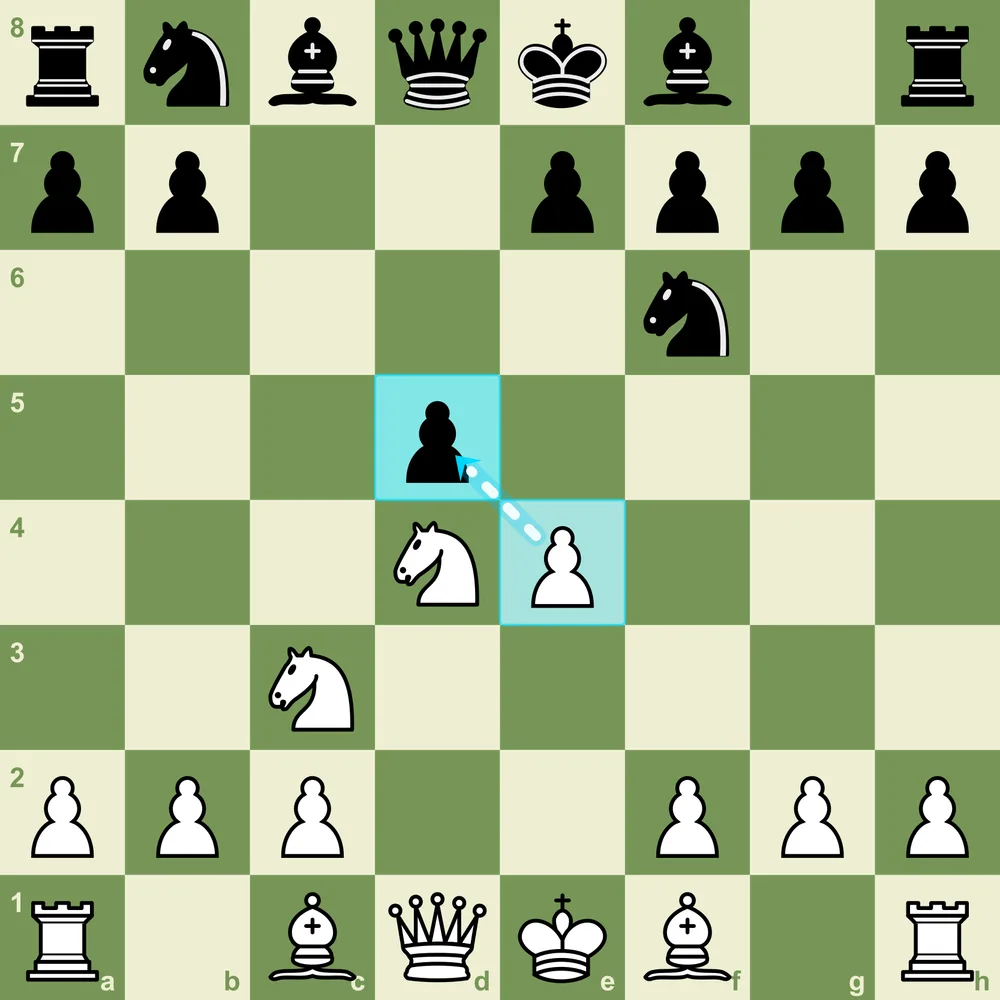
Pushing ...d5 prematurely
The ...d5 break is the key liberating move in many Sicilian positions, but timing is everything. Playing it too early, before you have sufficient piece support, often allows White to capture on d5 with a piece, gaining central control and leaving Black with a weak d-pawn or exposed pieces. Always ensure your pieces are developed and coordinated before committing to this central break.
Neglecting kingside safety
In the Open Sicilian, White often has a natural kingside attack. Delaying castling too long or weakening your kingside pawns without justification is a recipe for disaster. In the Dragon, for example, failing to castle before White launches the Yugoslav Attack with h4-h5 can lead to devastating sacrifices on g6 or h7.
Forgetting queenside counterplay
The Sicilian is built on the principle that Black attacks on the queenside while White attacks on the kingside. Passively defending without generating counterplay with moves like ...a5, ...b5, or activating the rook on the c-file hands White the initiative and usually leads to a slow loss. Always look for your own threats.
Playing the wrong variation move order
Move order matters enormously in the Sicilian. Playing 2...d6 instead of 2...Nc6 (or vice versa) can lead you into completely different variations that you may not have prepared. For example, if you intend to play the Sveshnikov, you must play 2...Nc6 first, not 2...d6. Study the exact move order for your chosen variation and practice it until it becomes automatic.
How to Practice the Sicilian Defense
Building mastery of the Sicilian Defense takes structured practice. Follow these five steps to integrate it into your repertoire effectively.
Choose one variation and learn it deeply
Don't try to learn every Sicilian system at once. Pick the variation that best matches your playing style, whether that is the tactical Dragon, the strategic Scheveningen, or the complex Najdorf, and study its key ideas, typical plans, and critical lines.
Study master games in your variation
Watch how grandmasters handle the middlegame positions that arise from your chosen variation. Pay attention to pawn breaks, piece maneuvers, and typical sacrificial ideas. Annotated games by Kasparov in the Najdorf or Radjabov in the Dragon are particularly instructive.
Use ChessHelper to analyze your games
After each game, review your Sicilian games with ChessHelper's AI-powered analysis. Identify where you deviated from the best moves, understand why certain positions went wrong, and build a personal database of positions to study. Real-time analysis during practice games helps reinforce correct plans.
Prepare against Anti-Sicilians
At club level, a significant number of 1.e4 players will avoid the Open Sicilian. Prepare a solid response against the Alapin, Grand Prix Attack, Closed Sicilian, and Smith-Morra Gambit so you are never caught off-guard. Even brief preparation in these lines will give you a significant edge.
Play rapid and blitz games to build pattern recognition
Theory only sticks when reinforced by practice. Play rapid (15+10) and blitz (5+3) games online using your chosen Sicilian variation. The faster time controls force you to rely on pattern recognition rather than calculation, which deepens your intuitive understanding of the opening's typical positions and plans.
Master the Sicilian Defense with ChessHelper
Get real-time analysis powered by Chess Helper AI as you practice the Sicilian in your online games. See the best moves, understand your mistakes, and climb the ratings.
Start Practicing for FreeJoin 10,000+ chess players improving their openings with ChessHelper
Related Openings
If you enjoy the Sicilian Defense, consider exploring these complementary openings to round out your repertoire.
French Defense
A solid alternative to the Sicilian against 1.e4. Black plays 1...e6 followed by 2...d5, creating a strong pawn chain.
1.e4 e6 2.d4 d5
Caro-Kann Defense
Another reliable defense against 1.e4 with 1...c6. Less theoretical than the Sicilian but equally sound at all levels.
1.e4 c6 2.d4 d5
King's Indian Defense
An aggressive hypermodern defense for Black against 1.d4. Shares the Sicilian's fighting spirit with a different pawn structure.
1.d4 Nf6 2.c4 g6
Sicilian Defense: Frequently Asked Questions
The Accelerated Dragon (1.e4 c5 2.Nf3 Nc6 3.d4 cxd4 4.Nxd4 g6) and the Classical Scheveningen (5...e6) are the most beginner-friendly Sicilian variations. They feature clear plans, solid pawn structures, and require less memorization of sharp theoretical lines compared to the Najdorf or Dragon. The Accelerated Dragon in particular lets you develop naturally with ...Bg7, ...Nf6, and castle kingside without navigating dangerous tactical complications early on.
Against the Alapin (1.e4 c5 2.c3), Black has two reliable responses. The most popular is 2...d5, immediately striking the center and leading to positions where Black obtains comfortable play after 3.exd5 Qxd5 4.d4 Nf6. The alternative is 2...Nf6, which targets the e4 pawn directly and can transpose into favorable positions. Both approaches give Black equal chances and avoid the heavily theoretical Open Sicilian lines that White was hoping to sidestep.
Not at all. While the Najdorf and Yugoslav Attack Dragon are famously sharp, many Sicilian variations are perfectly manageable for players rated 1200 and above. The Classical Scheveningen offers solid, strategic play with clear plans. The Kan Variation (4...a6) gives flexible development without early commitments. Even the Dragon without the Yugoslav Attack leads to rich but navigable positions. The key is choosing a variation that matches your playing style and studying the typical plans rather than memorizing 20 moves of theory.