
What is the Italian Game?
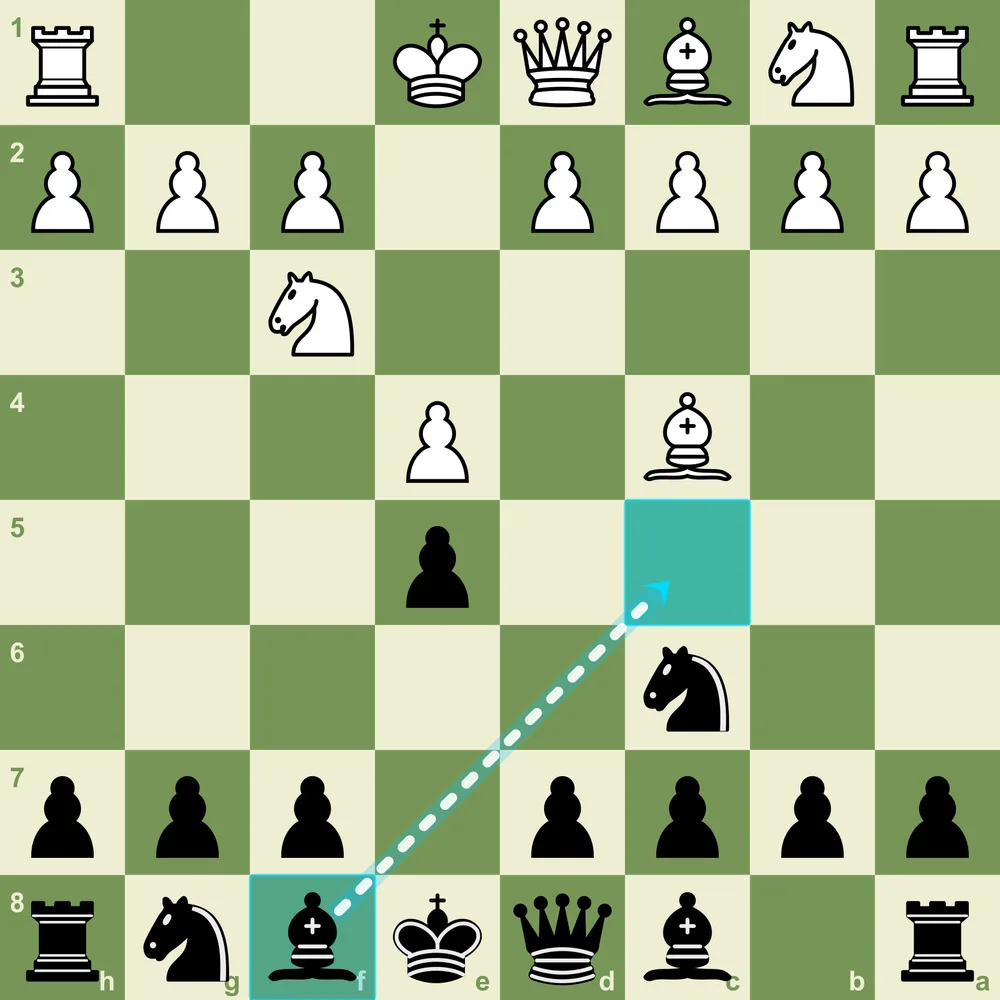
The Italian Game arises after the moves 1.e4 e5 2.Nf3 Nc6 3.Bc4. It is one of the oldest recorded openings in chess history, with analysis dating back to the 16th century in Italy - hence the name. The great Italian masters Greco and Polerio were among the first to explore its rich tactical possibilities.
The name “Giuoco Piano” literally translates to “quiet game” in Italian, but don't let that fool you. While the opening begins with natural, developing moves, it regularly leads to fierce attacking play with sacrifices on f7, open files, and dynamic piece activity. The contrast between the calm setup and explosive middlegame is part of what makes this opening so instructive and exciting.
The Italian Game is universally recommended as the first opening for beginners because it teaches the most important principles: develop your pieces toward the center, castle early, and create threats against your opponent's weakest point (f7). Paul Morphy, the greatest player of the 19th century, was a master of these positions. In modern chess, the Italian has enjoyed a major revival at the top level, with elite grandmasters like Caruana, So, and Carlsen regularly employing it as a less theoretical alternative to the Ruy Lopez.
How to Play
With 3.Bc4, White places the bishop on a powerful diagonal pointing directly at f7 - the weakest square in Black's position (it is only defended by the king). This move develops a piece with tempo, as Black must immediately consider the long-term pressure on that diagonal. The bishop on c4 works in tandem with the knight on f3 and the pawn on e4 to create a harmonious setup aimed at the kingside.
White's typical plan involves castling kingside quickly, then preparing the central advance d2-d4. Depending on Black's response, White may prepare this with c2-c3 (the Giuoco Piano proper) or play d2-d3 for a slower buildup (the Giuoco Pianissimo). The pawn break d2-d4 is the key moment in most Italian Game positions - it opens the center, activates the dark-squared bishop, and creates tactical opportunities. Understanding when and how to execute this advance is the most important strategic concept in this opening.
A typical move order for White might continue: 3...Bc5 4.c3 Nf6 5.d4 exd4 6.cxd4 Bb4+ 7.Bd2, leading to open, dynamic play where White's central pawn majority and active pieces provide excellent attacking prospects.
Main Variations
Giuoco Piano (3...Bc5 4.c3)
The main line of the Italian Game. After 3...Bc5 4.c3, White prepares the crucial d2-d4 advance with tempo, aiming to build an ideal pawn center. Black typically responds with 4...Nf6, attacking e4 and developing a piece. After 5.d4 exd4 6.cxd4, the position opens up dramatically and both sides must play with precision.
This variation has been deeply analyzed at the highest levels. White gains a strong center but Black obtains active piece play and potential targets. The resulting middlegames are rich in tactical and strategic ideas, offering both sides opportunities to fight for the advantage. This is the variation you will encounter most frequently.
Giuoco Pianissimo (4.d3)
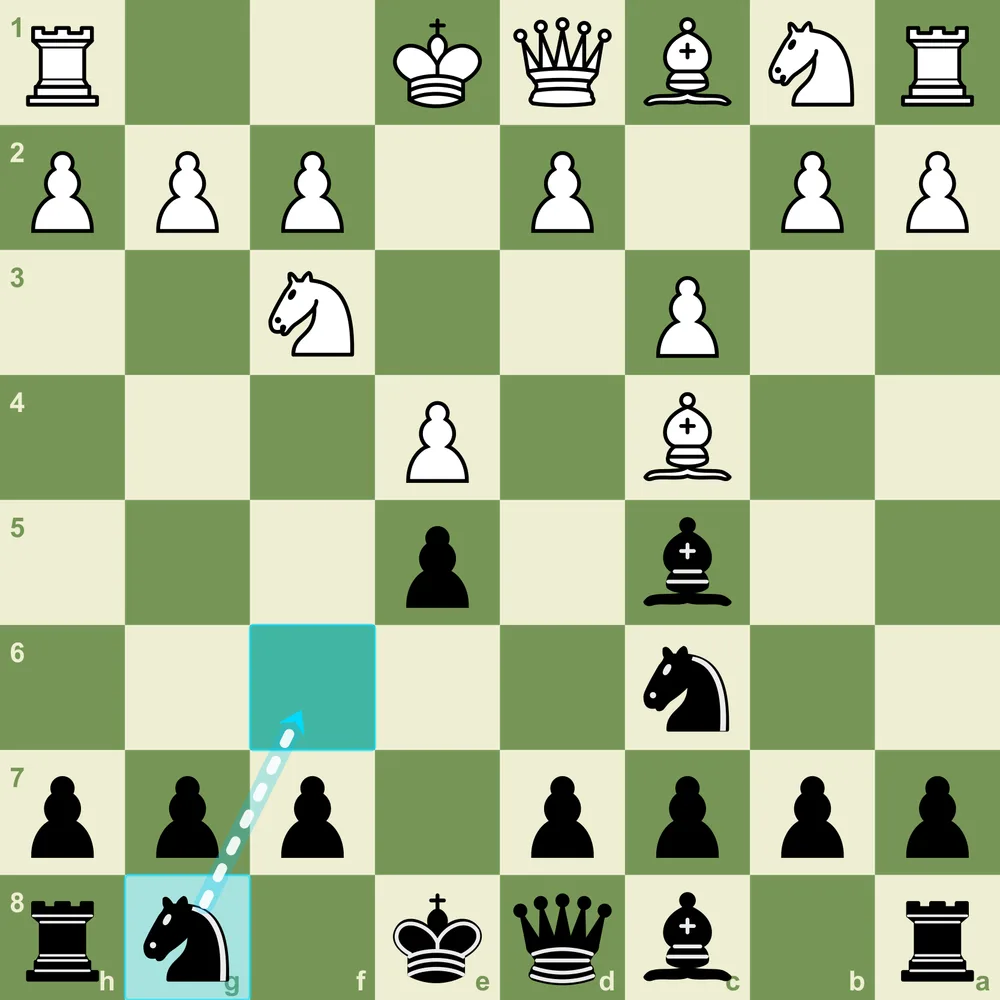
The “very quiet game” - White plays 4.d3 instead of 4.c3, opting for a slower, more flexible buildup. This avoids the sharp theoretical lines of the main Giuoco Piano and leads to rich positional play. White typically continues with O-O, Re1, and a2-a4, slowly improving piece placement before committing to a central break.
The Pianissimo has become extremely popular at the top level in recent years because it is less forcing, harder to prepare against, and leads to positions where understanding outweighs memorization. Magnus Carlsen and Fabiano Caruana have both scored excellent results with this approach. It is an ideal choice for players who prefer strategic maneuvering over sharp tactical battles.
Evans Gambit (4.b4)
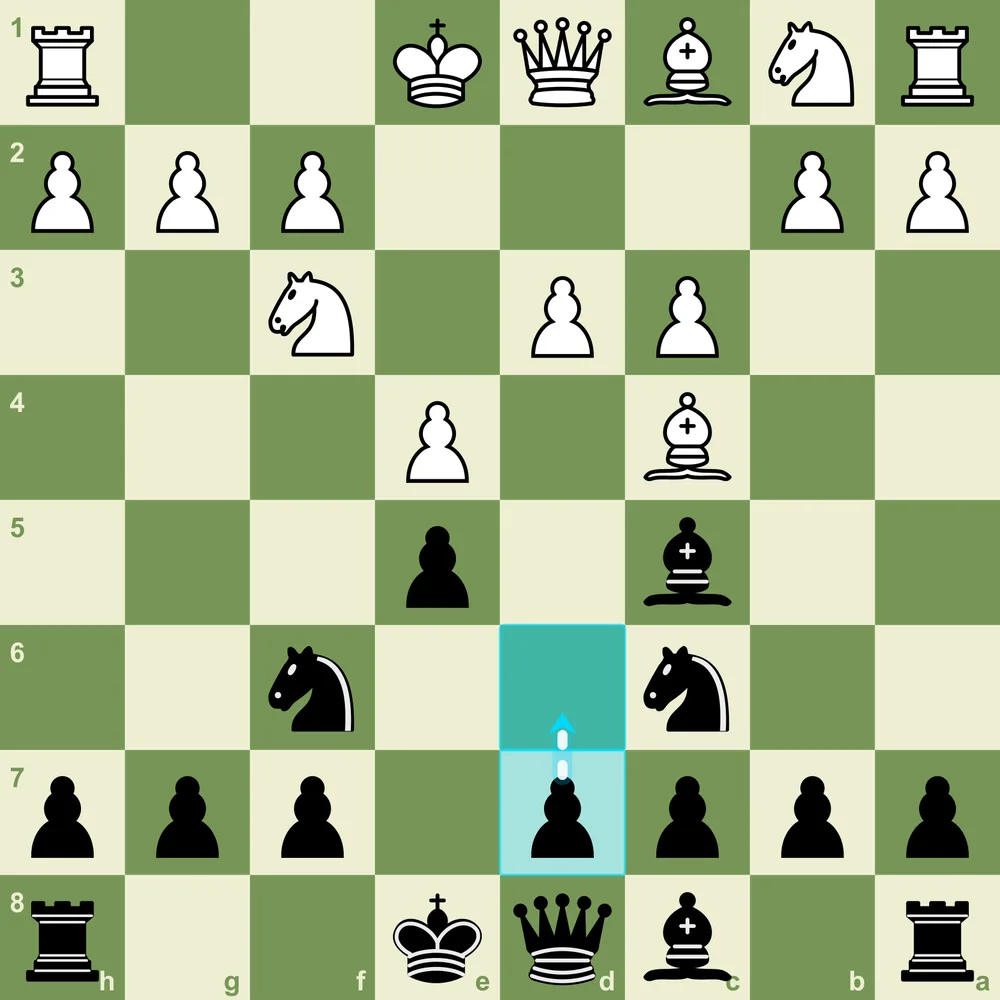
The Evans Gambit is romantic chess at its finest. After 3...Bc5 4.b4, White sacrifices a wing pawn to deflect Black's bishop and seize the center with tempo. Following 4...Bxb4 5.c3 Ba5 (or Be7) 6.d4, White achieves a massive pawn center and rapid piece development, often launching a devastating kingside attack before Black can consolidate.
Named after Welsh sea captain William Davies Evans, this gambit was the weapon of choice for the greatest attackers of the 19th century, including Anderssen and Morphy. Garry Kasparov revived it spectacularly against Anand in 1995. At club level, the Evans Gambit is lethal - many opponents will not know the correct defensive ideas and will quickly find themselves under a crushing attack.
Two Knights Defense (3...Nf6)
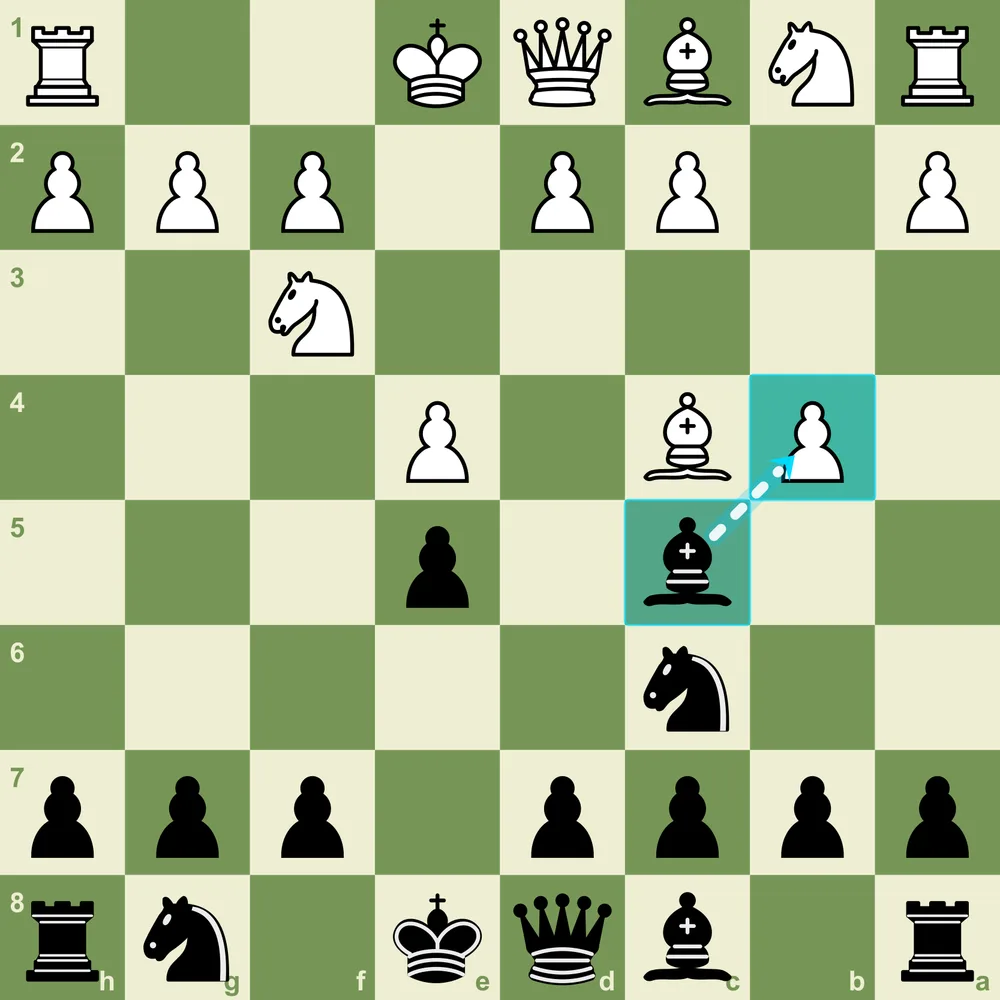
Instead of developing the bishop with 3...Bc5, Black plays 3...Nf6, immediately counterattacking White's e4 pawn. This is Black's most aggressive response to the Italian Game and leads to sharp, tactical play from the very beginning. White must decide how to defend e4, and the choice dramatically affects the character of the game.
The most critical continuation is 4.Ng5, threatening Nxf7 and targeting the weak f7 square. After 4...d5 5.exd5, Black faces a key decision: recapture with 5...Na5 (the safe, solid approach) or allow the Fried Liver Attack with 5...Nxd5. For a quieter game, White can play 4.d3, keeping the position within Giuoco Pianissimo territory.
Fried Liver Attack
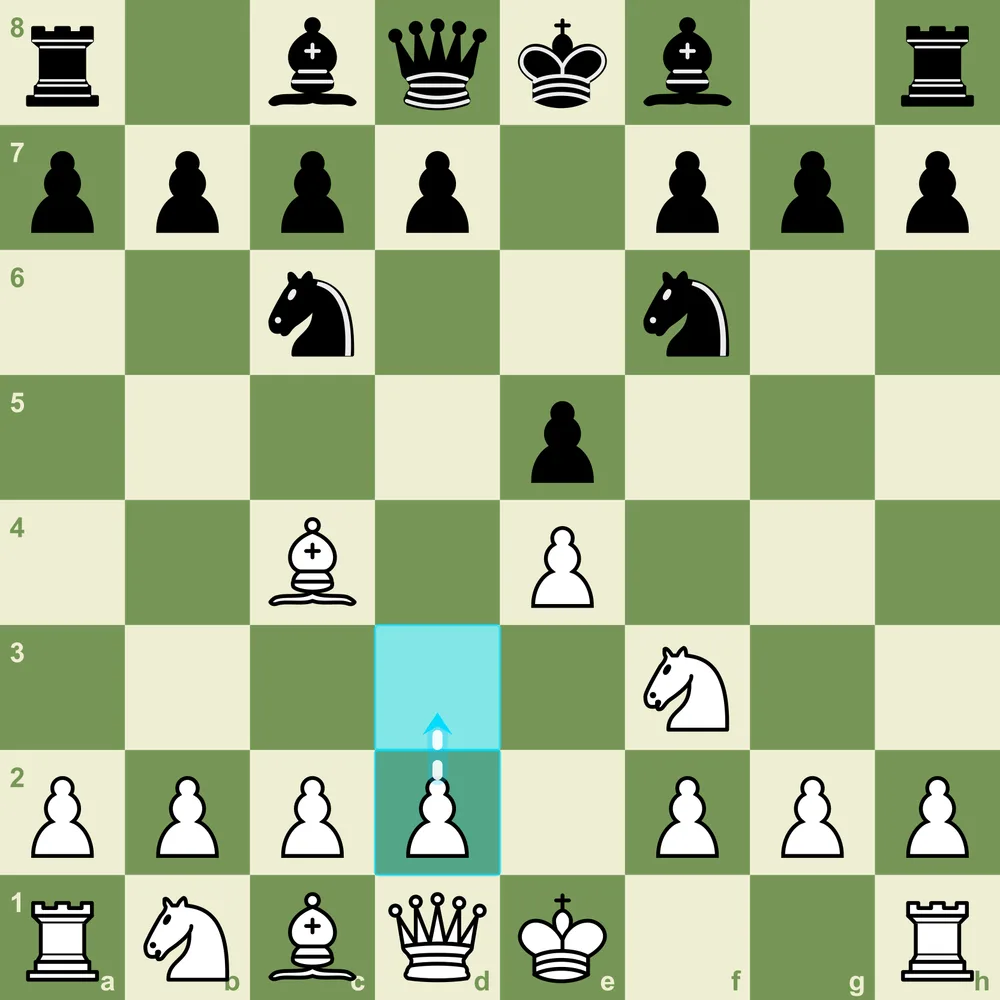
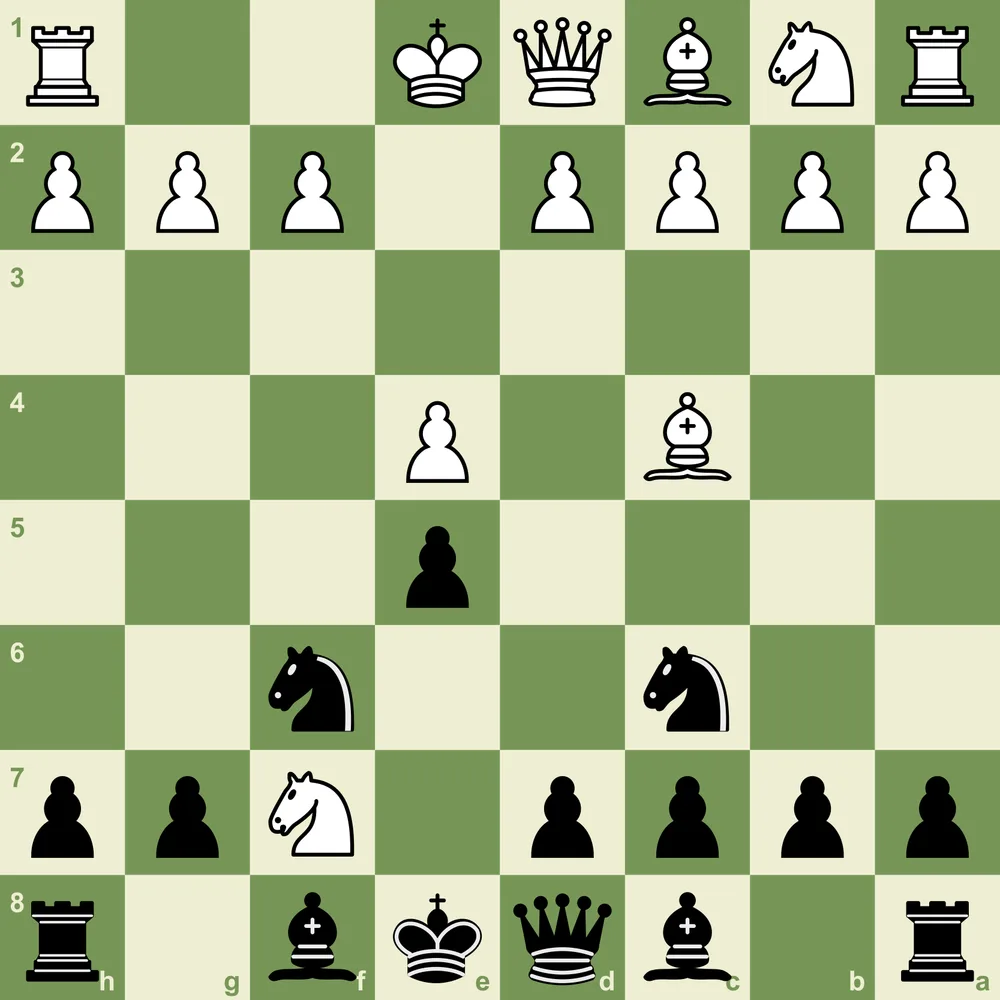
Perhaps the most famous attacking sequence in chess. After 3...Nf6 4.Ng5 d5 5.exd5 Nxd5 6.Nxf7, White sacrifices a knight on f7, dragging the Black king into the center of the board. The resulting positions are extraordinarily sharp - Black's king is exposed on e6 or f6, and White aims to exploit this with rapid development and open lines.
The Fried Liver is devastatingly effective at beginner and intermediate levels because Black must find a series of precise defensive moves to survive. Even experienced club players can struggle to navigate the complications. While top-level players generally avoid it with 5...Na5 (the Morphy variation), the Fried Liver remains one of the most instructive tactical patterns to study and one of the most fun ways to win a game.
Why the Italian Game is Perfect for Beginners
The Italian Game is the most recommended opening for players learning chess, and for good reason. Every move in the opening follows natural, logical principles that you will use throughout your entire chess career. You develop your knights before your bishops, place them on active squares controlling the center, castle early for king safety, and prepare a central pawn break. There are no memorization-heavy sidelines to worry about - if you understand the principles, you will always find good moves.
Beyond teaching fundamentals, the Italian Game introduces beginners to tactical patterns that appear across all openings: pins, forks, discovered attacks, and sacrifices on f7. The variety of positions it produces - from quiet Pianissimo maneuvers to wild Evans Gambit attacks - means you develop a well-rounded understanding of chess. As you improve, you can gradually add more sophisticated variations to your repertoire, but the core ideas from the Italian Game will remain relevant at every level of play.
Pros and Cons
Advantages
- •Easy to learn and based on natural developing principles
- •Rich in tactical opportunities and attacking play
- •Multiple variations to suit different playing styles
- •Teaches transferable skills useful in all openings
- •Viable at every level, from beginner to grandmaster
Disadvantages
- •Black can equalize relatively easily with precise play
- •The Two Knights Defense can lead to forced, drawish lines
- •Less theoretical depth than the Ruy Lopez for long-term study
- •Well-prepared opponents may steer toward symmetrical structures
Common Mistakes
1. Playing d4 too early without preparation
A common error is pushing d2-d4 before supporting it with c2-c3 or before castling. Playing d4 prematurely can lead to an unfavorable pawn exchange or leave the king exposed in the center. Always consider whether your pieces are ready to exploit the open lines that d4 creates. In the Giuoco Piano, the sequence c3 followed by d4 is correct; jumping straight to d4 often gives Black easy equality.
2. Neglecting to castle early
In the excitement of building an attack, many beginners delay castling to make “one more developing move.” In the Italian Game, this is particularly dangerous because the center can open quickly after d4, and an uncastled king becomes a target. Castle as soon as possible, ideally by move 5 or 6. Your attack will be much stronger when your king is safe and your rook can join the action along the e-file.
3. Ignoring Black's counterplay against e4
The e4 pawn is the foundation of White's position, but it can become a target. After moves like ...Nf6 and ...d5, Black often puts significant pressure on e4. Beginners sometimes focus exclusively on their own attack without monitoring this pawn. Be prepared to defend e4 with Re1, or to advance it at the right moment. Losing the e4 pawn without compensation usually means losing your entire opening advantage.
4. Moving the bishop too many times
After placing the bishop on c4, beginners are sometimes tempted to reposition it multiple times in the opening (Bc4-b3-a2 or Bc4-b5, etc.) while neglecting the development of other pieces. Each bishop move is a tempo that could be used for castling, developing the queenside, or preparing d4. Place your bishop on its best square and focus on completing development before fine-tuning piece positions.
Master the Italian Game with ChessHelper
Get real-time analysis of your Italian Game positions. See the best moves, understand the plans, and climb the ratings.
Try ChessHelper FreeJoin 10,000+ players improving their openings with AI analysis
Related Openings
Ruy Lopez
1.e4 e5 2.Nf3 Nc6 3.Bb5
Shares the same first two moves as the Italian but places the bishop on b5 instead of c4. The Ruy Lopez offers deeper positional play and more long-term pressure, making it the natural next step after mastering the Italian Game.
Sicilian Defense
1.e4 c5
The most popular reply to 1.e4 you will meet in your games. Learning the Sicilian Defense and its sharp, unbalanced positions helps Italian Game players prepare for their most common opponent.
Italian Game: Frequently Asked Questions
Both openings start with 1.e4 e5 2.Nf3 Nc6, but they diverge on move three. In the Italian Game, White plays 3.Bc4 targeting the f7 pawn directly, while in the Ruy Lopez White plays 3.Bb5 putting pressure on the knight that defends e5. The Italian Game tends to lead to more straightforward attacking play, making it better for beginners. The Ruy Lopez is deeper in positional nuance and requires more theoretical knowledge, which is why it is a favorite at the highest levels. Many players start with the Italian and transition to the Ruy Lopez as they gain experience.
The Evans Gambit (1.e4 e5 2.Nf3 Nc6 3.Bc4 Bc5 4.b4) is considered a respectable weapon even at the grandmaster level, though it is not as popular as the main Giuoco Piano lines. Kasparov famously revived it in 1995 against Anand, and players like Wei Yi have used it in top-level events. While Black can equalize with precise play, the practical chances White gets from rapid development and open lines make it a dangerous weapon, especially in faster time controls. At club level and below, it is extremely effective because many players are unprepared for the resulting complications.
When Black plays 3...Nf6 instead of 3...Bc5, you enter the Two Knights Defense. The most common continuation is 4.d3 for a quiet positional game, or 4.Ng5 for sharp tactical play targeting f7. After 4.Ng5 d5 5.exd5, you can try the famous Fried Liver Attack with 6.Nxf7 (though Black can sidestep with 5...Na5 or 5...b5, the Ulvestad and Traxler variations). For club players, 4.d3 is often the safest and most practical choice, keeping a solid position with long-term pressure. If you enjoy tactics, 4.Ng5 leads to some of the most exciting lines in all of chess.