
London System Complete Guide
The most practical opening system for White at any level. Learn one setup, play it against everything, and focus on understanding chess instead of memorizing theory.
What is the London System?
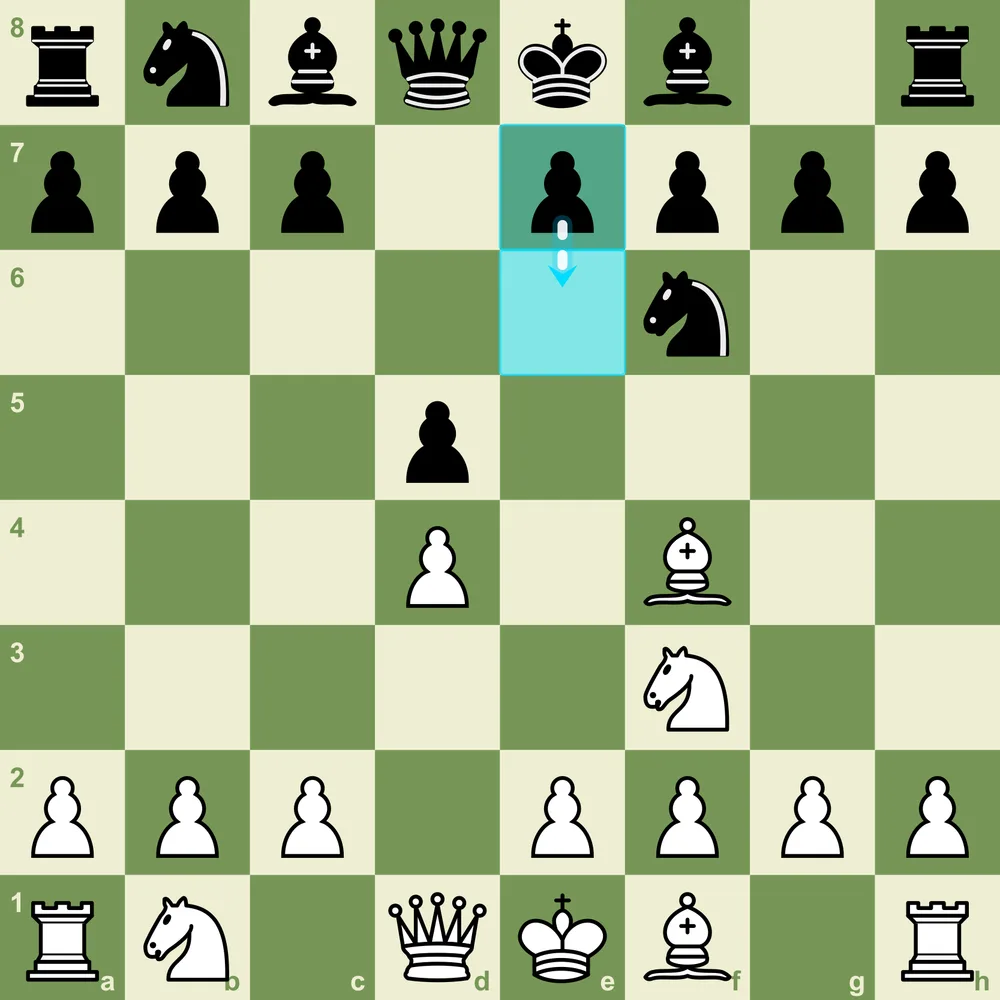
The London System is a chess opening for White characterized by the moves 1.d4, 2.Nf3, and 3.Bf4, though the exact move order is flexible. What makes the London unique among chess openings is its systematic nature: White develops pieces to the same squares regardless of what Black does. This "one setup fits all" approach makes it the most practical opening system available, especially for players who want to spend their study time on middlegames and endgames rather than memorizing opening theory.
The London System has surged in popularity over the past decade, driven in part by its adoption by top grandmasters. Magnus Carlsen has employed the London in classical games, including at the World Championship level. Eric Rosen and Kamil Miton have popularized it through online content, demonstrating that the London can produce dynamic, attacking games far removed from its "boring" reputation. GothamChess (Levy Rozman) has also contributed to its widespread popularity among club players.
The key concept behind the London is the pyramid pawn structure: pawns on d4, e3, and c3 form a solid, resilient foundation. The dark-squared bishop develops to f4 before the e-pawn advances to e3, ensuring it does not get locked in. From this stable base, White can launch kingside attacks, execute central breaks, or simply outplay the opponent in a comfortable middlegame.
The London System Setup
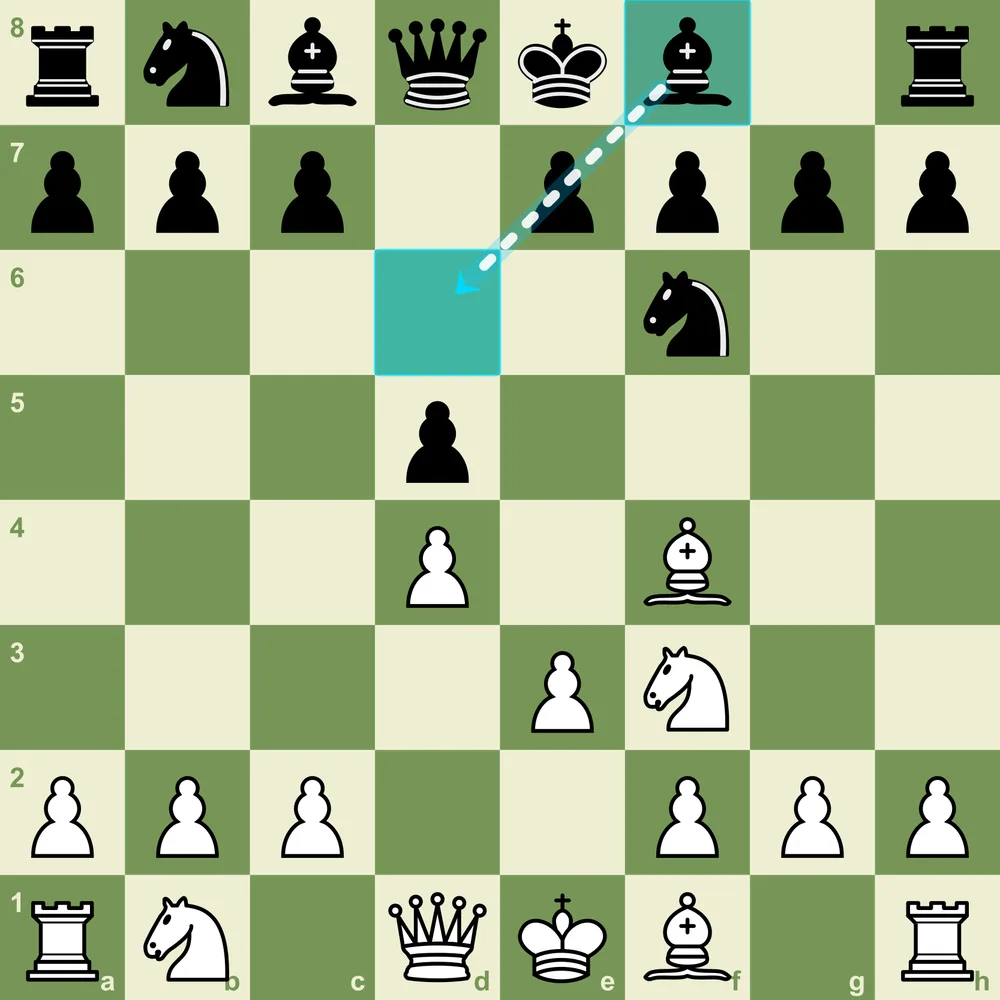
The standard London setup follows a predictable and logical sequence. You should aim to develop your pieces in roughly this order, adapting slightly based on Black's moves:
- 1.d4 — Claim the center. This is always your first move.
- 2.Bf4 — Develop the bishop outside the pawn chain before playing e3. This is the defining move of the London System. Play this early, typically on move 2 or 3.
- 3.e3 — Support the d4-pawn and create the pyramid structure. The bishop is already outside, so this is perfectly timed.
- 4.Nf3 — Develop the knight to its natural square, supporting d4 and controlling e5.
- 5.Bd3 — Place the bishop on an active diagonal pointing toward h7, creating potential kingside attacking ideas.
- 6.Nbd2 — Develop the second knight. From d2, it can reroute to e5 (the dream square) or f1-g3 for kingside play.
- 7.O-O — Castle kingside for king safety.
- 8.c3 — Complete the pyramid. Now your center is rock-solid and you can begin active operations.
The beauty of this system is its simplicity. Once you internalize these eight moves, you have a complete opening setup that works against virtually any Black response. Your middlegame plan typically involves placing a knight on e5, pushing h3 and possibly g4 for a kingside attack, or executing the e4 break to open the center.
Playing Against Different Responses
vs Queen's Pawn (1...d5)
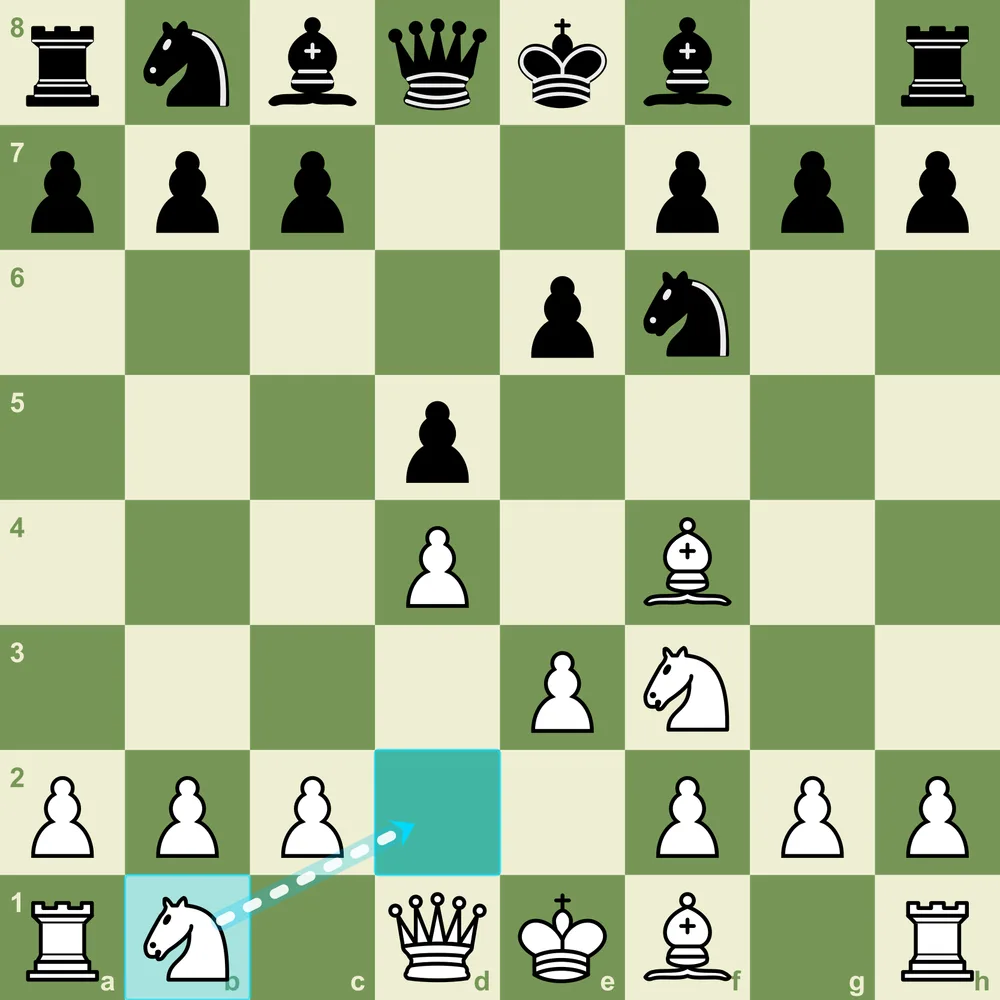
This is the most common scenario and the one where the London System feels most natural. After 1.d4 d5 2.Bf4 (or 2.Nf3 Nf6 3.Bf4), you proceed with the standard setup. Black will typically develop with ...Nf6, ...e6, ...Be7, and ...O-O, reaching a classical Queen's Pawn structure.
Your primary plan is to place a knight on e5, supported by f3 if needed. From e5, the knight exerts enormous pressure on Black's position. If Black exchanges on e5 with ...Nxe5, you recapture with dxe5 and gain space while opening the d-file for your rook. The Bd3 bishop aims at h7, and in many positions a direct kingside attack with Qf3, Qh3, or even h4-h5 is possible.
vs Indian Setup (1...Nf6 2.Nf3 g6)
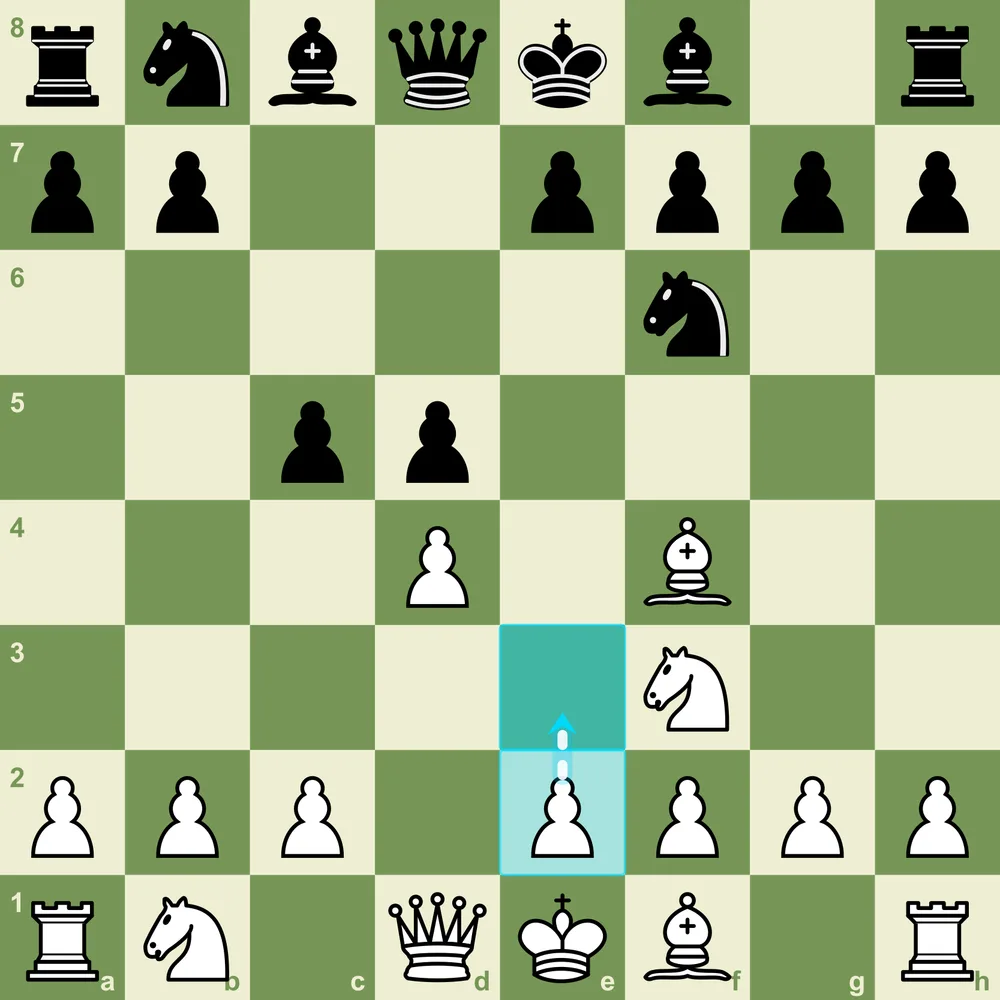
When Black fianchettoes with ...g6 and ...Bg7, many d4 players worry about their opening preparation. With the London System, you simply continue with the same plan: Bf4, e3, Bd3, Nbd2, O-O, c3. The setup works perfectly well against the King's Indian formation.
One important nuance is that Black's fianchettoed bishop on g7 will pressure your d4-pawn along the long diagonal. To counter this, make sure your c3 pawn is in place and consider placing your bishop on h2 if Black targets it with ...Nh5. The knight on e5 remains your ideal outpost, and the Bd3-h7 battery still creates threats, especially if Black's king castles short.
vs Slav Setup
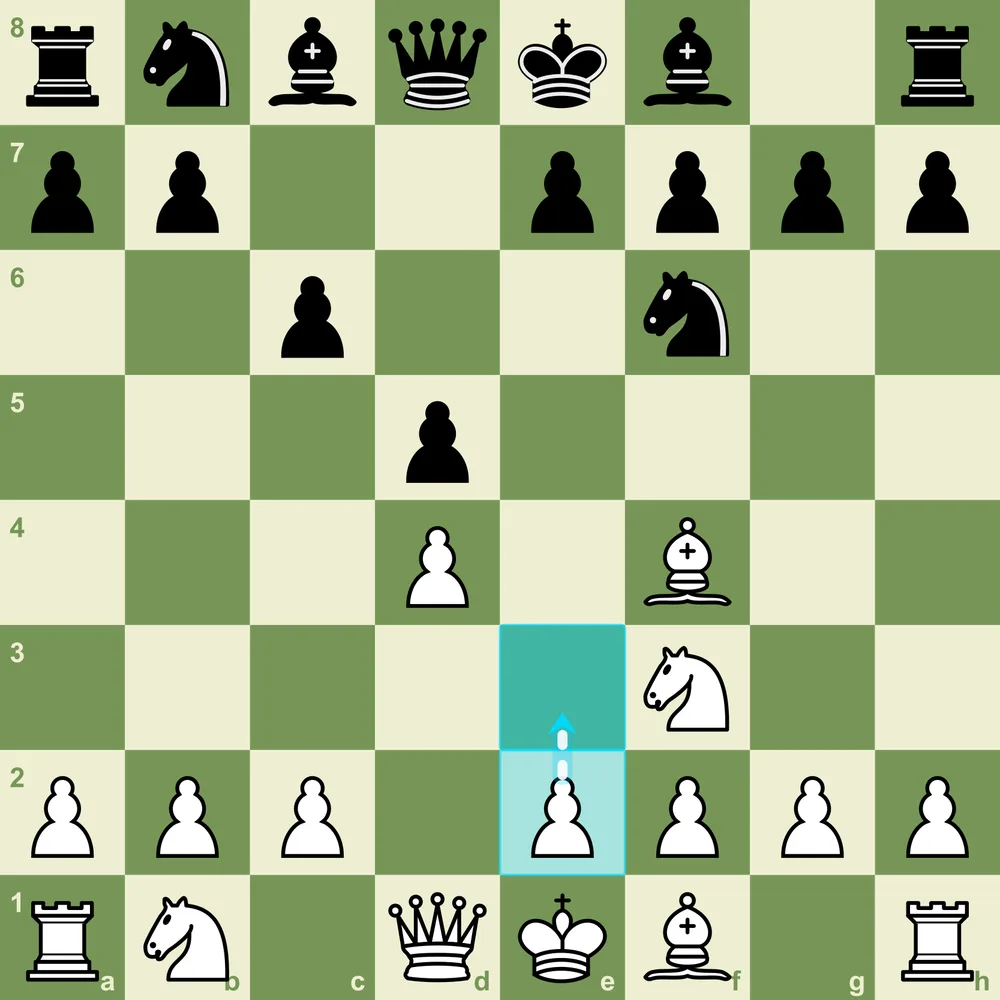
Against the Slav structure (Black plays ...d5 and ...c6), the London System is particularly comfortable. Black's solid but somewhat passive setup gives White time to complete the standard development and begin active operations without any urgency.
The key advantage against the Slav setup is that Black's c6-pawn, while supporting d5, limits the activity of the b8-knight, which must go to d7 instead of the more active c6 square. White can focus on the kingside attack, often with the plan of Ne5, Qf3, and eventually e4 or even g4-g5 in aggressive positions. The solid center means you can attack without worrying about counterplay in the middle of the board.
Why the London System is Perfect for Beginners
The single biggest challenge for beginner and intermediate chess players is the overwhelming amount of opening theory. In most openings, you need to learn different responses to different Black moves, study trap variations, and memorize long forced sequences. The London System eliminates nearly all of this complexity.
With the London, you play the same setup whether Black plays 1...d5, 1...Nf6, 1...f5, 1...c5, or almost any other move. This means you can spend your study time on middlegame strategy, tactical puzzles, and endgame technique, which are the areas that actually determine who wins at the club level. Instead of memorizing 15 moves of theory in the Catalan or the Nimzo-Indian, you learn one setup and invest your energy where it matters most.
Another advantage for beginners is that the London leads to stable, understandable positions. You will not suddenly find yourself in a razor-sharp tactical melee where one wrong move means instant defeat. The positions are solid, your king is safe, and you have clear plans to follow. This lets you focus on developing your chess understanding rather than surviving the opening.
Finally, the London teaches excellent chess habits. You learn to develop pieces before pushing pawns, castle early for king safety, control the center, and formulate a middlegame plan. These fundamentals will serve you well no matter what openings you play in the future.
Pros and Cons
Advantages
- ●Minimal theory required - one setup works against nearly everything
- ●Extremely solid pawn structure protects the king
- ●Clear plans and piece placements that are easy to remember
- ●Effective at every level from beginner to grandmaster
- ●Low risk of falling into traps or sharp theoretical battles
Disadvantages
- ●Does not fight for a large opening advantage
- ●Can feel repetitive since you play the same setup every game
- ●Experienced opponents know how to equalize against it
- ●May limit your understanding of other d4 openings if used exclusively
- ●The dark-squared bishop can become a target for Black's pieces
The Jobava London
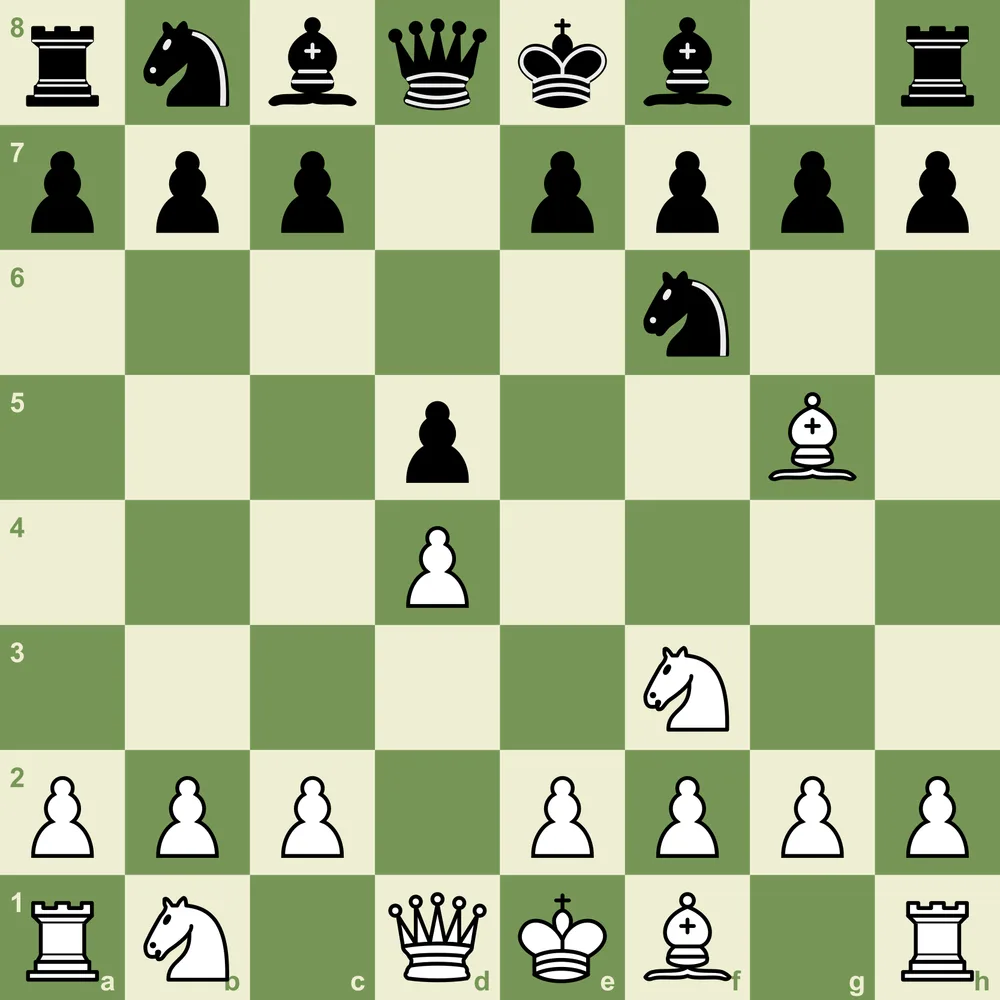
The Jobava London, named after Georgian grandmaster Baadur Jobava, is an aggressive twist on the traditional London System. Instead of the quiet Nf3 and Nbd2 development, White plays Nc3 early, often combining it with Bf4 and sometimes even f3 followed by e4. This creates a much more dynamic setup that can catch unprepared opponents off guard.
The Jobava London leads to unbalanced, tactical positions where White can push for an advantage from the very start. The knight on c3 supports the e4 advance and controls key central squares, while the Bf4 maintains the London's signature dark-square control. Rapport, Carlsen, and Nakamura have all employed this variation at the top level.
If you enjoy the simplicity of the London setup but want more aggressive options, the Jobava London is an excellent addition to your repertoire. It requires slightly more theoretical knowledge than the standard London, but the potential for early initiative makes it well worth the investment.
Common Mistakes to Avoid
1. Playing e3 before Bf4
This is the number one mistake London System beginners make. If you play e3 first, your dark-squared bishop gets trapped behind the pawn chain and becomes a passive piece for the rest of the game. Always develop the bishop to f4 before playing e3. This single rule will immediately improve your London System results.
2. Being too passive in the middlegame
The London gives you a solid position, but solid does not mean passive. Many players complete their setup and then have no idea what to do. Remember your middlegame plans: place a knight on e5, push for e4 to open the center, or launch a kingside attack with h3, g4, and Qf3. A solid opening advantage is wasted if you do not act on it.
3. Stubbornly keeping the bishop on f4 when it is under attack
When Black plays ...Nh5 targeting your bishop, do not try to keep it on f4 at all costs. Simply retreat to g3 or h2. The bishop is still active on these squares, especially Bh2 where it supports a future e4 push and maintains pressure along the b8-h2 diagonal. Wasting tempo to keep the bishop on f4 often leads to an awkward position.
Play the London System with Confidence
ChessHelper gives you real-time move suggestions and positional guidance when you play the London System online. Know the right plan in every position.
Try ChessHelper FreeUsed by thousands of London System players on Chess.com and Lichess
Related Openings
English Opening
Another flexible system opening beginning with 1.c4. Like the London, it avoids heavy theory and gives White a solid foundation. A natural companion for London System players who want variety.
Caro-Kann Defense
The Black-side counterpart to the London philosophy: a solid, reliable setup that sidesteps heavy theory. A natural pick for London players when they are the ones facing 1.e4.
London System: Frequently Asked Questions
The London System has a reputation for being dry, but this is largely a misconception. While the opening setup is systematic, the middlegame positions offer plenty of attacking chances, especially on the kingside. Players like Magnus Carlsen and Rapport have shown that the London can lead to dynamic, exciting games. The Jobava London variation in particular is anything but boring, featuring aggressive piece play and early tactical opportunities.
When Black plays ...Bf5 before you play Bf4, you face an important decision. The simplest approach is to play Bd3, offering to trade bishops. After ...Bxd3 Qxd3, White has a comfortable position with the queen actively placed. Alternatively, you can play Nh3 intending Nf4 to maintain your dark-squared bishop. Some players even switch to a different setup entirely. The key is not to panic - Black playing ...Bf5 does not refute the London System.
The London System is effective at every rating level, from absolute beginners to world championship contenders. For players rated under 1500, it is arguably the single best opening choice because you can focus on understanding middlegame plans rather than memorizing theory. For intermediate players (1500-2000), it remains a reliable weapon that lets you spend study time on other areas of your game. Even at the grandmaster level, the London sees regular use as a practical, solid choice.
Keep Improving
Opening Trainer
Practice openings interactively with real-time feedback as you play on chess.com and Lichess.
Move Analyzer
See the best move and a live evaluation for any position in your games.
Best Openings for White
The strongest first moves for White, grouped by style, with links to full guides.
Chess Opening Principles
Control the center, develop your pieces, and castle early — the ideas behind every good opening.