
What is the English Opening?
The English Opening begins with 1.c4, a move that immediately stakes a claim on the d5 square from the flank rather than occupying the center directly. Named after the English master Howard Staunton, who popularized it in the 1843 match against Saint-Amant, the English has become one of the most popular and respected openings at all levels of chess. It is the third most common first move after 1.e4 and 1.d4.
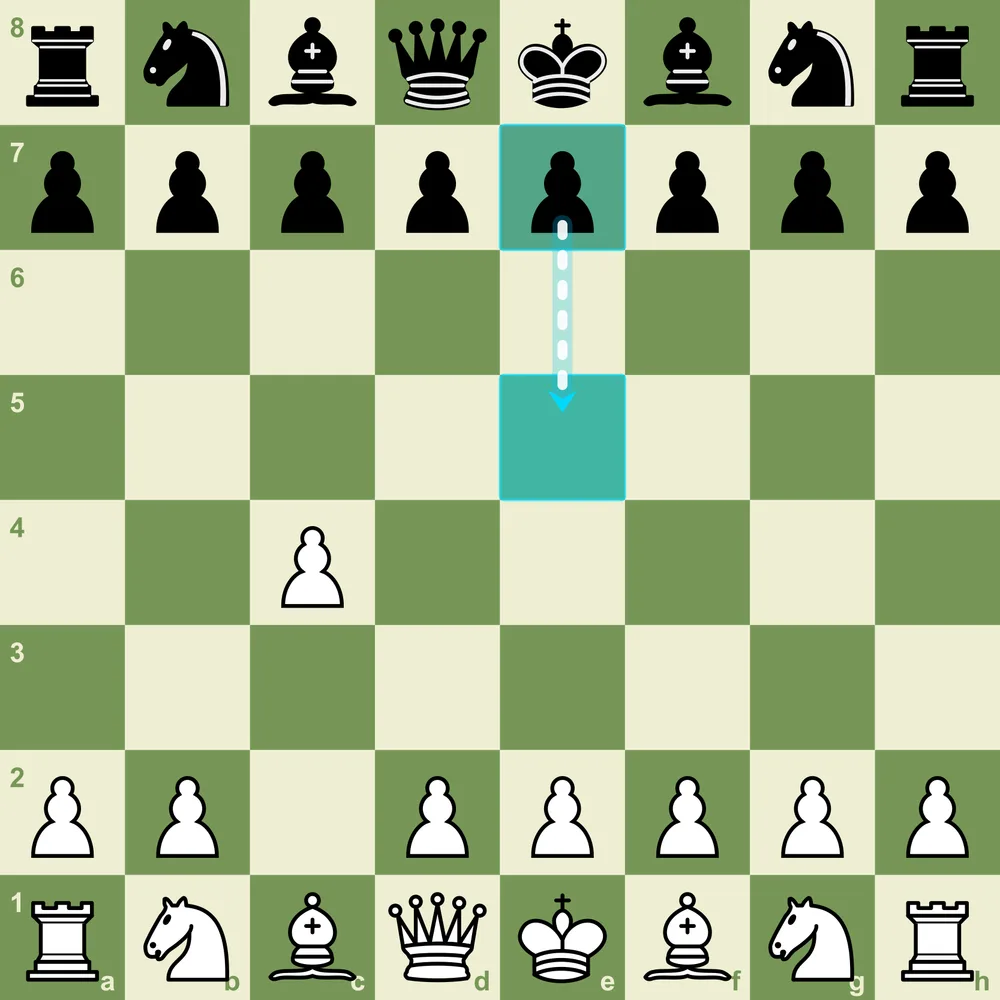
What makes the English truly special is its extraordinary flexibility. From the 1.c4 move order, White can transpose into the Queen's Gambit (by playing d4), the Catalan (with d4 and g3), the King's Indian Attack, or stay in purely English territory. This means your opponent must be prepared for a vast range of positions, giving you a practical advantage before a single piece is developed.
The English has been a favorite of world champions and elite grandmasters throughout history. Mikhail Botvinnik used it to great effect in his world championship matches. Garry Kasparov employed it as a surprise weapon in critical games. Magnus Carlsen has made it a regular part of his White repertoire, appreciating its ability to create fresh positions where deep understanding matters more than memorized theory. The English rewards players who think for themselves.
How to Play
With 1.c4, White controls the d5 square from the flank and keeps every option open. Unlike 1.e4 or 1.d4, which commit to a specific central setup early, 1.c4 allows White to decide on the pawn structure based on how Black responds. This makes the English an opening where understanding plans and piece placement is more important than memorizing long theoretical lines.
White's typical setup involves fianchettoing the king's bishop with g3 and Bg2, developing the knight to c3 to reinforce control of d5, and castling kingside. From there, White chooses between expanding in the center with d3 and e4, playing on the queenside with b3 and Bb2, or keeping a flexible position that adapts to Black's setup. The English often leads to rich middlegame positions where both sides have chances and the better strategist wins.
One of the biggest practical advantages of the English is that it can go in many different directions. If you see that your opponent has prepared for a specific system, you can steer the game into a completely different structure. This adaptability makes the English an excellent long-term opening investment: the more you play it, the more positions you learn to handle, and the harder you become to prepare against.
Main Variations
Symmetrical Variation (1...c5)
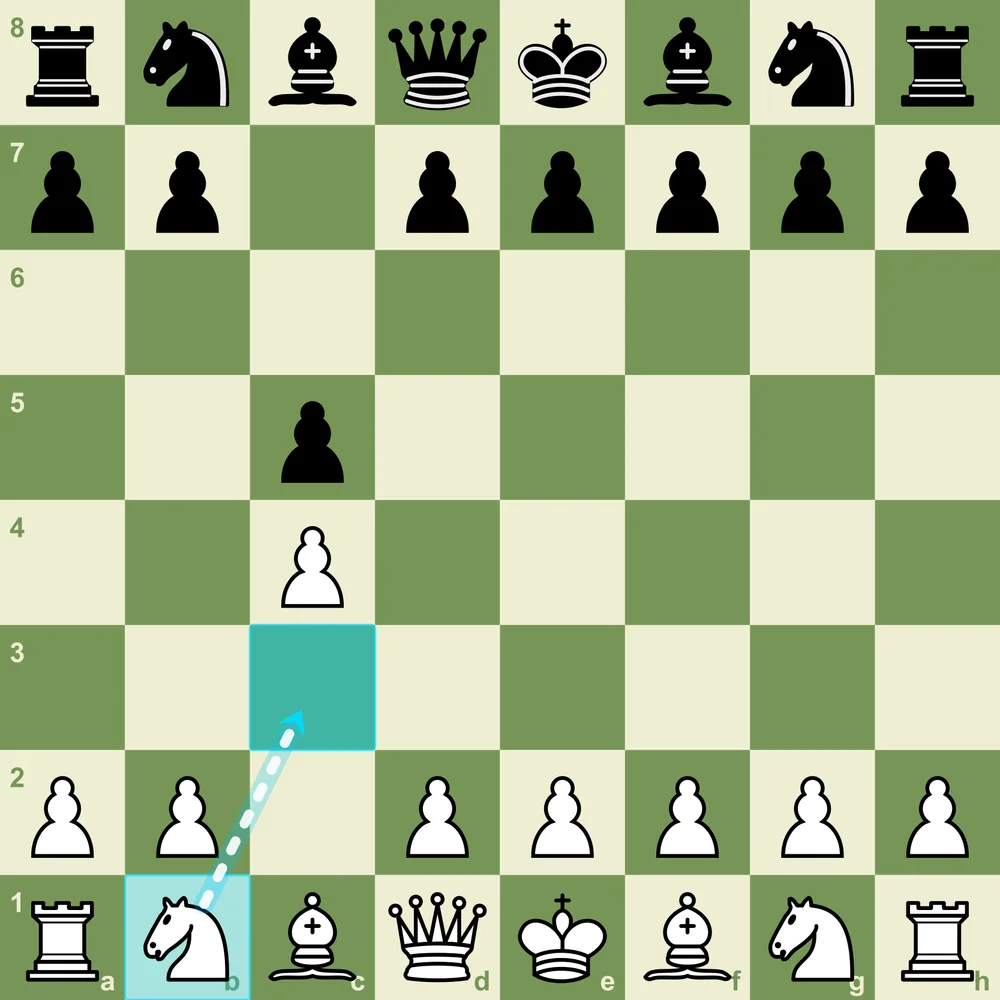
The Symmetrical English arises after 1.c4 c5, where both sides control the center from the flanks. This creates a balanced position where the fight for d4 and d5 becomes the central strategic theme. White typically plays Nc3, g3, Bg2, and Nf3, while Black mirrors with ...Nc6, ...g6, ...Bg7, and ...Nf6. The Symmetrical English often leads to complex maneuvering games where pawn breaks like d4 (for White) or ...d5 (for Black) become pivotal moments. Patience and understanding of piece placement are rewarded here over aggressive play.
Reversed Sicilian (1...e5)
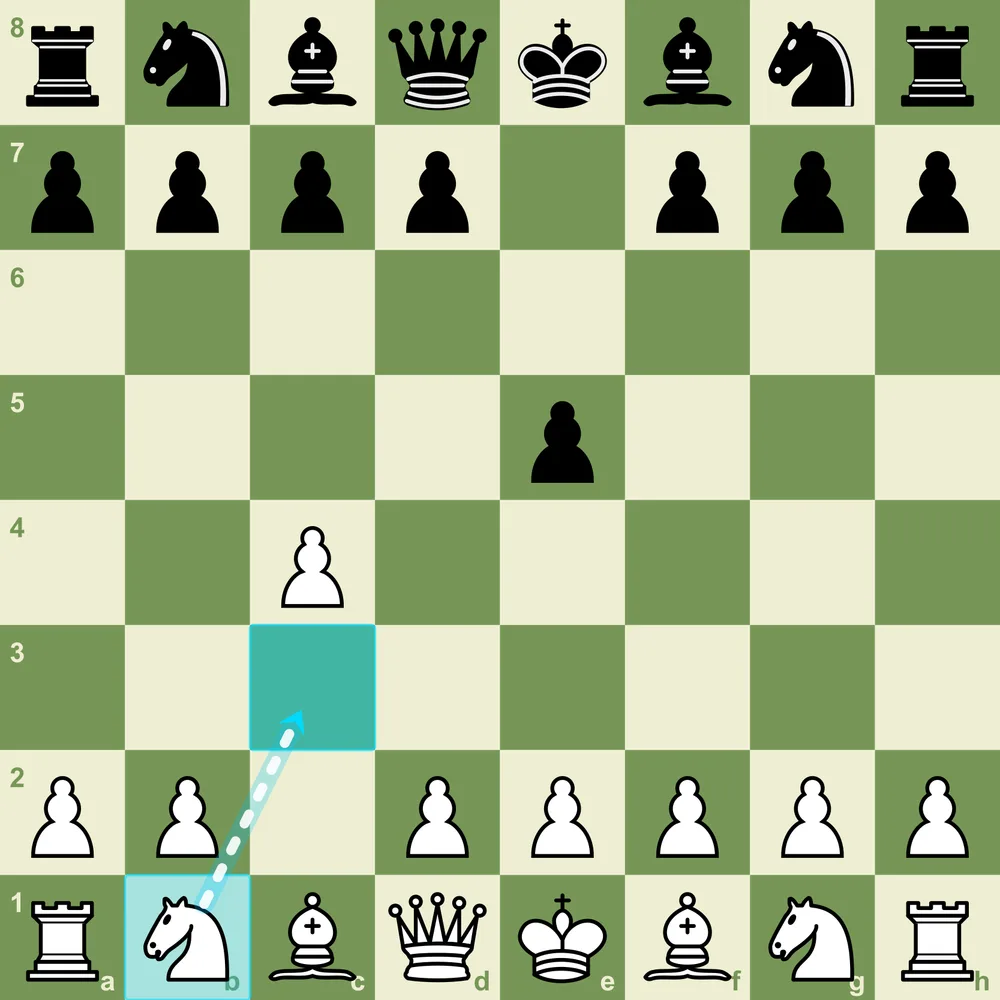
When Black plays 1.c4 e5, White gets what is essentially a Sicilian Defense with colors reversed and an extra tempo. This is one of the most attractive features of the English Opening. In a normal Sicilian, Black plays ...c5 and gets a perfectly good game; here, White plays c4 and gets the same structure with an additional move in hand. White typically continues with Nc3, g3, Bg2, and looks to expand in the center with d3 and e3 (or e4 when ready). The extra tempo can be used for a quicker development, an earlier d4 break, or simply a more comfortable version of typical Sicilian middlegame positions.
Four Knights Variation
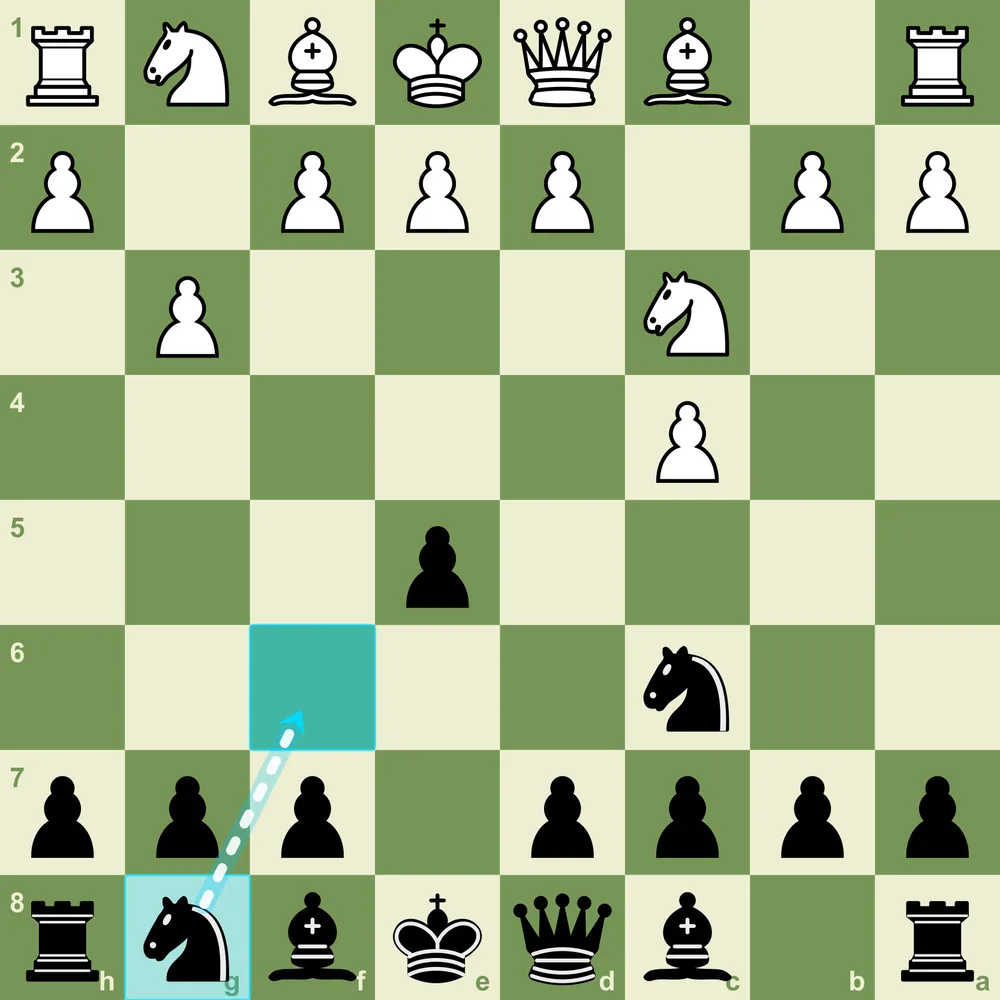
The Four Knights English arises after 1.c4 e5 2.Nc3 Nf6 3.Nf3 Nc6 (or similar move orders). This is one of the most solid and well-tested setups in the English, leading to sophisticated maneuvering chess. White typically plays g3, Bg2, 0-0, and d3, building a flexible formation. A common plan involves e3 followed by d4 to seize the center, or a slower approach with a2-a3 and Rb1 preparing a queenside expansion with b4. The Four Knights is ideal for players who enjoy deep strategic positions where piece maneuvering and subtle improvements matter more than sharp tactical blows.
King's Indian Setup (1...Nf6 2.Nc3 g6)
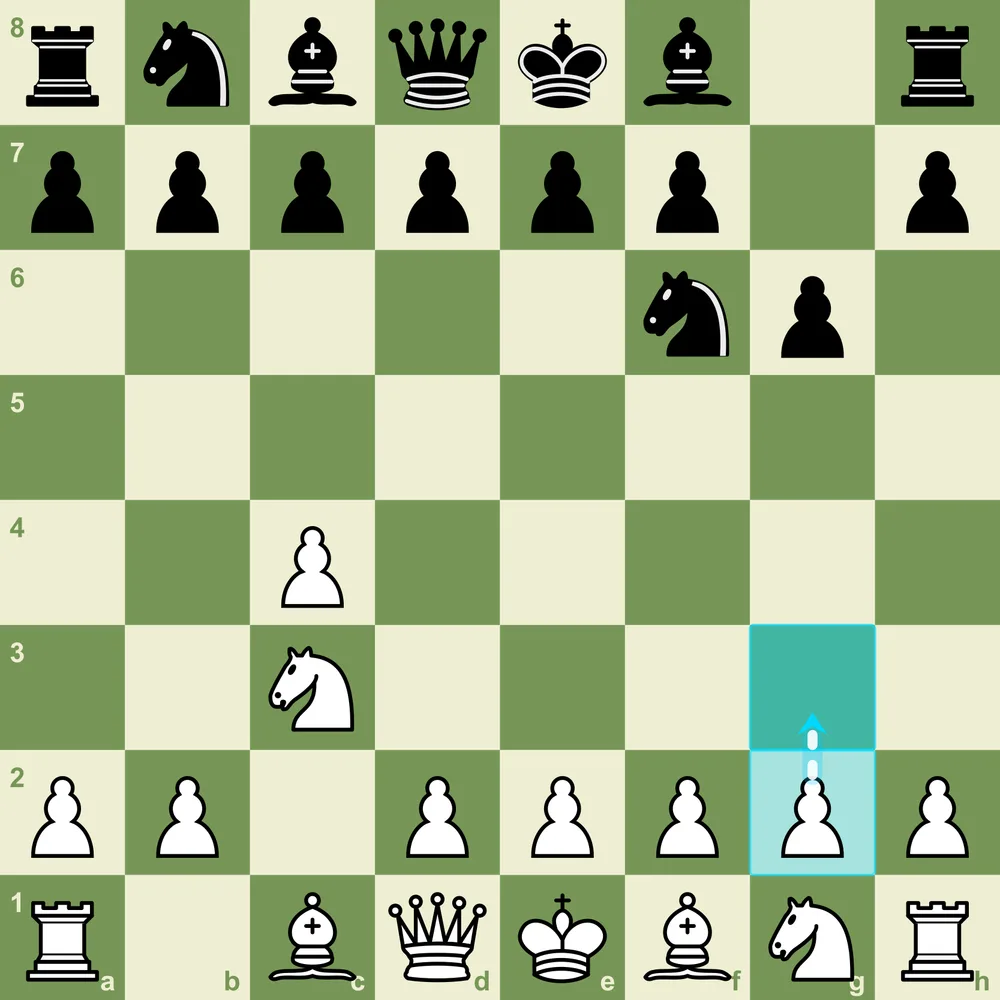
When Black opts for a King's Indian setup with 1.c4 Nf6 followed by ...g6 and ...Bg7, the resulting positions closely resemble the King's Indian Defense but with White having more flexibility about when (or whether) to play d4. White can choose a pure English approach with g3, Bg2, and e4 (the Botvinnik System), or transpose to a standard King's Indian with d4. This flexibility is a key advantage of the English move order: you can study your opponent's preferences and steer the game toward positions where you are more comfortable. The positions are strategically rich with both sides having clear plans.
Against 1...d5
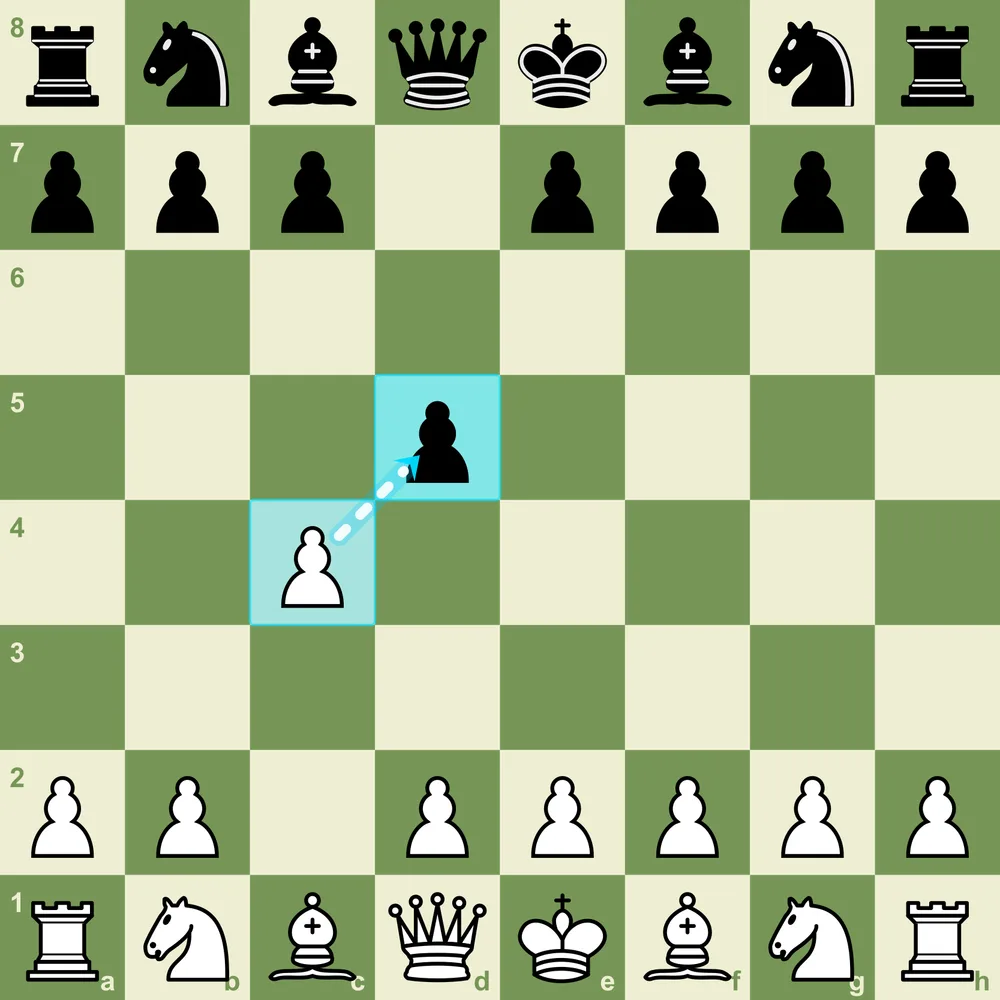
After 1.c4 d5, Black immediately challenges White's control of d5. White can capture with 2.cxd5 Qxd5 3.Nc3 (gaining a tempo on the queen), or play 2.Nc3 and allow the central tension to remain. If Black plays 2...dxc4, White gets easy development similar to a Queen's Gambit Accepted. If Black plays 2...e6 or 2...Nf6, the game can easily transpose into a Queen's Gambit Declined after a subsequent d4. This line demonstrates the English's transposition power: by starting with 1.c4, you retain the ability to enter Queen's Gambit positions on your own terms, choosing the exact moment to play d4.
Transposition Possibilities
One of the English Opening's greatest strengths is its ability to transpose into other well-known openings. This gives White enormous practical flexibility and can catch opponents off guard. Here are the most important transpositions to know:
Queen's Gambit Declined
After 1.c4 e6 2.Nc3 d5 3.d4 or 1.c4 Nf6 2.Nc3 e6 3.d4 d5, you reach a standard Queen's Gambit Declined position. This is useful because you can choose to enter the QGD only when you know your opponent plays it, while avoiding it against opponents who have prepared a specific anti-QGD system.
Catalan Opening
By playing 1.c4 followed by g3, Bg2, and d4, White can reach a Catalan setup. The English move order can be advantageous because it avoids certain Black systems that are comfortable against 1.d4 but less effective against 1.c4. The fianchettoed bishop on g2 is a powerful piece in these structures.
Reti Opening
The line 1.c4 Nf6 2.Nf3 (or 1.Nf3 followed by c4) leads to a Reti Opening. These hypermodern positions focus on controlling the center from a distance before occupying it. The Reti and English are closely related and share many strategic ideas, making them natural companions in a repertoire.
Key Takeaway
The English is not just one opening; it is a gateway to an entire family of systems. By mastering 1.c4, you gain the ability to steer the game into Queen's Gambit, Catalan, Reti, or pure English positions depending on what your opponent plays and what you feel like playing. This adaptability is the English's greatest weapon.
Pros and Cons
Advantages
- •Extremely flexible: can transpose into Queen's Gambit, Catalan, Reti, or stay independent
- •Less theory-dependent than 1.e4 or 1.d4, rewarding understanding over memorization
- •Difficult for Black to prepare against since the positions can go in many directions
- •Excellent long-term investment: the more you play it, the better you understand the positions
- •Reversed Sicilian lines give White a Sicilian structure with an extra tempo
Disadvantages
- •Does not fight for an immediate opening advantage the way 1.e4 or 1.d4 can
- •Positions can be slow-developing, which may frustrate players who prefer sharp tactical play
- •Black has many viable responses, requiring White to know a wide range of setups
- •The Symmetrical Variation can lead to drawish positions if White is not ambitious
- •Transposition knowledge is essential; without it, you may end up in unfamiliar territory
Common Mistakes
1. Playing d4 too early without preparation
A common mistake is pushing d4 prematurely, before the position is ready for it. The beauty of the English is that you do not have to commit to d4 at all. Playing d4 too early can lead to an inferior version of a Queen's Gambit where your pieces are not ideally placed. Instead, focus on completing your development with Nc3, g3, Bg2, and 0-0 first. Play d4 only when it gives you a concrete advantage, or stick with d3 and e4 for a purely English middlegame.
2. Neglecting the d5 square
The d5 square is the most important outpost in many English Opening positions. If Black manages to establish a piece or pawn on d5 without White being able to challenge it, the English can become passive. Always keep control of d5 in mind. Use your c4-pawn, Nc3, and Bg2 to exert maximum pressure on this square. If Black plays ...d5, consider whether capturing (cxd5) creates a favorable structure or whether maintaining the tension serves you better.
3. Being too passive and letting Black equalize easily
While the English is a flexible opening, flexibility does not mean passivity. Some players make the mistake of shuffling pieces around without a clear plan, allowing Black to equalize comfortably. You need to have concrete goals: fight for d5, prepare a timely e4 or d4, create queenside pressure with b4, or launch a kingside attack when appropriate. The English gives you options, but you still need to choose one and execute it with purpose.
Master the English Opening with ChessHelper
Practice English Opening positions at your rating level. Learn the transpositions, understand the strategic plans, and become a more versatile player.
Start Practicing FreeJoin 10,000+ chess players improving their openings
Related Openings
London System
The London System (1.d4 followed by Bf4) shares the English's philosophy of solid, flexible play for White. While the London is more structured with a fixed piece setup, the English offers more variety. Together, they form a versatile White repertoire: use the London against opponents who thrive in complex positions, and the English against those who rely on prepared theory.
Learn moreRuy Lopez
The Ruy Lopez (1.e4 e5 2.Nf3 Nc6 3.Bb5) is the classical alternative for players who prefer 1.e4 over 1.c4. Where the English emphasizes flexibility and flank play, the Ruy Lopez focuses on direct central control and piece pressure. Many well-rounded players keep both in their repertoire: the English for positional battles and the Ruy Lopez for classical middlegame fights.
Learn moreFrequently Asked Questions About the English Opening
Not at all. While the English has a reputation for being positional, it regularly produces sharp, tactical games. The Reversed Sicilian lines (after 1...e5) can lead to aggressive kingside attacks. The Four Knights Variation often features complex middlegame maneuvering with real attacking chances. Garry Kasparov, one of the most aggressive world champions in history, played the English Opening regularly throughout his career. The opening is flexible enough to accommodate any style of play.
Both are excellent choices for White, and the English actually complements the Queen's Gambit perfectly. If you play 1.d4, learning 1.c4 gives you an alternative first move that can transpose into many of your existing Queen's Gambit lines (after 1.c4 e6 2.d4 or 1.c4 Nf6 2.d4). If you are starting from scratch, the English may be slightly easier to learn because the typical plans (fianchetto the bishop, control d5, play in the center) are more intuitive and less theory-heavy than the main Queen's Gambit lines.
When Black plays 1...e5 against the English, you get a Reversed Sicilian with an extra tempo. This is actually one of the best outcomes for White. You can play 2.Nc3 followed by g3, Bg2, and gradually build up pressure. The extra move means you have more flexibility than Black typically gets in a normal Sicilian. Common plans include a kingside fianchetto, controlling d5, and expanding in the center with d3 and e4 when the time is right. Many English Opening specialists consider 1...e5 the most comfortable line to play against.