
Ruy Lopez (Spanish Opening)
One of the oldest and most respected chess openings in history. Master the strategic plans, key variations, and subtle positional ideas that have been tested at the highest level for over 500 years.
What is the Ruy Lopez?
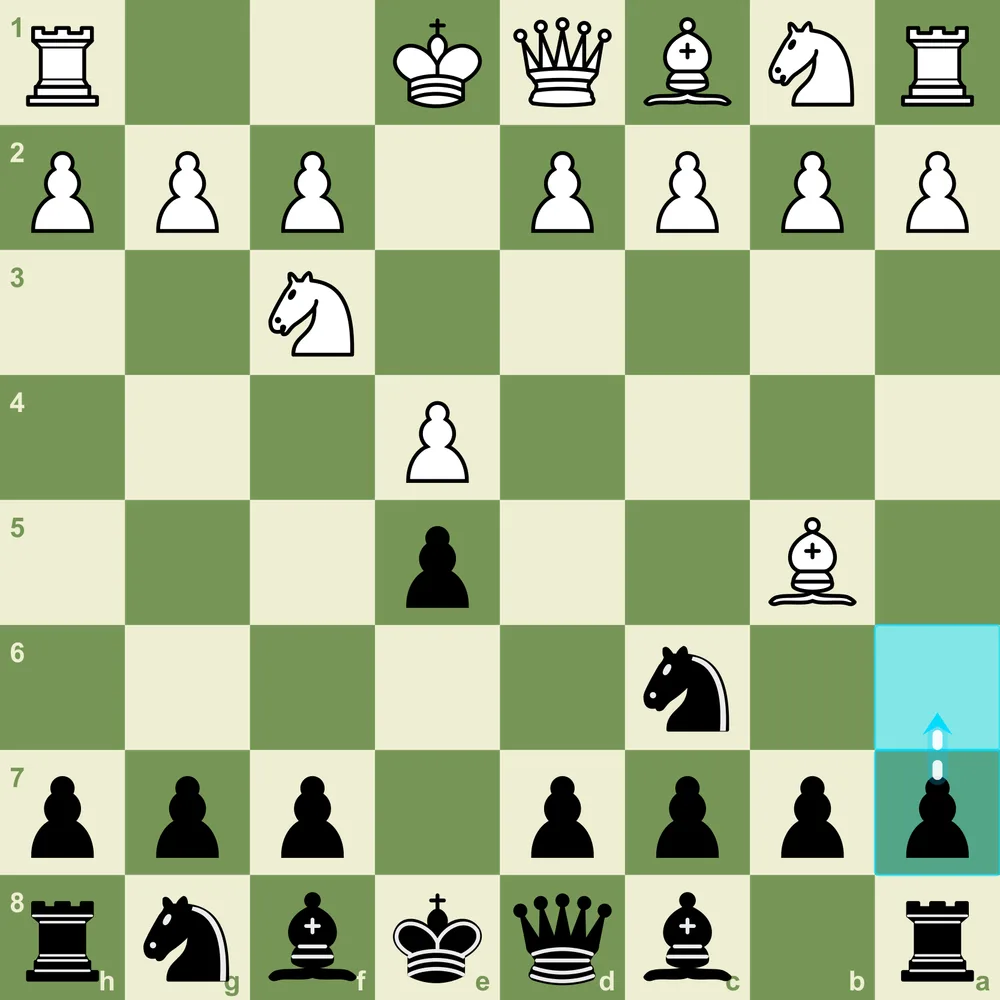
The Ruy Lopez, also known as the Spanish Opening, begins with the moves 1.e4 e5 2.Nf3 Nc6 3.Bb5. It is named after the Spanish priest Ruy López de Segura, who analyzed the opening extensively in his 1561 treatise Libro de la invención liberal y arte del juego del axedrez. Despite being over 500 years old, the Ruy Lopez remains one of the most popular and deeply studied openings in chess at every level of play.
The key idea behind 3.Bb5 is to put pressure on the knight on c6, which is the primary defender of Black's e5-pawn. While White does not immediately threaten to win the pawn (since after 4.Bxc6 dxc6 5.Nxe5, Black recovers the pawn with 5...Qd4), the bishop on b5 creates a long-term strategic tension. White aims to build a strong center, develop harmoniously, and gradually increase pressure on Black's position.
The Ruy Lopez has been a cornerstone of the repertoire of virtually every World Champion. Garry Kasparov was known for his deep preparation in the Ruy Lopez, often reaching move 25 or beyond in his home analysis. Fabiano Caruana has used it as his primary weapon with White, and Magnus Carlsen has employed it regularly throughout his career. The positions that arise reward patience, strategic understanding, and the ability to navigate complex middlegames.
How to Play the Ruy Lopez
The logic behind 3.Bb5 is both subtle and profound. Unlike the Italian Game's 3.Bc4, which targets the f7-square directly, the Ruy Lopez bishop puts indirect pressure on Black's center by threatening the knight on c6. This knight is the main protector of the e5-pawn, and by targeting it, White creates a latent threat that influences Black's entire setup.
White's typical plan involves castling kingside, building a strong pawn center with d4 at the right moment, and gradually expanding. The bishop often retreats to a4 and then to c2 or b3, where it supports central operations from a safe diagonal. White frequently follows up with c3 (to prepare d4), Re1 (reinforcing the e4-pawn), and Nbd2 (rerouting the knight to better squares).
Black, in turn, must decide how to address the pin on the knight. Each response leads to a fundamentally different type of position, which is why the Ruy Lopez has spawned so many distinct variations, each with decades of theory behind them.
Main Variations
Morphy Defense (3...a6)
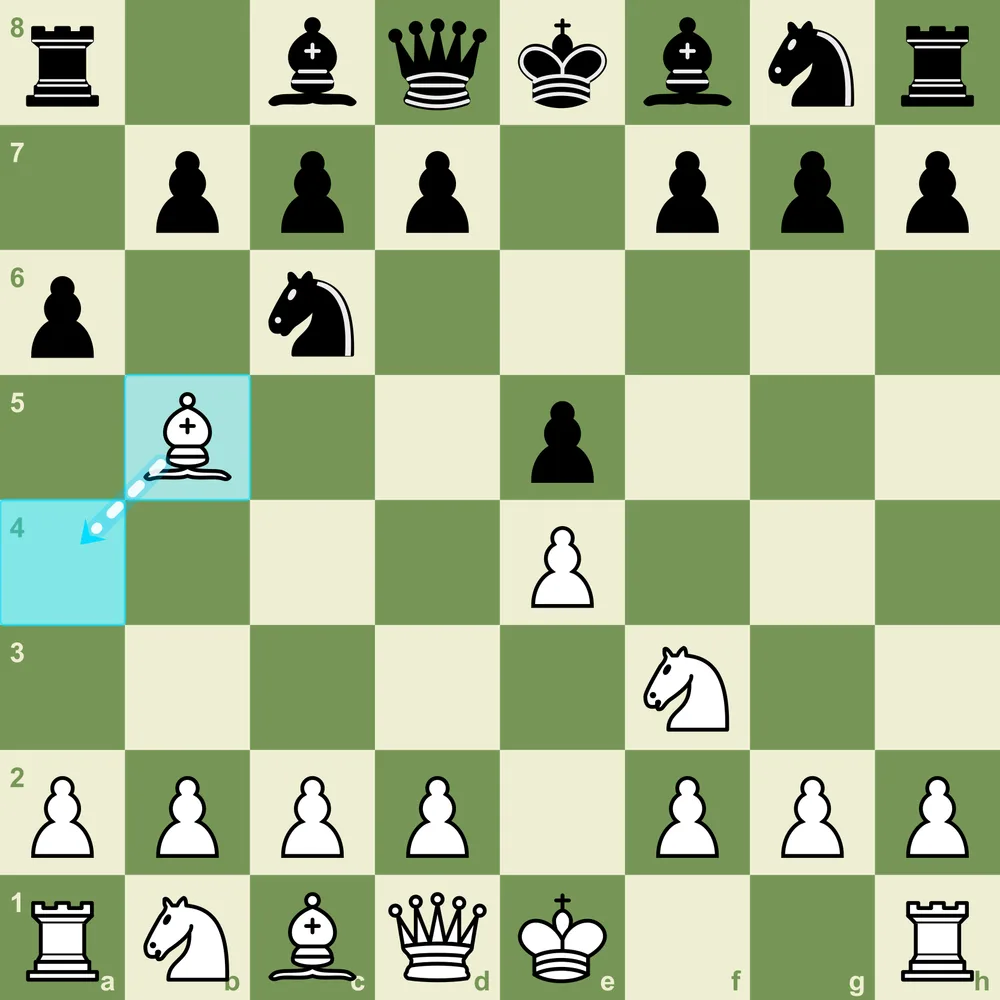
The Morphy Defense is by far the most popular response to the Ruy Lopez and forms the backbone of modern opening theory. By playing 3...a6, Black immediately asks the bishop what it intends to do. White must decide between retreating to a4 (maintaining the pin while allowing Black the option of ...b5 later), capturing on c6 (the Exchange Variation), or in rare cases retreating to c4 or e2.
After 4.Ba4, Black has tremendous flexibility. The main lines continue with 4...Nf6 5.O-O, and here Black faces another critical decision point that branches into the Closed Variation, the Open Variation, the Marshall Attack, and several other systems. This is where the Ruy Lopez truly comes alive.
Berlin Defense (3...Nf6)
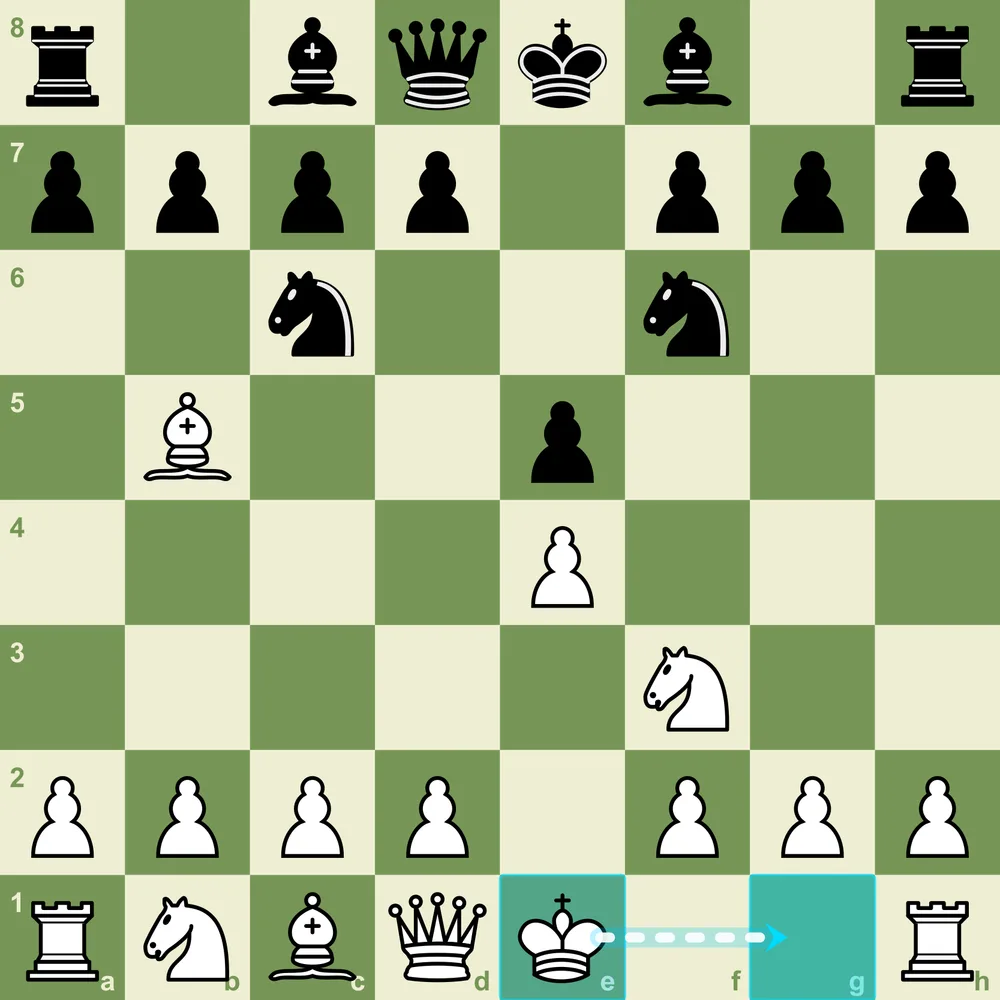
The Berlin Defense rose to prominence after Vladimir Kramnik used it to defeat Garry Kasparov in their 2000 World Championship match. After 4.O-O Nxe4 5.d4 Nd6 6.Bxc6 dxc6 7.dxe5 Nf5 8.Qxd8+ Kxd8, an unusual endgame arises where Black has given up castling rights but possesses the bishop pair and a solid pawn structure.
This so-called "Berlin Wall" endgame has proven extremely difficult for White to crack, even with the world's best players. Magnus Carlsen has used the Berlin as a reliable drawing weapon when needed. While the positions may look dry, they require precise technique and deep understanding from both sides.
Marshall Attack
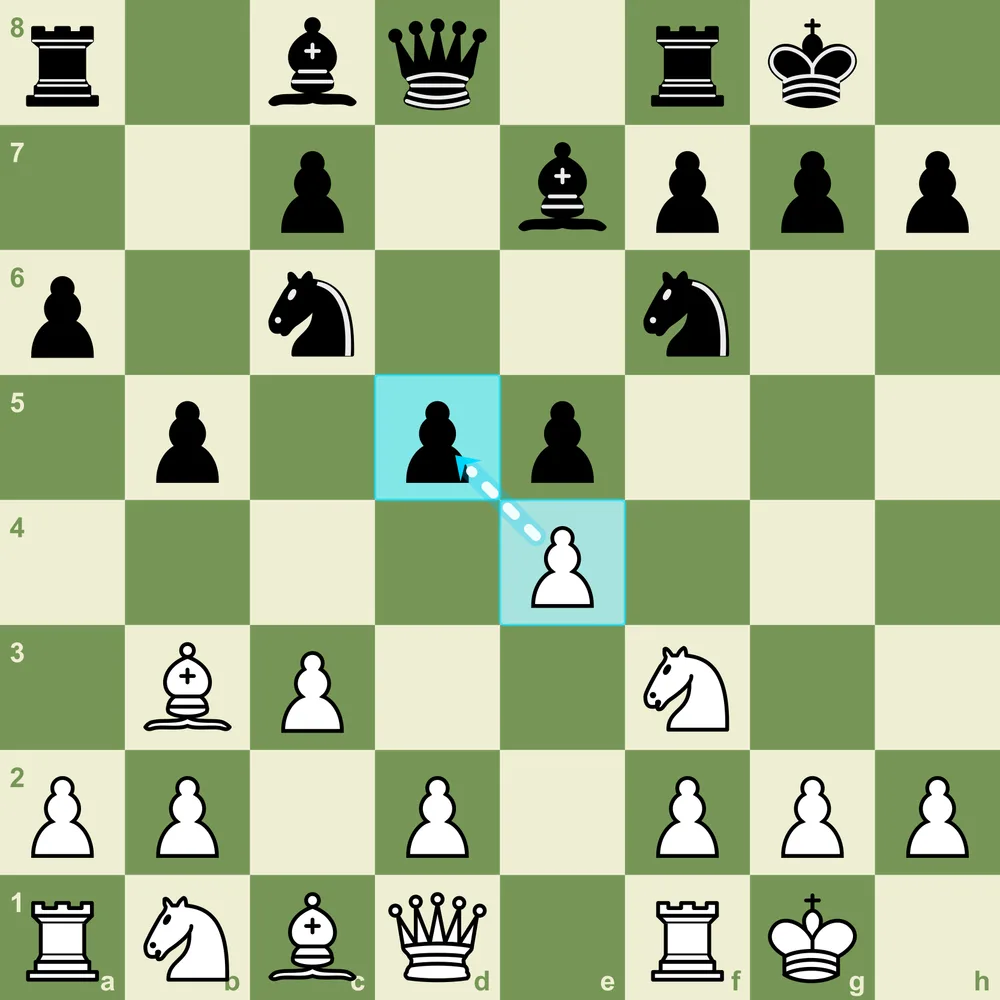
The Marshall Attack is one of the most dramatic gambits in all of chess. Arising after 1.e4 e5 2.Nf3 Nc6 3.Bb5 a6 4.Ba4 Nf6 5.O-O Be7 6.Re1 b5 7.Bb3 O-O 8.c3 d5, Black sacrifices a pawn to unleash a powerful attack against White's king. First played by Frank Marshall against Jose Raul Capablanca in 1918, legend has it that Marshall saved this preparation for years before deploying it.
The resulting positions are exceptionally sharp and require both sides to know their theory well. Black generates tremendous activity with moves like ...Bd6, ...Qh4, and ...Bg4, creating threats against the white king that can be lethal if White is unprepared. Many top players avoid the Marshall entirely by deviating with the Anti-Marshall (8.a4 or 8.h3).
Exchange Variation (4.Bxc6)
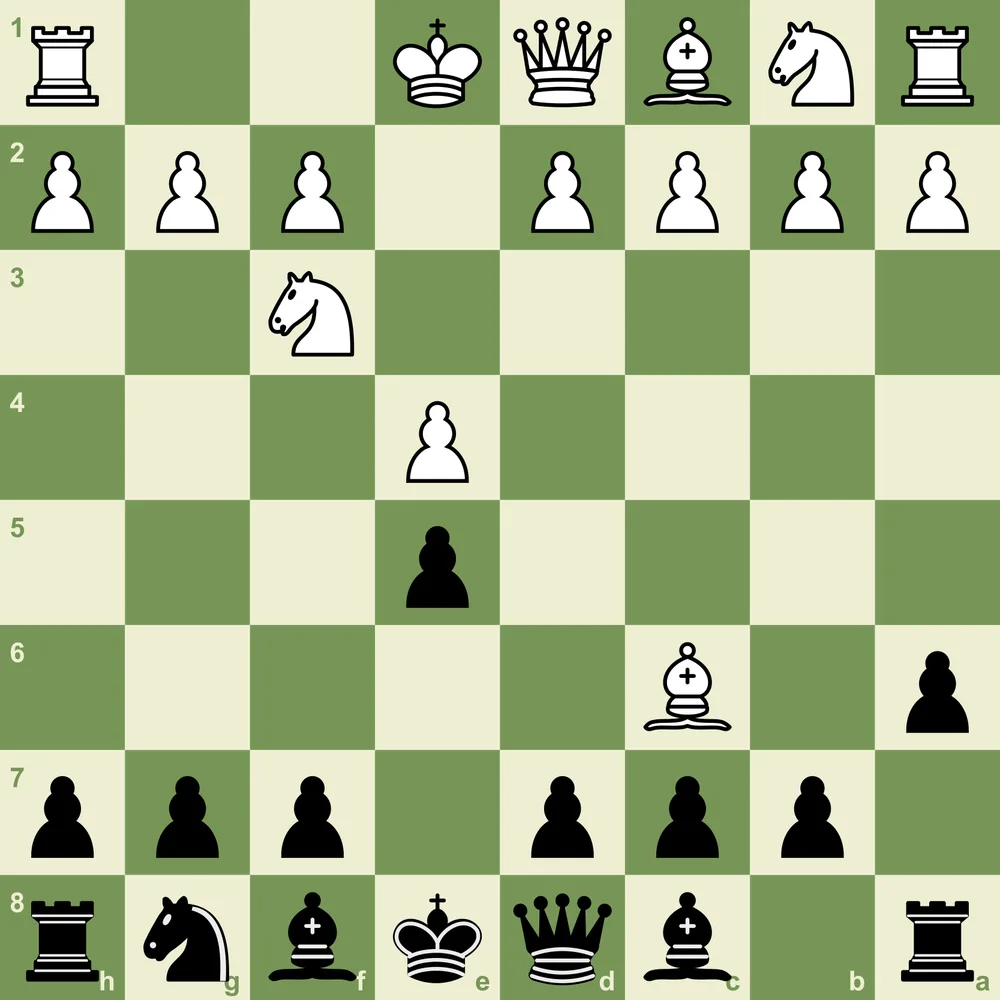
In the Exchange Variation, White captures on c6 immediately with 4.Bxc6 dxc6. This doubles Black's pawns on the c-file and gives White a structural advantage in the endgame, where the superior pawn structure (four versus three on the kingside) can be decisive. Bobby Fischer was a notable proponent of this line, using it to win several important games.
However, Black receives compensation in the form of the bishop pair and active piece play. Black often plays ...f6 and ...Bg4 to create counterplay, and the resulting middlegames can be quite dynamic despite the structural simplicity. This variation is an excellent choice for players who enjoy clear strategic plans.
Closed Variation
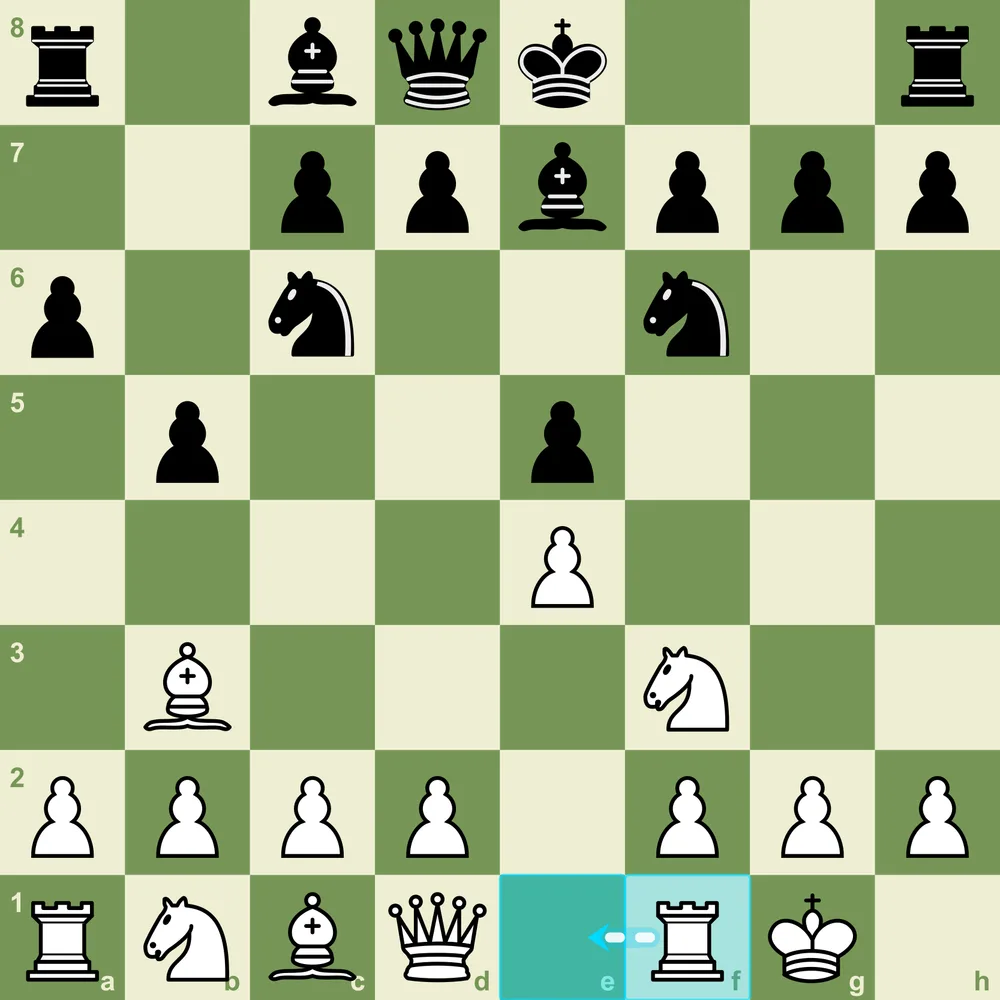
The Closed Variation is the main line of the Ruy Lopez and arguably the most important position in all of opening theory. After 3...a6 4.Ba4 Nf6 5.O-O Be7, White typically continues with 6.Re1 b5 7.Bb3 d6 8.c3 O-O, reaching a position that has been tested in thousands of grandmaster games. The play is deep, strategic, and requires both sides to understand long-term plans.
White aims to execute d4 at the optimal moment, often after preparation with h3, Nbd2, and Bc2. Black counters with plans involving ...Na5, ...c5, and ...Nc6-d4, fighting for control of the center. The Breyer Variation (9...Nb8), the Chigorin Variation (9...Na5), and the Zaitsev Variation (9...Bb7) are the three pillars of Closed Ruy Lopez theory, each leading to extraordinarily rich middlegame positions.
Pros and Cons
Advantages
- ●Provides long-term strategic pressure with no early commitments
- ●Extremely well-tested at the highest level of play
- ●Flexible enough to lead to both tactical and positional games
- ●Teaches fundamental principles of piece coordination and central control
- ●Wide variety of systems to suit different playing styles
Disadvantages
- ●Requires significant theoretical knowledge to play well
- ●Many variations where Black can equalize with precise play
- ●The Berlin Defense can lead to dry, equal endgames
- ●Advantages are often small and require patience to convert
- ●Must be prepared against multiple Black defenses (Morphy, Berlin, Marshall, etc.)
Who Should Play the Ruy Lopez?
The Ruy Lopez is ideal for players who enjoy strategic, long-term play and are willing to invest time in studying opening theory. If you prefer positions where small advantages accumulate over many moves rather than quick tactical skirmishes, the Ruy Lopez will suit your style perfectly.
This opening is particularly well-suited for players rated approximately 1200 and above who want to build a serious, professional-level repertoire. The patterns and ideas you learn in the Ruy Lopez, such as maneuvering pieces to optimal squares, timing pawn breaks, and managing space advantages, transfer directly to many other openings and middlegame positions.
Players who enjoy deep preparation will find the Ruy Lopez especially rewarding. With theory extending well beyond move 20 in many lines, there are endless opportunities to surprise your opponents with well-prepared novelties. However, even without memorizing extensive theory, understanding the key plans and piece placements will take you far.
Common Mistakes to Avoid
1. Capturing on c6 too early without a plan
Many club players play Bxc6 automatically without understanding the strategic implications. The Exchange Variation requires a specific endgame plan focused on the kingside pawn majority. Without this understanding, you give Black the bishop pair for free and may find yourself worse in the middlegame.
2. Playing d4 prematurely
Pushing d4 before proper preparation (typically before c3, Re1, and developing the queenside) can backfire. Black may respond with ...exd4 cxd4, and the isolated d4-pawn or open c-file may give Black counterplay. Timing the d4 advance correctly is one of the most important skills in the Ruy Lopez.
3. Ignoring Black's queenside counterplay
In many Ruy Lopez positions, Black expands on the queenside with ...b5, ...Na5, and ...c5. White players who focus exclusively on their own plans without monitoring Black's queenside activity often find themselves under serious pressure. Always keep an eye on Black's plan to challenge the center with ...c5 or ...d5.
4. Underestimating the Marshall Attack
Walking into the Marshall Attack without preparation is one of the fastest ways to lose a game. If you play 8.c3 in the Closed Variation, you must be ready for 8...d5. Many strong players choose Anti-Marshall lines (8.h3 or 8.a4) specifically to avoid the complications. Know your anti-Marshall before sitting down at the board.
Master the Ruy Lopez with ChessHelper
Get real-time analysis and move suggestions when you encounter the Ruy Lopez in your games. Understand the plans, avoid the traps, and play with confidence.
Try ChessHelper FreeJoin thousands of chess players improving their opening play
Related Openings
Italian Game
Another classical 1.e4 e5 opening where White develops the bishop to c4 instead of b5. More tactical and direct than the Ruy Lopez, with lines like the Giuoco Piano and the Evans Gambit.
Sicilian Defense
The most popular reply to 1.e4 you will meet in your games. Learning the Sicilian Defense and its sharp, unbalanced positions prepares Ruy Lopez players for their most common opponent.
Ruy Lopez: Frequently Asked Questions
The Ruy Lopez is suitable for intermediate players and above. While beginners can learn the opening moves, fully understanding the strategic plans requires some positional knowledge. If you are just starting out, the Italian Game (1.e4 e5 2.Nf3 Nc6 3.Bc4) may be more intuitive. However, learning the Ruy Lopez early will build strong positional habits that pay off as you improve.
The most popular and reliable response is the Morphy Defense (3...a6), which challenges the bishop immediately and gives Black flexible plans. The Berlin Defense (3...Nf6) is considered the most solid option and is a favorite at the top level. Other choices include the Classical Defense (3...Bc5), the Schliemann Gambit (3...f5) for aggressive players, and the Steinitz Defense (3...d6) for those who prefer a solid but passive setup.
The Ruy Lopez remains popular because it offers White long-term strategic pressure without committing to an early tactical confrontation. The positions that arise are rich, complex, and offer both sides meaningful choices at every stage. Unlike some openings that lead to forced sequences, the Ruy Lopez rewards deep understanding, creativity, and preparation, which is exactly what top-level players look for in an opening.
Keep Improving
Opening Trainer
Practice openings interactively with real-time feedback as you play on chess.com and Lichess.
Move Analyzer
See the best move and a live evaluation for any position in your games.
Best Openings for White
The strongest first moves for White, grouped by style, with links to full guides.
Best Openings for Intermediate
More ambitious systems to step up your repertoire as you improve.