
What is the King's Indian Defense?
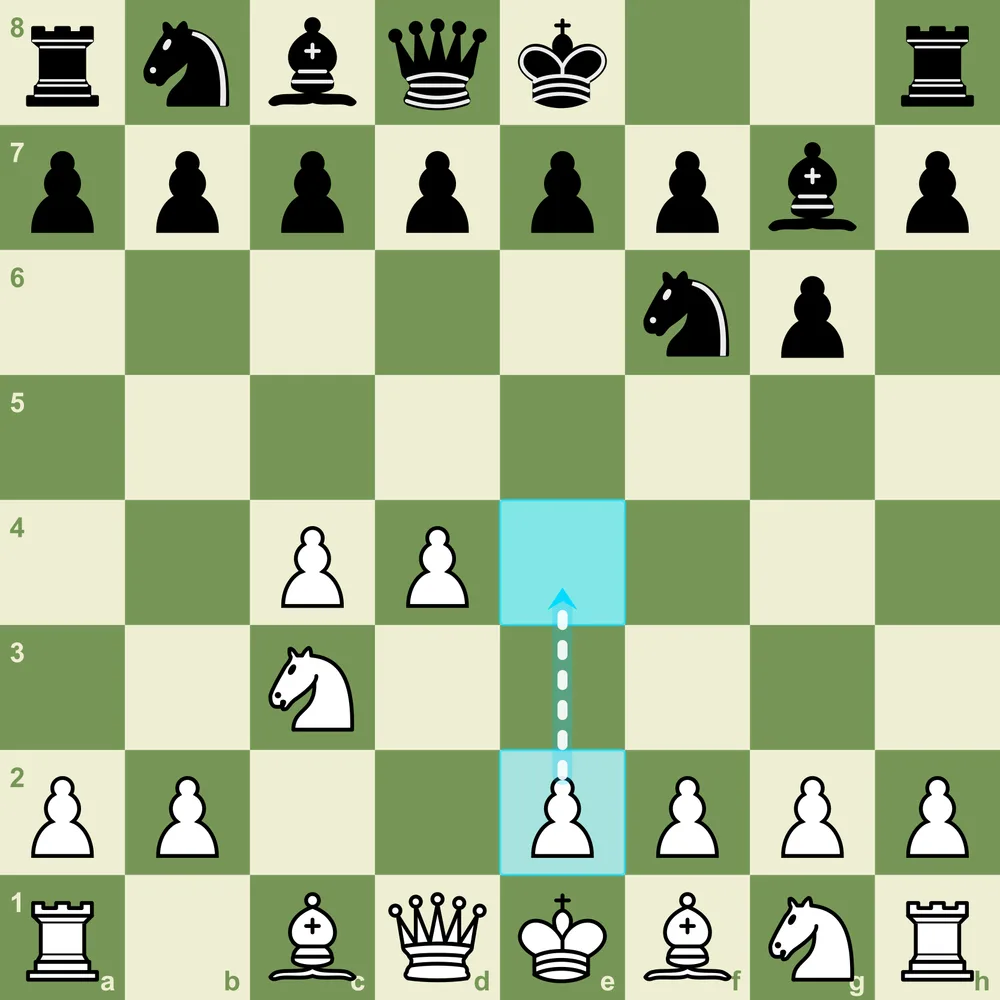
The King's Indian Defense arises after 1.d4 Nf6 2.c4 g6 3.Nc3 Bg7. It is a hypermodern opening - Black deliberately allows White to build an imposing pawn center with pawns on c4, d4, and often e4, with the bold plan of undermining and attacking it later. The fianchettoed bishop on g7 is the cornerstone of Black's position, exerting long-range pressure on the entire long diagonal from h8 to a1.
The defining feature of the King's Indian is Black's kingside pawn storm. After the typical setup with ...d6, ...e5, and ...0-0, Black launches a ferocious attack with ...f5, ...f4, ...g5, and sometimes ...h5, hurling pawns at White's king while sacrificing material for the initiative. This kingside attack is one of the most thrilling and visually spectacular strategies in chess, creating positions where both sides are racing to deliver checkmate first.
The King's Indian has been the weapon of choice for some of history's greatest fighters. Garry Kasparov, widely considered the greatest KID practitioner ever, used it to devastating effect throughout his career, including legendary games against Karpov. Bobby Fischer employed it during his rise to the World Championship. In modern chess, Hikaru Nakamura and Teimour Radjabov keep the flame alive, proving that the King's Indian remains one of the most potent weapons in Black's arsenal.
How to Play
The King's Indian is built on a hypermodern philosophy: rather than fighting for the center with pawns from the start, Black develops pieces first and allows White to occupy the center, planning to attack it later when the time is right. The fianchetto bishop on g7 is the soul of the position - even when it appears blocked by Black's own pawns on d6 and e5, it exerts latent energy that can be unleashed when the center opens or the pawn structure shifts.
Black's typical setup involves ...d6, ...Nbd7 (or ...Nc6), ...e5, and ...0-0. After White plays d5, closing the center, the real battle begins. The position splits into two distinct theaters of war: Black attacks on the kingside with ...f5, ...f4, ...g5, ...Nh5, and ...Rf7-g7, while White expands on the queenside with c5, b4, and a4, trying to break through before Black's attack arrives. This creates one of the most dynamic and tense structures in chess, where both players are essentially playing different games on opposite sides of the board.
The key to playing the King's Indian well is understanding that tempi matter enormously. Every move spent on defense is a move not spent on attack. Black must be bold and committed to the kingside assault - half-measures lead to a position where White's queenside play arrives first. This is what makes the King's Indian both exciting and demanding: it requires courage, calculation, and a willingness to burn the bridges behind you.
Main Variations
Classical Variation (6...e5)
The heart and soul of the King's Indian Defense. After 1.d4 Nf6 2.c4 g6 3.Nc3 Bg7 4.e4 d6 5.Nf3 O-O 6.Be2 e5, Black stakes a claim in the center and sets the stage for the famous middlegame battle. When White plays 7.d5, closing the center, the race begins in earnest: Black attacks on the kingside with ...f5, ...f4, ...g5, and ...Nh5, while White pushes forward on the queenside with c5, a4, b4, and Nb5.
The Classical is the most theoretically important and deeply studied line. White has several critical responses including the Bayonet Attack (9.b4), the Petrosian System (7.d5 followed by postponing Nf3), and the classical main line with Be3 and d5. Each creates unique challenges, but the fundamental character remains the same: a thrilling race where the first player to break through wins. Kasparov's legendary games in this variation are essential study material.
Sämisch Variation (f3)
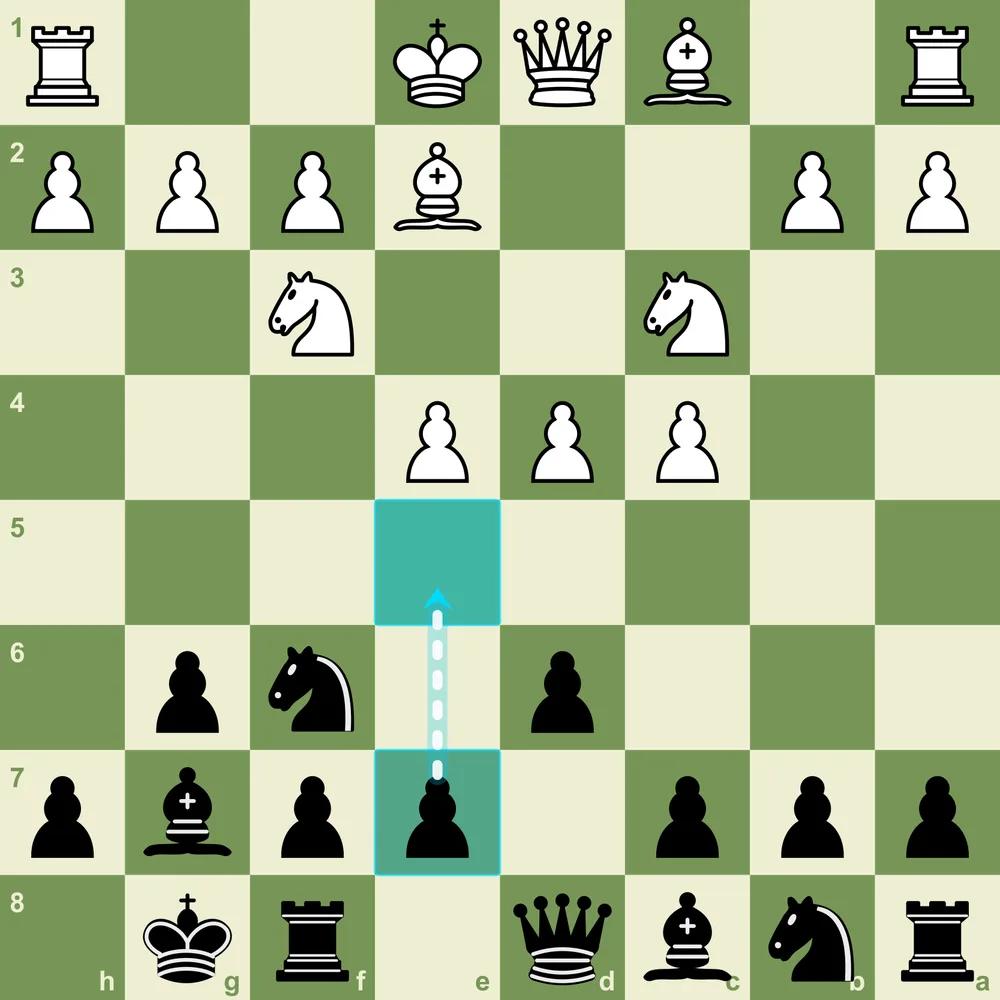
Named after Friedrich Sämisch, this aggressive system features f2-f3, reinforcing the e4 pawn and preparing a massive pawn center. A typical move order is 1.d4 Nf6 2.c4 g6 3.Nc3 Bg7 4.e4 d6 5.f3. White's plan is to play Be3, Qd2, and sometimes O-O-O, creating a fortress in the center before expanding on either wing.
Against the Sämisch, Black has two main approaches. The most popular is ...c5, striking at the center immediately and leading to sharp, Benoni-like positions where Black often sacrifices the exchange on c3. Alternatively, Black can play ...e5, transposing into a Classical structure but with the important difference that White has committed to f3 instead of Nf3. The Sämisch leads to some of the most complex and combative positions in the entire King's Indian, and both sides must be prepared for chaos.
Four Pawns Attack
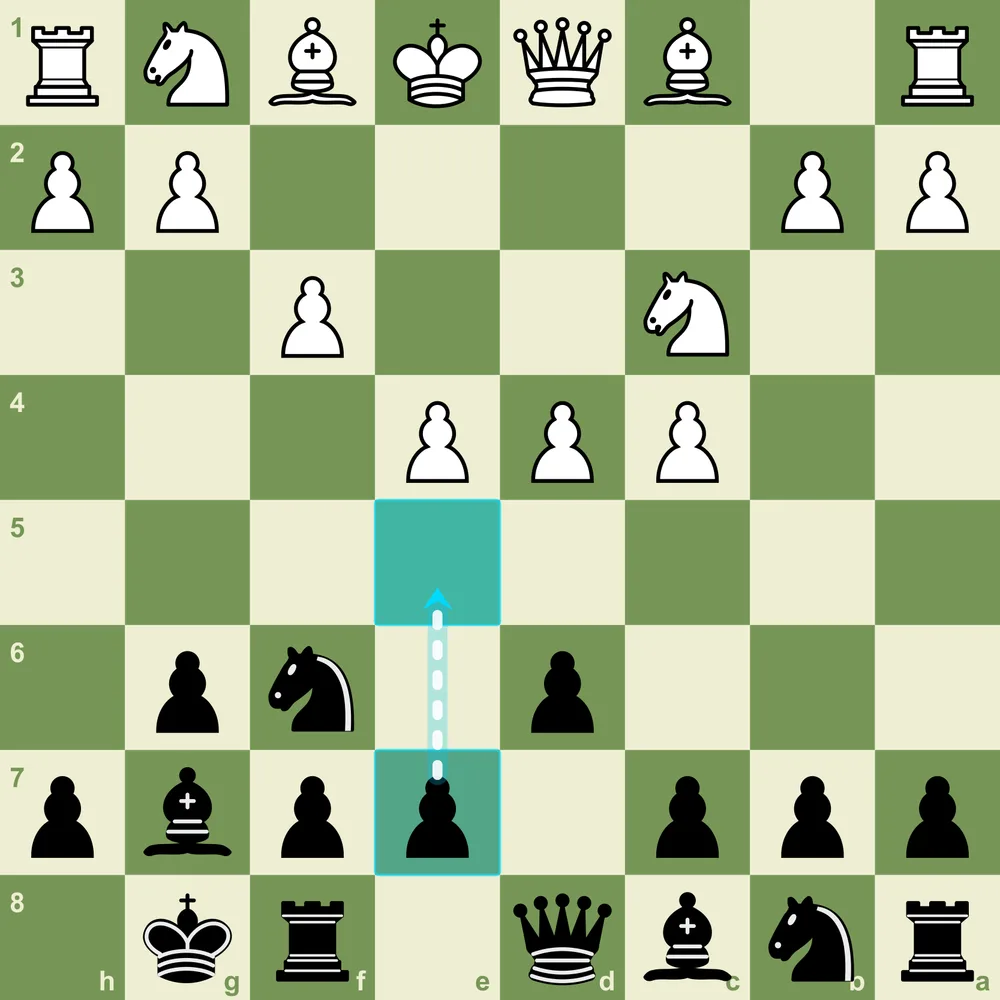
White throws caution to the wind with 1.d4 Nf6 2.c4 g6 3.Nc3 Bg7 4.e4 d6 5.f4, establishing four pawns abreast in the center. This is the most aggressive way for White to play against the King's Indian, immediately occupying maximum space and challenging Black to prove that the center is overextended.
The Four Pawns Attack is extremely double-edged. White's massive center can be a steamroller or a liability - it depends on whether Black can create effective counterplay before White consolidates. After 5...O-O 6.Nf3 c5, Black strikes at the base of the pawn chain, and the center can explode at any moment. If White overextends, the pawns become targets. If Black is too passive, the pawns roll forward and crush everything. This variation is a test of nerve for both players and produces some of the most exciting games in the King's Indian.
Fianchetto Variation
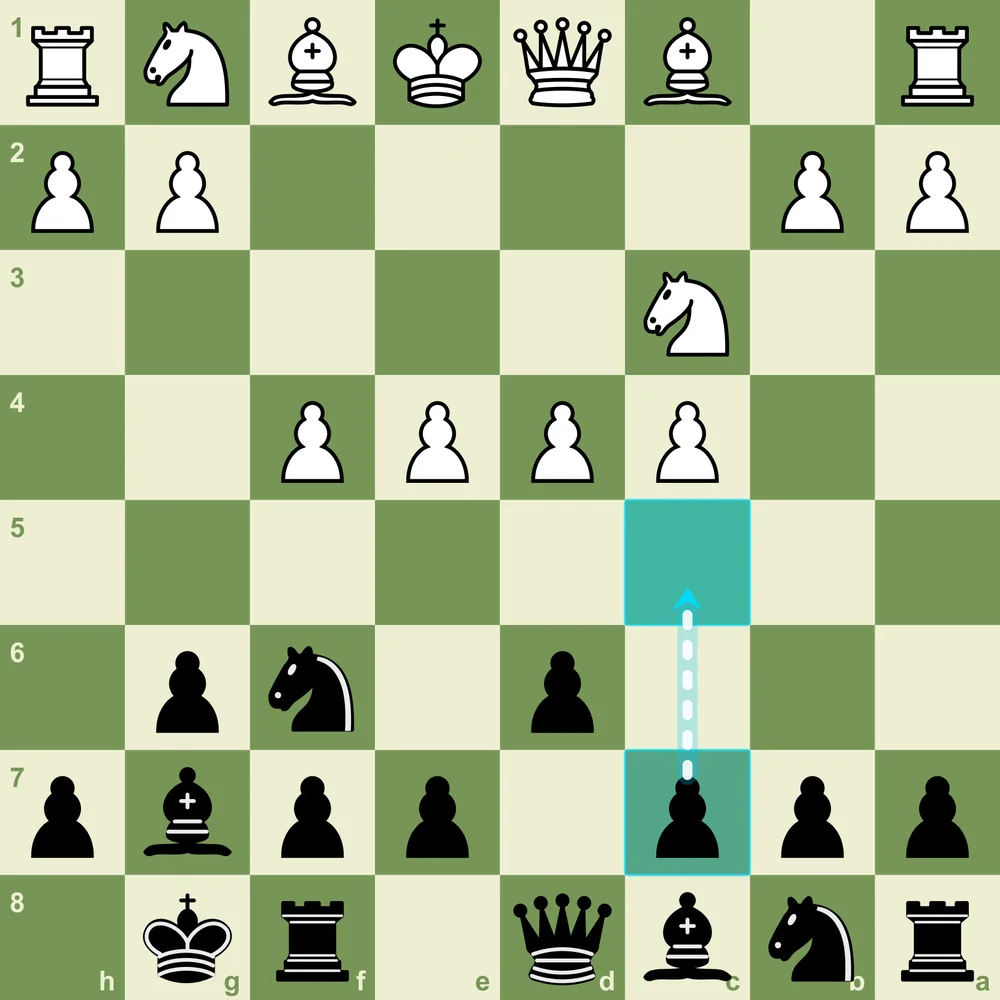
The Fianchetto Variation with 1.d4 Nf6 2.c4 g6 3.Nf3 Bg7 4.g3 O-O 5.Bg2 is White's most solid and positional approach. By mirroring Black's fianchetto, White avoids the sharp main lines entirely and plays for a quiet, strategic advantage. The two bishops face each other across the board, creating a symmetrical tension that requires patience and understanding rather than tactical fireworks.
Against the Fianchetto, Black cannot rely on the standard kingside attack because White's king is better protected. Instead, Black typically plays ...c5 or adopts a Benoni-style setup with ...c6 and ...d5, or the Yugoslav system with ...Nc6 and ...e5. The resulting positions are less volatile than the Classical but no less rich. Karpov was a master of the White side of the Fianchetto, demonstrating how to squeeze positional advantages from seemingly equal positions. For King's Indian players, learning to handle the Fianchetto is essential because it takes away your most familiar attacking patterns.
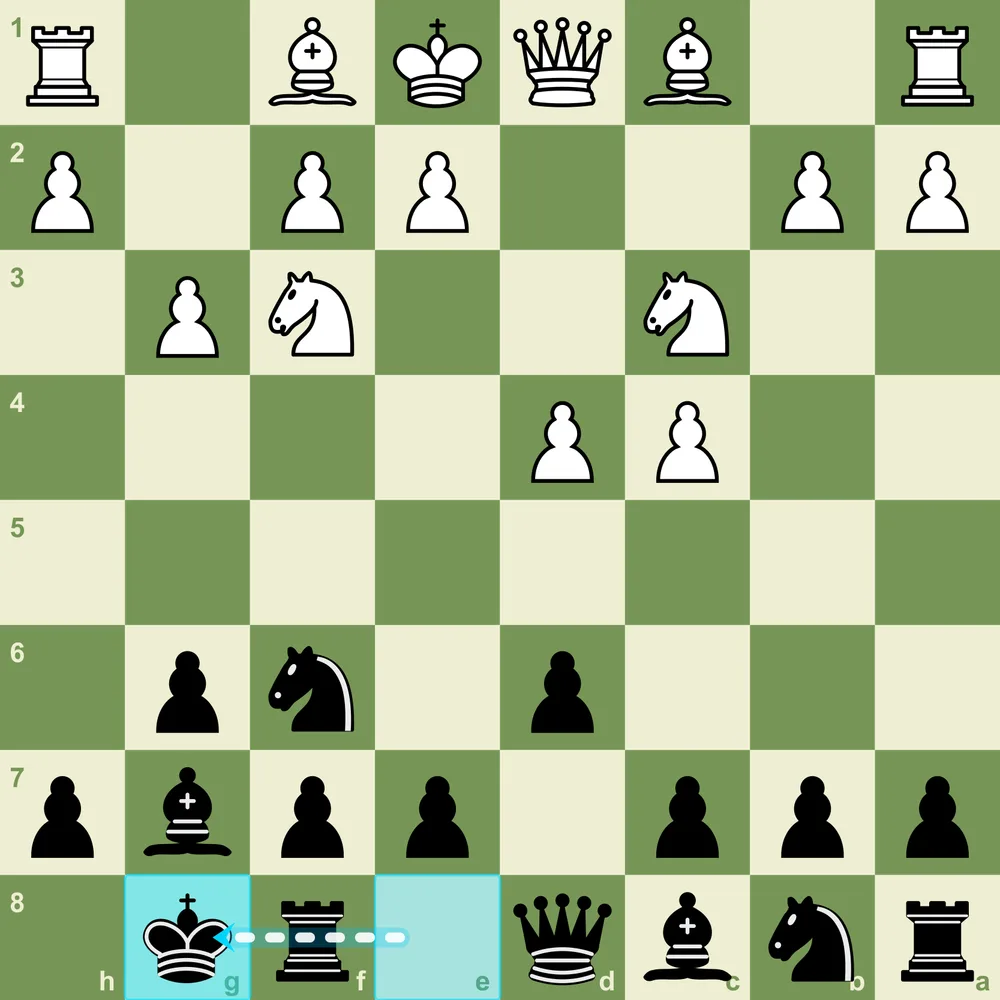
The Kingside Attack
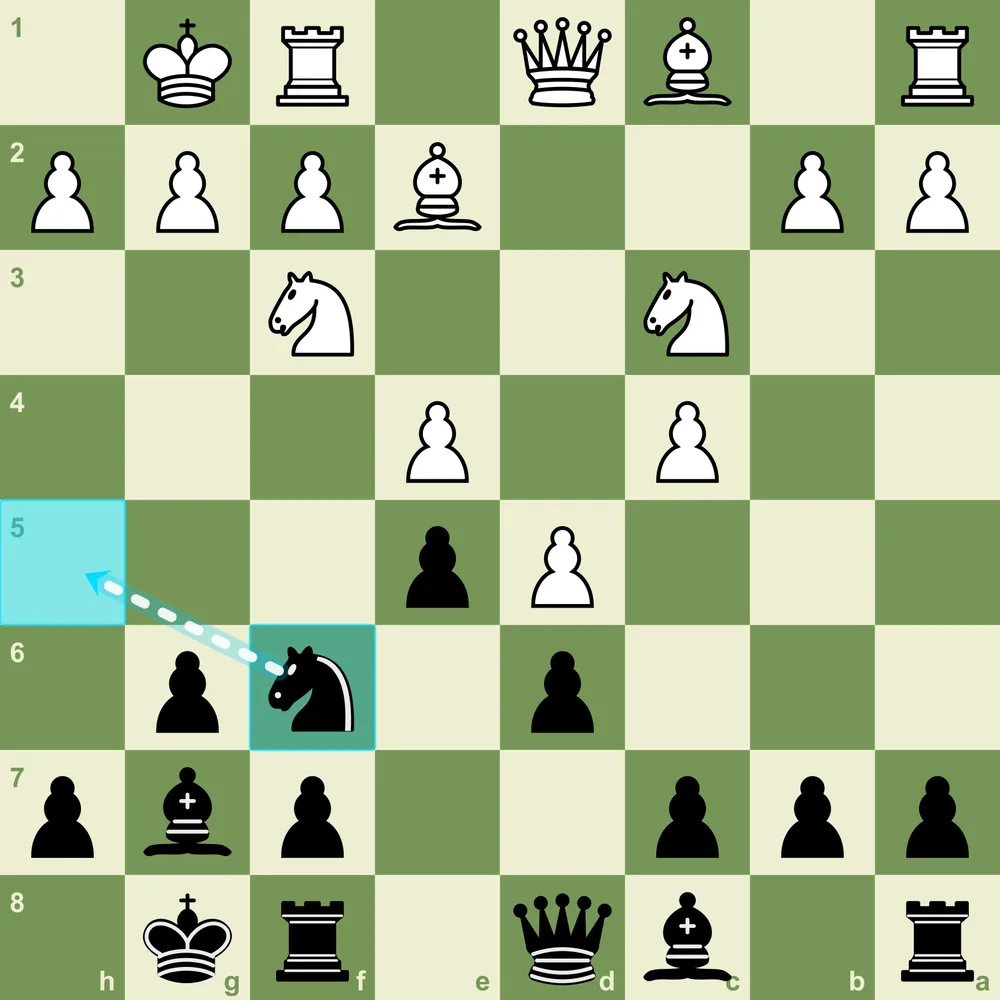
The kingside pawn storm is what makes the King's Indian Defense legendary. Once the center is closed after d5, Black redirects all energy toward White's king. The typical attacking sequence begins with ...Nh5, removing the knight from f6 to prepare ...f5 without allowing exf5 with a discovered attack on the queen.
After ...f5, Black aims for ...f4, locking the kingside pawns and creating a battering ram. The follow-up involves ...g5, then ...h5-h4, ripping open lines toward White's king. A key maneuver is ...Rf7 followed by ...Rg7 (or ...Bf8 and ...Rg7), tripling heavy pieces on the g-file. The bishop on g7, once seemingly blocked by the e5 pawn, comes alive after ...f4 as it supports the attack from behind the pawn chain.
The beauty of this attack is that it often plays itself once you understand the pattern. Even if White defends accurately, Black's pieces naturally flow toward the kingside, creating threats that are difficult to parry. Many games end with spectacular sacrifices on g3, h3, or f2, with the dark-squared bishop delivering the final blow through the shattered pawn cover. When the King's Indian attack works, it is among the most aesthetically pleasing finishes in chess.
Pros and Cons
Advantages
- •Excellent winning chances for Black with clear attacking plans
- •Flexible setup that works against virtually any White system
- •Leads to complex, unbalanced positions where the better player wins
- •Rich middlegame ideas that improve your overall chess understanding
- •Proven at the highest level by Kasparov, Fischer, and Nakamura
Disadvantages
- •White can achieve a theoretical advantage with precise play
- •Black must accept a cramped position in the early middlegame
- •Requires deep knowledge of multiple White systems and the correct response to each
- •If the kingside attack fails, Black is often left in a losing endgame
- •Not recommended for players who dislike high-risk, all-or-nothing positions
Common Mistakes
1. Playing ...f5 too early without preparation
The ...f5 break is the cornerstone of Black's kingside attack, but timing is everything. Playing it before rerouting the knight from f6 (typically via ...Nh5 or ...Nf6-d7-f8-g6) can be disastrous, as after exf5, White may have a discovered attack on the queen or gain strong control of the e4 square. Always ensure your knight is properly placed and your pieces are coordinated before launching the pawn storm. Patience in the King's Indian is the difference between a brilliant attack and a premature one.
2. Ignoring White's queenside play
In the excitement of preparing the kingside attack, many players completely ignore what White is doing on the queenside. White's c5 break, followed by Nc4 and b4-b5, can create devastating threats including passed pawns and infiltration on the a- and b-files. While you should not abandon your kingside plans, you must keep an eye on White's progress and sometimes invest a tempo to slow it down (for example, ...a5 to prevent b4). The King's Indian is a race, and you need to know where both runners are.
3. Trading the dark-squared bishop carelessly
The bishop on g7 is the most important piece in Black's position. Even when it looks passive behind the e5 pawn, it controls critical dark squares, supports the kingside attack, and can become a monster if the center opens. Trading it for a knight or a less important piece is almost always a strategic mistake. Protect it, keep it, and look for moments when it can strike - particularly after ...f4 when the long diagonal opens, or in endgames where its range dominates the entire board.
4. Playing half-heartedly on both flanks
The King's Indian demands commitment. A common mistake among intermediate players is trying to play on both sides of the board - a little ...f5 here, a little ...b5 there. This scattered approach wastes critical tempi and allows White to consolidate the queenside advantage while your kingside attack never materializes. Once you decide on the kingside attack plan, commit to it fully. Every move should either advance your attack or prepare for it. Half-measures in the King's Indian are worse than no measures at all.
Master the King's Indian with ChessHelper
Get real-time analysis of your King's Indian positions. Find the best attacking plans and never miss a tactical shot.
Try ChessHelper FreeJoin 10,000+ players sharpening their openings with AI analysis
Related Openings
Sicilian Defense
1.e4 c5
Shares the same fighting spirit as the King's Indian but against 1.e4. The Sicilian Defense creates unbalanced, asymmetrical positions where Black plays for a win from the start. If you love the dynamic play of the KID, the Sicilian is its natural counterpart for facing 1.e4.
English Opening
1.c4
The English often transposes into the same fianchetto structures you know from the King's Indian, only with colours reversed. A flexible, strategic way to reach familiar middlegames when you have the white pieces.
King's Indian Defense: Frequently Asked Questions
Both are responses to 1.d4, but they reflect fundamentally different philosophies. In the King's Indian Defense (1.d4 Nf6 2.c4 g6), Black fianchettoes the bishop and allows White to build a large pawn center, planning to attack it later with ...e5 or ...c5. In the Nimzo-Indian (1.d4 Nf6 2.c4 e6 3.Nc3 Bb4), Black immediately pins the knight and fights for control of e4, leading to more classical positional play. The King's Indian is more dynamic and risky, with greater winning chances for Black but also a higher chance of losing. The Nimzo-Indian is considered more solid and theoretically sound. Many top players keep both in their repertoire, using the Nimzo when they want a safe game and the King's Indian when they need to play for a win.
No, the King's Indian Defense is not refuted, though it has faced serious challenges from top-level preparation. The Bayonet Attack (9.b4) in the Classical Variation and certain Samisch lines have caused problems, and some elite GMs like Kramnik have claimed White has a theoretical advantage. However, players like Radjabov, Nakamura, and previously Kasparov and Fischer have consistently demonstrated that Black's dynamic counterplay is more than sufficient. The King's Indian is one of those openings where engine evaluations showing a small White advantage do not tell the full story - Black's positions are rich in practical winning chances, and the complexity makes it very difficult for White to convert any theoretical edge. It remains a fully viable and dangerous weapon at every level of play.
For players new to the King's Indian, the Classical Variation (with ...e5 and the standard kingside pawn storm) is the best place to start. It teaches you the most important concepts of the opening: the fianchetto bishop, the kingside attack with ...f5 and ...f4, and the race between Black's kingside play and White's queenside expansion. Once you are comfortable with the Classical, branch out into the Samisch and Four Pawns Attack, learning how to adapt your plans to different White setups. The Fianchetto Variation requires a different approach from Black, so study it separately. Start with a few model games by Kasparov in the Classical - his games from the 1980s and 1990s are the gold standard for understanding this opening.