
What is the Grunfeld Defense?
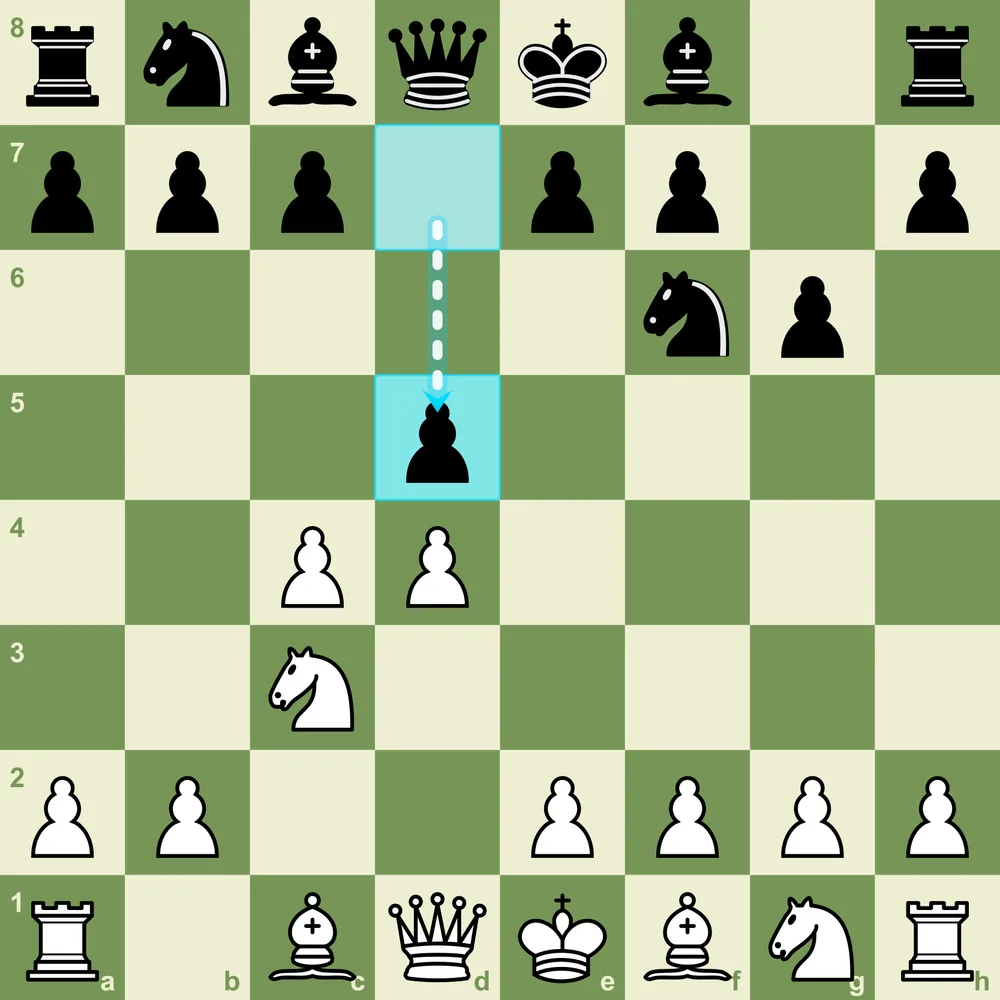
The Grunfeld Defense arises after 1.d4 Nf6 2.c4 g6 3.Nc3 d5 and is the purest expression of hypermodern chess. Instead of meeting White's central pawns with pawns of its own, Black fianchettoes the dark-squared bishop and then challenges the center directly with 3...d5. The idea is deliberately provocative: Black is happy to let White capture on d5 and construct a broad pawn front, betting that this center can be attacked and eventually undermined faster than it can be made to count.
The opening is named after the Austrian grandmaster Ernst Grunfeld, who unveiled it against Alexander Alekhine in 1922. At a time when classical dogma insisted that the center must be occupied, Grunfeld's willingness to hand it over and strike back with pieces was revolutionary. The defense quickly earned respect and, over the following decades, became a mainstay at the very top of the game.
No opening better illustrates the tension between a big pawn center and dynamic piece play. In the main lines, White ends up with pawns on c3, d4, and e4, a formation that looks overwhelming at first glance. Black responds with the bishop on g7 pointing straight down the long diagonal, the pawn break ...c5 chopping at d4, and rapid development with ...Nc6 and ...Bg4. If White's center holds and advances, Black is worse; if Black manages to liquidate or blockade it, the extended white pawns become permanent weaknesses. Every Grunfeld game is a referendum on this question.
The Grunfeld has been a favorite of some of the greatest attacking and universal players in history. Bobby Fischer used it in his 1972 World Championship match, and Garry Kasparov made it a cornerstone of his repertoire against 1.d4 throughout his reign. Today it is championed by elite grandmasters such as Peter Svidler - widely regarded as the world's foremost Grunfeld expert - along with Ding Liren, Ian Nepomniachtchi, and many others who value its blend of soundness and razor-sharp counterplay.
How to Play the Grunfeld Defense
The Grunfeld begins with 1.d4 Nf6 2.c4 g6, mirroring the start of the King's Indian Defense. The defining choice comes on move three: after 3.Nc3, Black plays 3...d5, immediately confronting White's center rather than settling behind it as in the King's Indian. From here White must decide how to handle the tension on d5, and that decision shapes the entire game.
White has several serious tries. The most principled and most common is the Exchange Variation (4.cxd5 Nxd5 5.e4), grabbing the center and daring Black to attack it. The ambitious Russian System (4.Nf3 Bg7 5.Qb3) pressures d5 with the queen before Black is fully organized. The solid Bf4 System (4.Bf4) develops quickly and keeps the structure flexible, while the positional Fianchetto System (4.Nf3 Bg7 5.g3) answers Black's bishop with a bishop of its own on g2.
Whatever White chooses, Black's guiding ideas stay remarkably consistent. Complete the kingside fianchetto and castle quickly, keep the bishop on g7 pointing at d4 and beyond, and prepare the thematic ...c5 break to strike at the base of White's center. Pieces flood toward the center along active lines - the knight to c6, the bishop to g4 pinning a defender of d4, sometimes a rook lifting to the c-file. The Grunfeld player must think in terms of energy and initiative, treating White's pawns not as a wall to fear but as a target to hunt.
Main Grunfeld Defense Variations
The Grunfeld splits into four major systems, each posing a different question about that central pawn mass. Here are the variations every Grunfeld player must know.
The Exchange Variation
4.cxd5Advanced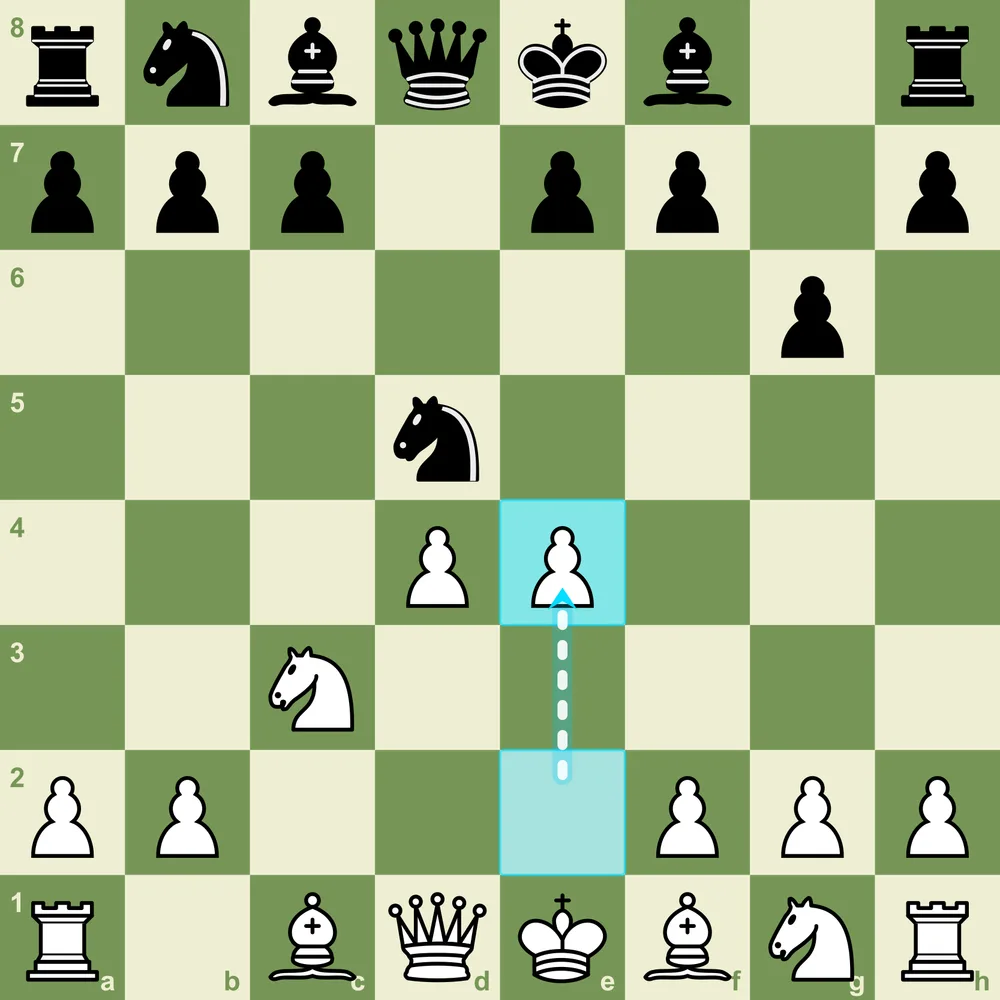
The Exchange Variation is the main battleground of the entire Grunfeld and the line you must understand first. After 4.cxd5 Nxd5 5.e4 Nxc3 6.bxc3, White obtains the classic c3-d4-e4 pawn center while Black eyes it from the flank. This is the position that defines the opening: a magnificent-looking wall of white pawns set directly against Black's fianchettoed bishop and coming counterplay.
Black's plan is uncompromising. The bishop is already fianchettoed on g7, and the moves ...c5, ...Nc6, and ...Bg4 pile pressure onto d4, the base of White's center. If White is careless, ...cxd4 and ...Qa5 or ...Bxf3 rip the center apart and leave the c3 and d4 pawns weak. If White consolidates and pushes d5 at the right moment, the space advantage can become overwhelming. The resulting middlegames are among the most heavily analyzed in all of chess.
Famous practitioners: Kasparov, Fischer, Svidler, Nepomniachtchi
The Russian System
5.Qb3Advanced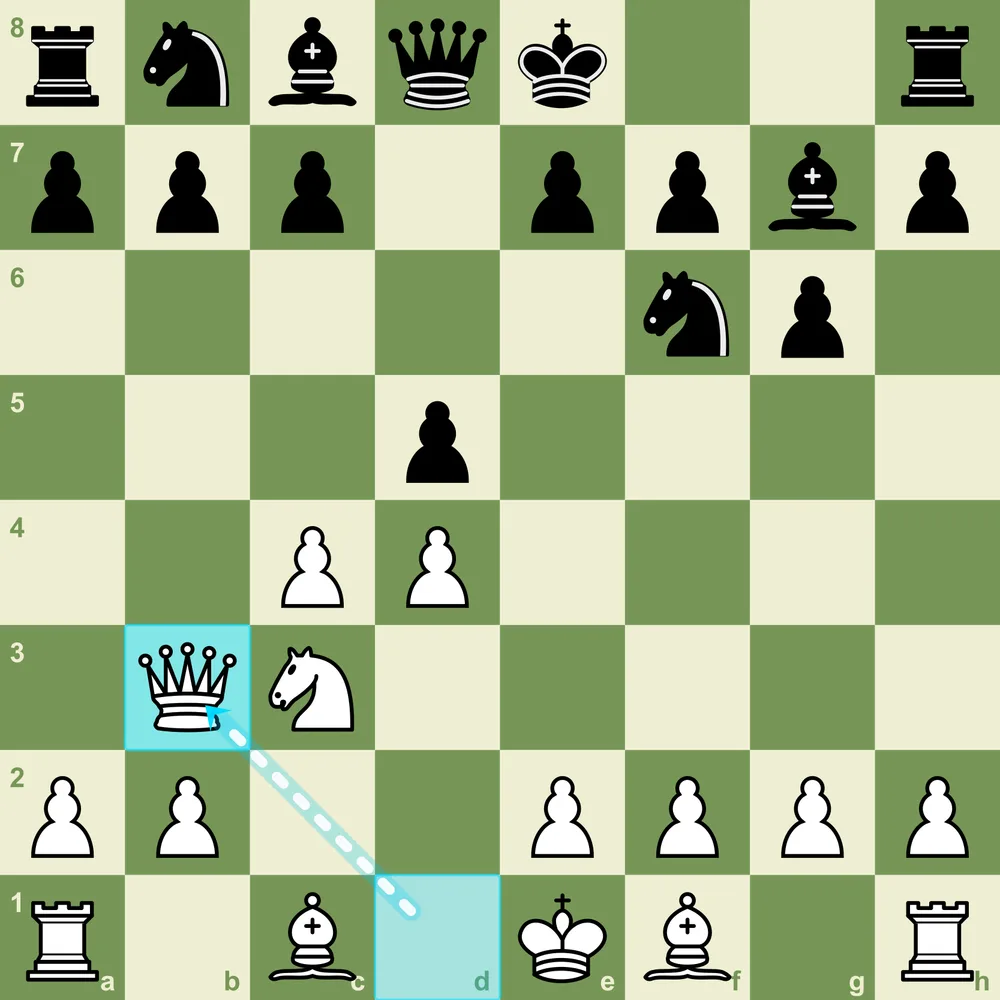
In the Russian System, White develops with 4.Nf3 Bg7 5.Qb3, adding a second attacker to the d5 pawn before Black can comfortably support it. The queen on b3 also eyes the sensitive f7 and b7 squares, and White intends to recapture on c4 with the queen if Black releases the tension. It is one of the most testing and theory-heavy answers to the Grunfeld.
Black typically responds with 5...dxc4 6.Qxc4, handing White a broad center once again but gaining time to strike back. The main setups feature the accurate maneuver ...c6 and ...b5 to gain queenside space, or the flexible development ...Na6 and ...Be6 harassing the white queen, and always the familiar ...Bg4 and ...cxd4 pressure against the center. As in the Exchange, the entire fight revolves around whether White's pawns become a strength or a target.
Famous practitioners: Kasparov, Karpov, Svidler, Vachier-Lagrave
The Bf4 System
4.Bf4Intermediate-Advanced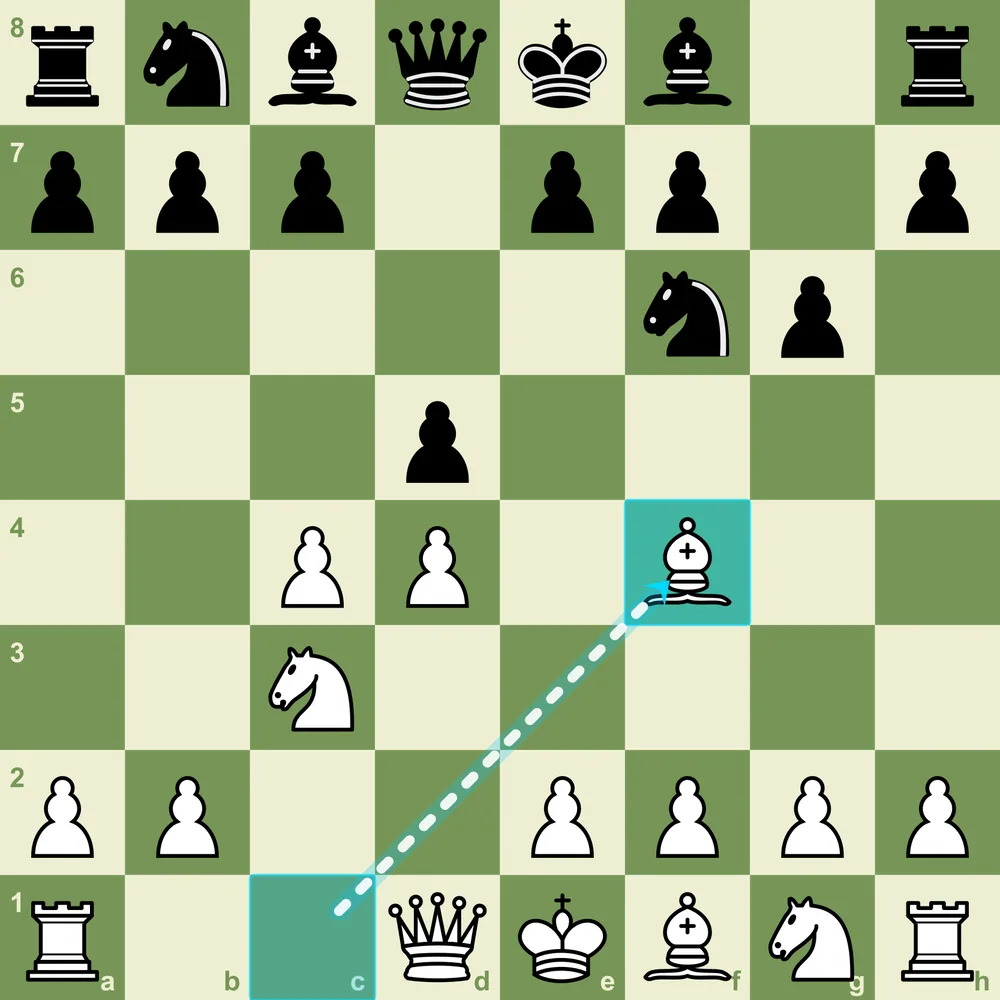
The Bf4 System, sometimes grouped with the modern anti-Grunfeld setups, meets 3...d5 with the quiet developing move 4.Bf4. Instead of committing to a huge center immediately, White brings the dark-squared bishop to an active diagonal and keeps options open. The line is less forcing than the Exchange or Russian System but no less venomous, and it has become a popular practical weapon precisely because it sidesteps reams of sharp theory.
Black continues in classic Grunfeld style with ...Bg7 and quick castling, and then chooses between capturing with ...dxc4 to loosen White's grip or striking with ...c5 against d4. A key point is that with the bishop already on f4, some standard White setups are slightly awkward to coordinate, and Black often obtains comfortable, harmonious development. The positions are rich and strategic, rewarding a player who understands Grunfeld structures rather than memorized lines.
Famous practitioners: Carlsen, Aronian, Grischuk, Giri
The Fianchetto System
5.g3Intermediate-Advanced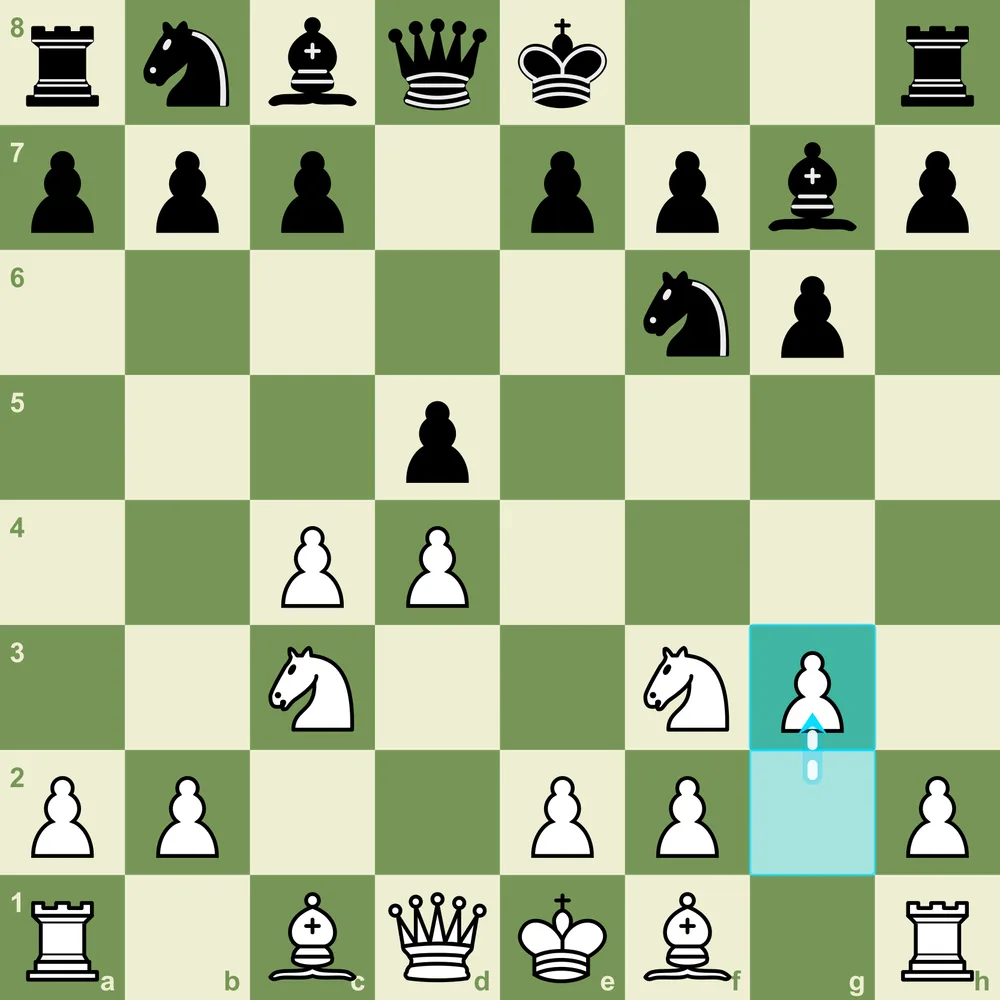
In the Fianchetto System, White plays 4.Nf3 Bg7 5.g3, preparing to develop the bishop to g2 and neutralize Black's long-diagonal pressure with a rival fianchetto. This is the most restrained and positional way to handle the Grunfeld: White declines the big center and instead relies on smooth development, solid structure, and a long-term battle for the light squares.
Because White is not building an overextended pawn front, Black cannot count on the usual demolition tactics and must play more subtly. The main equalizing tries are ...dxc4 followed by ...c5 and quick development, or a solid ...c6 keeping the center closed and maneuvering for the ...e5 or ...c5 break later. Play tends to be quieter and more maneuvering than in the sharp main lines, but the underlying Grunfeld logic - pressure the center, activate the g7 bishop, seek the freeing break - remains firmly in place.
Famous practitioners: Carlsen, Kramnik, Ding Liren, Caruana
Pros and Cons of the Grunfeld Defense
Advantages
- •Active, dynamic counterplay - Black attacks from the very first moves, playing for the initiative rather than passively equalizing against 1.d4
- •The powerful g7 bishop - the fianchettoed bishop on the long diagonal is a monster, generating pressure against d4 and White's king for the entire game
- •Excellent winning chances - the imbalanced, double-edged positions give Black real chances to play for a win, not just a draw, even against 1.d4
- •Elite-tested soundness - a staple of world champions from Fischer and Kasparov to today's top grandmasters, with a rock-solid theoretical reputation
Disadvantages
- •Heavy theoretical demands - the sharp main lines require significant memorization and regular upkeep, since a single inaccuracy can be punished quickly
- •Concedes central space - if Black fails to generate counterplay in time, White's big pawn center can advance and simply crush the position
- •Unforgiving of imprecision - the positions are concrete and tactical; understanding general plans is not enough when accurate move orders matter so much
- •Tough for beginners - the counterintuitive strategy of surrendering the center makes it a challenging first choice for less experienced players
Common Mistakes to Avoid in the Grunfeld
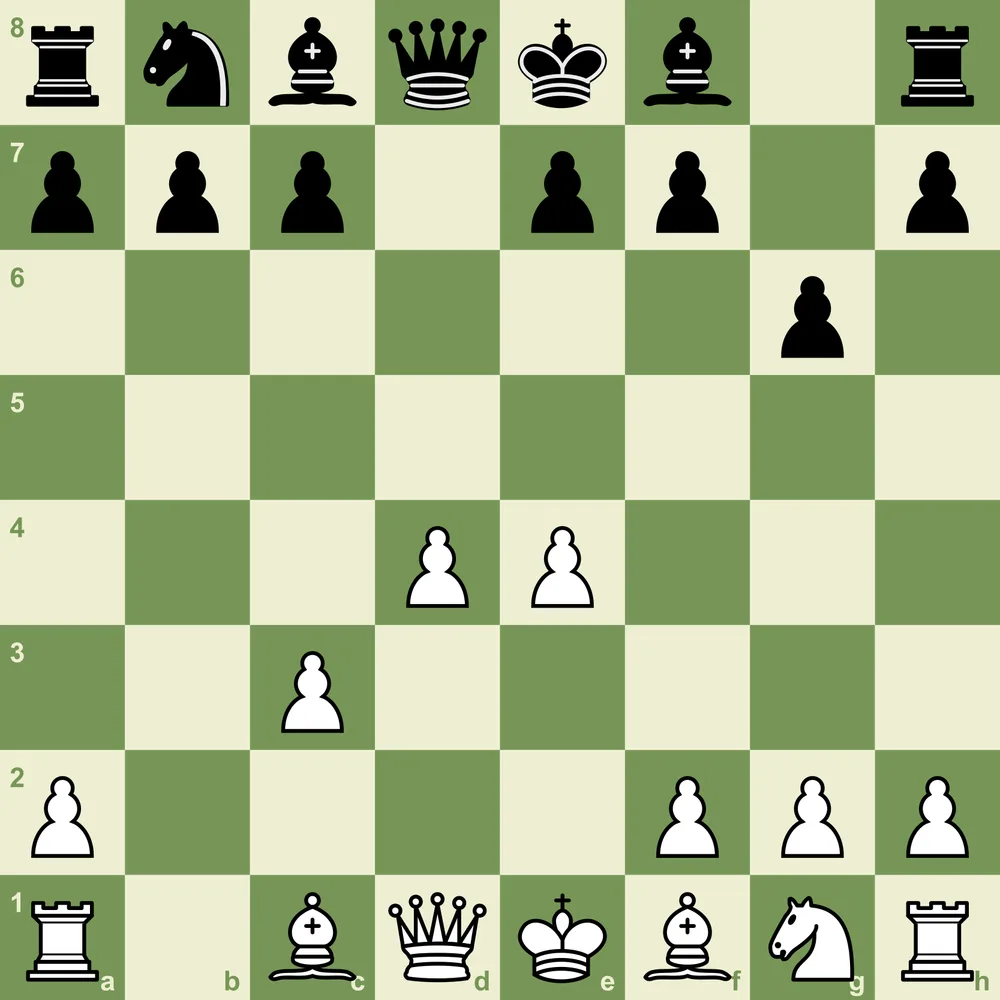
Failing to challenge the center with ...c5
The whole point of the Grunfeld is to attack White's pawns, and the ...c5 break against d4 is the single most important idea in the opening. Players who drift with slow, quiet moves let White consolidate the c3-d4-e4 center and then roll it forward with d5, gaining a crushing space advantage. Keep ...c5 (backed by ...Nc6 and ...Bg4) at the front of your mind and play it before White is fully coordinated.
Trading off the g7 bishop too readily
The fianchettoed bishop on g7 is the soul of the Grunfeld, exerting pressure on d4 and the whole long diagonal. Voluntarily exchanging it - or allowing it to be traded without real compensation - hands White the dark squares and strips Black of the very piece that justifies the opening. Guard this bishop carefully and keep its diagonal open whenever possible.
Treating the Grunfeld as a solid, passive setup
The Grunfeld is a counterattacking opening, not a fortress. Some players adopt it hoping for a quiet, King's Indian-style build-up and then wonder why they get slowly squeezed. If you sit back and let White keep the center intact, you will simply be worse. Play with energy: develop quickly, castle, and throw your pieces at the enemy pawns while they are still vulnerable.
Mishandling ...dxc4 and piece placement in the Russian System
Against 5.Qb3, the timing of ...dxc4 and the follow-up development of the queenside pieces are critical. Capturing at the wrong moment, or drifting with the a6-knight and light-squared bishop, lets White regain the pawn with a big center and a comfortable lead in development. Study the main setups - ...c6 with ...b5, or ...Na6 and ...Be6 - so you know exactly how to harass the white queen and fight for the center rather than improvising.
How to Practice the Grunfeld Defense
The Grunfeld rewards concrete, disciplined study more than almost any other defense. Follow these steps to make it a reliable part of your repertoire.
Start with the Exchange Variation
The Exchange Variation is the heart of the Grunfeld and the line you will face most often. Learn the main position after 5.e4 Nxc3 6.bxc3 and internalize the core plan: pressure d4 with ...c5, ...Nc6, and ...Bg4. Everything else in the opening builds on the ideas you absorb here, so make it your foundation.
Master the ...c5 break and typical piece placements
Drill the thematic structures until they are second nature: the bishop on g7, the knight on c6, the bishop to g4 pinning the defender of d4, and the ...cxd4 and ...Qa5 follow-ups that expose White's pawns. Understanding when and how to break with ...c5 - and what to do after the resulting exchanges - is what separates strong Grunfeld players from the rest.
Use ChessHelper to analyze your Grunfeld games
After each game, review the opening and early middlegame with ChessHelper's AI analysis. Did you break with ...c5 at the right moment? Was there a stronger way to pressure d4? ChessHelper's AI-powered engine pinpoints the critical turning points in your games and helps you understand the sharp, concrete positions the Grunfeld produces.
Study the games of Kasparov and Svidler
No one has demonstrated the Grunfeld's power more convincingly than Garry Kasparov, who used it at the highest level for decades, and Peter Svidler, the modern authority on the opening. Play through their games to see how top players time the ...c5 break, coordinate their pieces against the center, and convert the resulting dynamic positions into wins.
Play sharp positions at slow time controls
The Grunfeld is concrete and tactical, so it is best learned in longer games where you can calculate carefully and test your theoretical knowledge under pressure. Play at least some practice games at 15+10 or slower, and use the time to ask the key questions: when do I break with ...c5, how do I keep my g7 bishop active, and is White's center a strength or a target?
Master the Grunfeld with ChessHelper
Get real-time AI analysis as you practice the Grunfeld in your online games. Time your central breaks perfectly, learn from every mistake, and build a razor-sharp repertoire against 1.d4.
Start Practicing for FreeJoin 10,000+ chess players building dynamic opening repertoires with ChessHelper
Related Openings
If you enjoy the Grunfeld, these openings share similar move orders or strategic themes and will complement your repertoire.
King's Indian Defense
The Grunfeld's sibling from the same move order. Black fianchettoes and lets White build a center, but plays for a closed struggle and a kingside attack instead of immediate confrontation.
1.d4 Nf6 2.c4 g6
Queen's Gambit
The classical way to meet 1.d4 with ...d5. If you want to understand the center Grunfeld players fight against, learning the Queen's Gambit from White's side is invaluable.
1.d4 d5 2.c4
Pirc Defense
Another hypermodern defense built on the g7 bishop and counterattack. Black concedes the center against 1.e4 and strikes back, echoing the Grunfeld's core philosophy.
1.e4 d6
Grunfeld Defense: Frequently Asked Questions
The Grunfeld is generally considered an advanced opening and is not the easiest starting point for beginners. Its central philosophy is counterintuitive: Black deliberately allows White to build a large pawn center and only then attacks it with piece pressure and pawn breaks. This requires precise timing, comfort with sharp positions, and a good understanding of dynamic versus static factors. Improving players who already grasp basic development and pawn structure can absolutely learn it, but true beginners often benefit from starting with something more solid, such as the King's Indian setup or the Queen's Gambit Declined, before taking on the Grunfeld.
This is the hypermodern idea at the heart of the Grunfeld. Rather than occupying the center with pawns, Black challenges and controls it from a distance. After the typical Exchange Variation, White gets an imposing c3-d4-e4 pawn center, but Black immediately pressures it: the fianchettoed bishop on g7 rakes the long diagonal, the ...c5 break undermines d4, and pieces like the c6 knight and a bishop on g4 pile up on White's center. If Black plays accurately, that big center becomes a target and a liability rather than a strength, and Black obtains excellent piece activity and long-term chances against White's extended pawns.
Both begin with 1.d4 Nf6 2.c4 g6 and both fianchetto the dark-squared bishop, but the plans diverge sharply on move three. In the Grunfeld, Black plays 3...d5, striking at the center immediately and inviting exchanges that lead to open, dynamic positions where Black attacks White's center. In the King's Indian, Black plays 3...Bg7 and 4...d6, allowing White a big center and aiming for a later kingside pawn storm in a closed, maneuvering struggle. In short, the Grunfeld is about direct, early central confrontation and piece activity, while the King's Indian is about a slower build-up toward opposite-wing attacks.