
What is the Caro-Kann Defense?
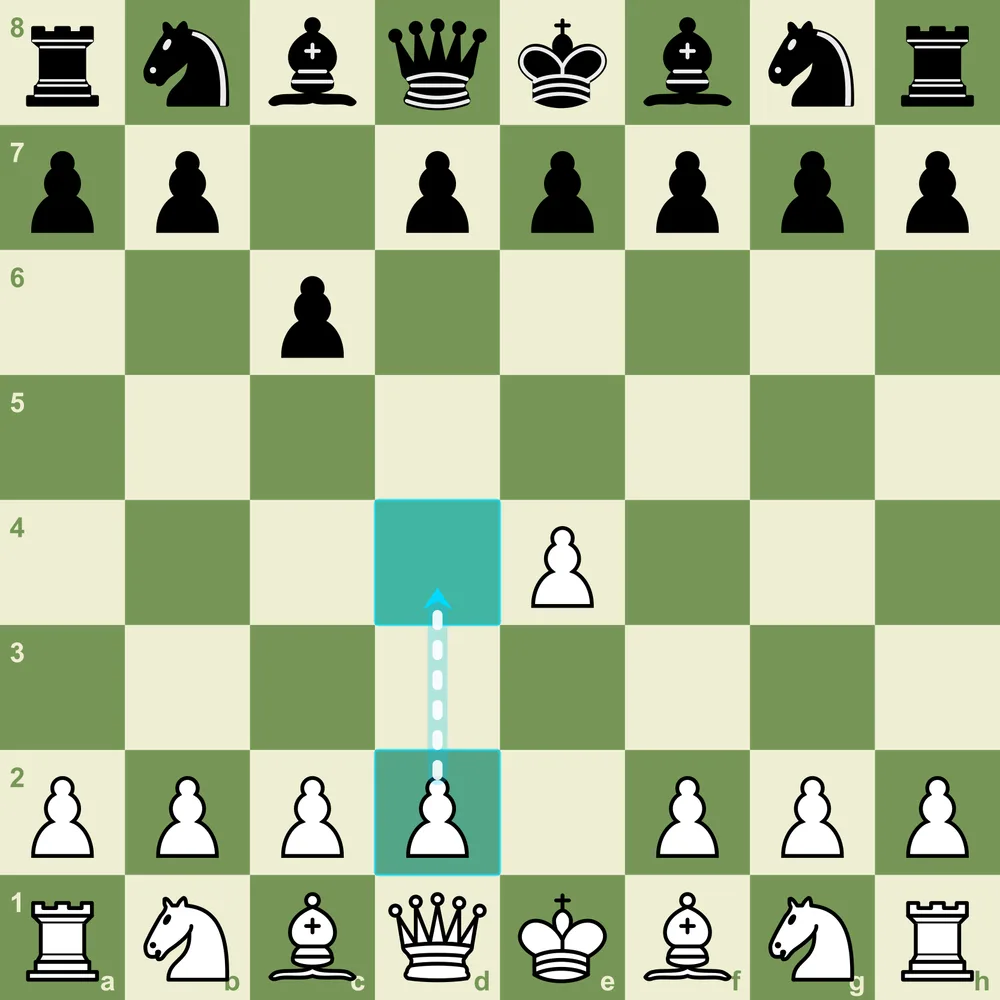
The Caro-Kann Defense begins with the moves 1.e4 c6 and is one of the most respected and durable defenses in chess. The idea behind 1...c6 is simple yet profound: Black prepares to challenge White's center on the very next move with 2...d5, establishing a strong foothold in the center while keeping the pawn structure flexible. Unlike the French Defense (1...e6), the c6 pawn does not block the light-squared bishop, which can develop actively to f5 or g4 in most variations.
The opening is named after the English player Horatio Caro and the Austrian player Marcus Kann, who analyzed and published their findings about the defense in 1886. However, it was the great world champions of the 20th century who elevated the Caro-Kann to elite status. Jose Raul Capablanca, the third World Champion renowned for his endgame mastery, frequently employed the Caro-Kann for its favorable pawn structures. Anatoly Karpov, the 12th World Champion and one of the greatest positional players in history, made the Caro-Kann a cornerstone of his repertoire, demonstrating that its supposedly "boring" reputation was wildly misleading.
Compared to the French Defense, which also aims for ...d5 against 1.e4, the Caro-Kann trades a bit of immediate central tension for superior piece harmony. In the French, after 1.e4 e6 2.d4 d5, Black's light-squared bishop is often hemmed in behind the e6 pawn, creating the so-called "French bishop problem." The Caro-Kann sidesteps this issue entirely: since the c-pawn, not the e-pawn, supports ...d5, the light-squared bishop can develop freely to f5 (its ideal square in the Classical Variation) before Black eventually plays ...e6. This advantage in piece activity is the defining feature that draws many players to the Caro-Kann.
In modern practice, the Caro-Kann is played regularly at the highest levels by grandmasters including Anish Giri, Alireza Firouzja, and Fabiano Caruana. It remains one of the safest and most practical openings for Black, combining a rock-solid foundation with enough strategic complexity to play for a win in virtually every game.
How to Play the Caro-Kann Defense
The Caro-Kann begins with 1.e4 c6. This seemingly modest move has a very clear purpose: Black prepares to play 2...d5 on the next move, immediately challenging White's e4 pawn with full pawn support. After the typical continuation 2.d4 d5, we reach the fundamental position of the Caro-Kann, where White must decide how to deal with the tension in the center.
White has four main responses: 3.Nc3 (or 3.Nd2) leading to the Classical and Modern variations, 3.e5 (the Advance Variation), 3.exd5 cxd5 4.c4 (the Panov-Botvinnik Attack), or 3.exd5 cxd5 followed by quiet development (the Exchange Variation). Each of these choices leads to fundamentally different types of positions, giving the Caro-Kann a variety that surprises many players who assume it is a one-dimensional opening.
The strategic philosophy behind the Caro-Kann is clear: establish a strong, healthy pawn structure, develop pieces to natural squares with the light-squared bishop going outside the pawn chain, and use the solid position as a platform for counterplay in the middlegame. Black is rarely in danger of being attacked off the board, and the resulting positions reward patience, technique, and strategic understanding.
Main Caro-Kann Defense Variations
The Caro-Kann branches into four major systems, each requiring distinct strategic approaches. Here are the variations every Caro-Kann player must know.
The Classical Variation
4...Bf5Intermediate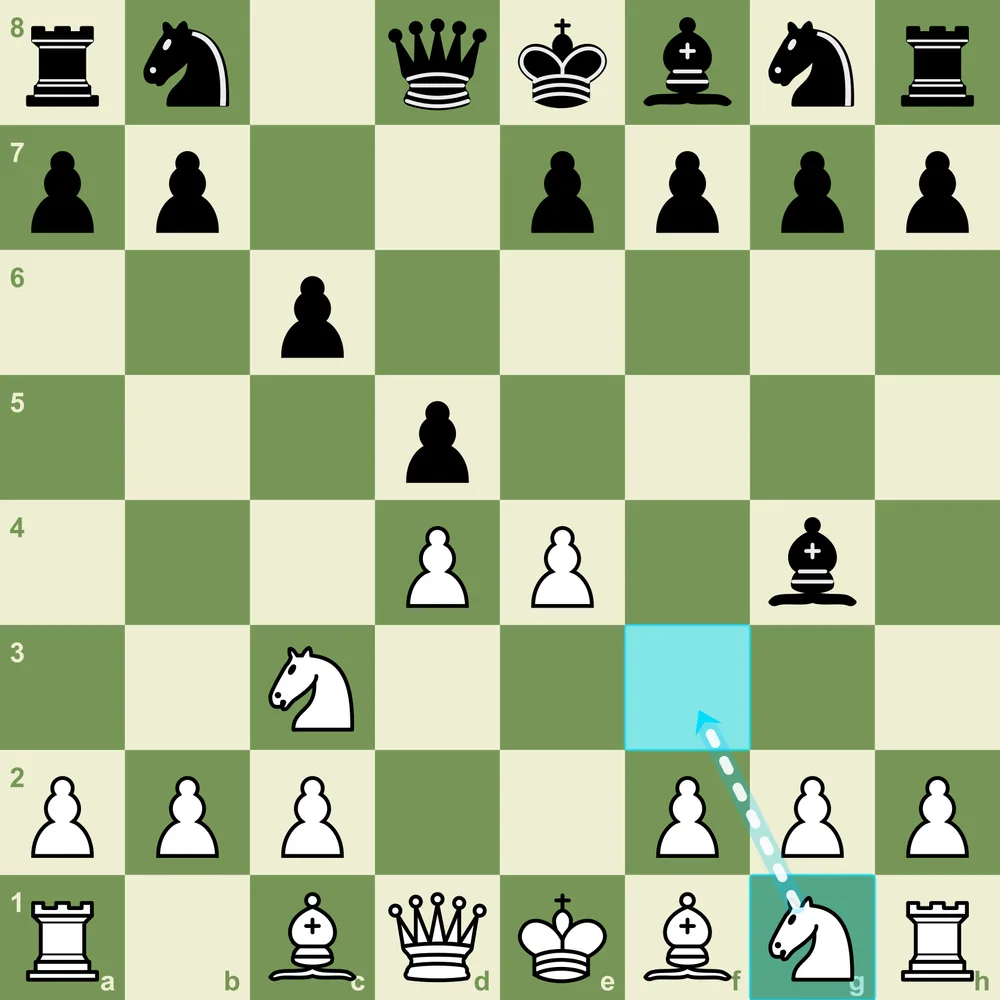
The Classical Variation is the most traditional and perhaps the most thematically pure line in the Caro-Kann. After 1.e4 c6 2.d4 d5 3.Nc3 dxe4 4.Nxe4, Black plays the natural 4...Bf5, developing the light-squared bishop to its ideal diagonal before playing ...e6. This is the move that justifies the entire Caro-Kann concept: the bishop that would be passive in the French Defense is here an active, well-placed piece.
After 5.Ng3 Bg6 6.h4 h6 7.Nf3 Nd7, Black has a solid, harmonious setup. The typical plan involves completing development with ...Ngf6, ...e6, ...Be7, and castling kingside. White's h4-h5 push has locked the bishop on g6, but that piece remains solid and provides long-term control of the light squares. Anatoly Karpov demonstrated the power of this setup across hundreds of games, showing that Black can gradually outplay White in the endgame thanks to the superior pawn structure.
Famous practitioners: Karpov, Capablanca, Smyslov, Giri
The Advance Variation
3.e5Intermediate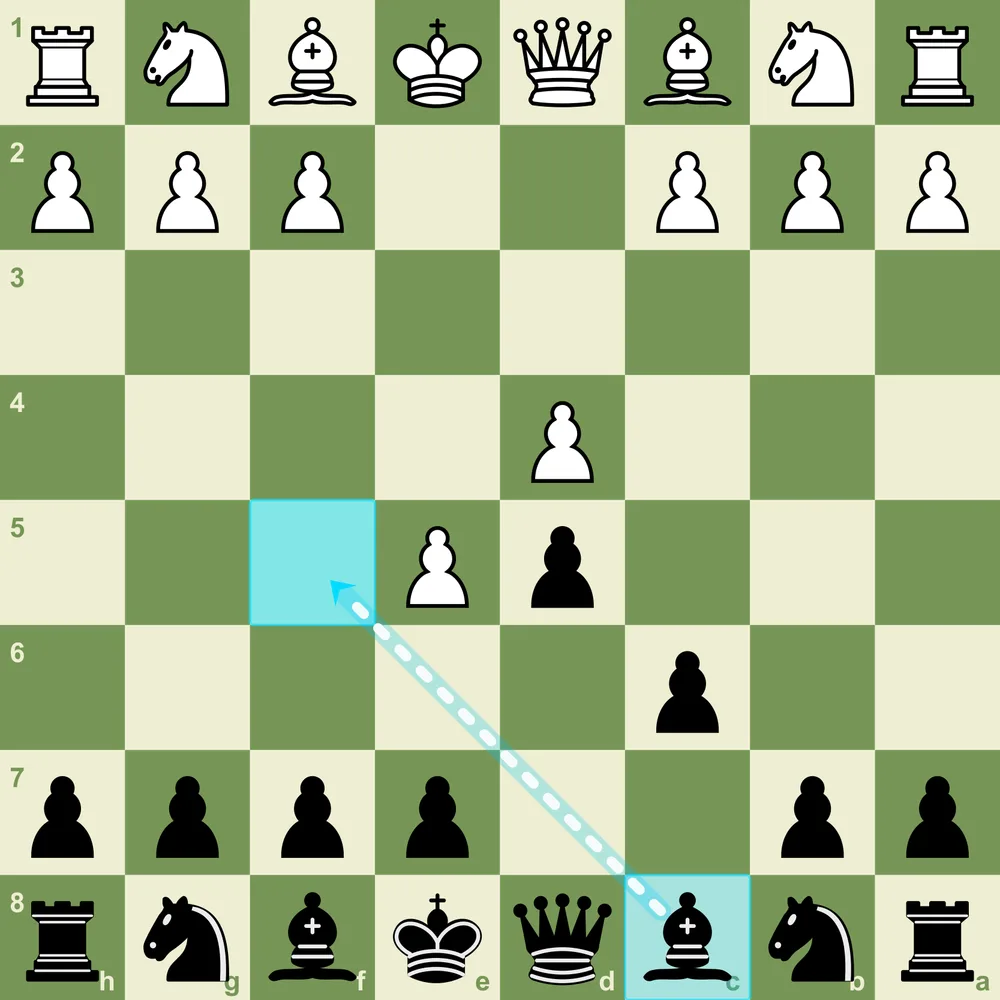
In the Advance Variation, White plays 3.e5 immediately, gaining space in the center and restricting Black's knight from its natural f6 square. This is one of the most popular lines at club level and has gained increasing attention at the grandmaster level as well. The resulting positions are strategically rich, with clear plans for both sides.
Black's primary strategy revolves around two key ideas: developing the light-squared bishop to f5 before playing ...e6, and undermining White's pawn center with the break ...c5. The standard continuation runs 3...Bf5 4.Nf3 e6 5.Be2 c5, where Black immediately targets the d4 pawn. White must decide whether to maintain the center with c3 or allow exchanges that relieve Black's spatial disadvantage. The Advance Variation rewards players who understand pawn structure dynamics and can patiently chip away at White's space advantage.
Famous practitioners: Firouzja, Nimzowitsch, Short, Dreev
The Panov-Botvinnik Attack
3.exd5 cxd5 4.c4Intermediate-Advanced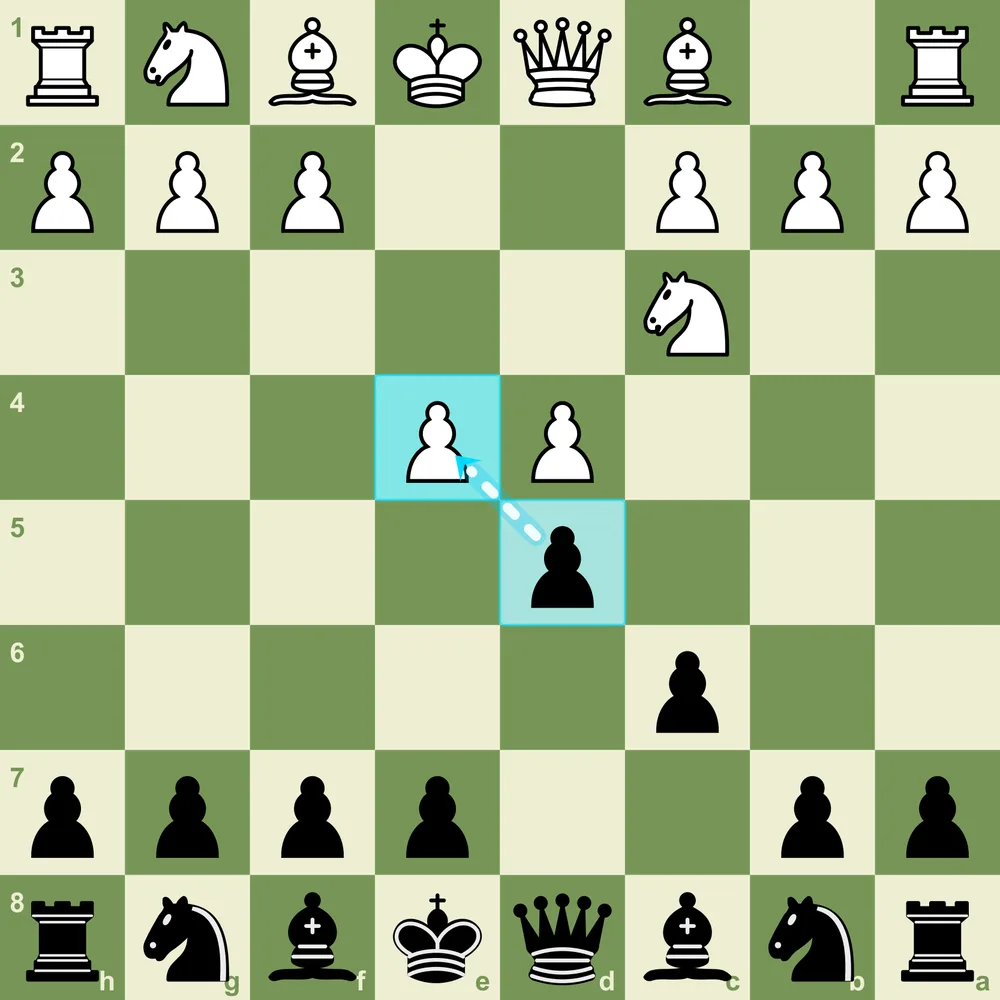
The Panov-Botvinnik Attack, named after the Russian grandmasters Vasily Panov and Mikhail Botvinnik, arises after 3.exd5 cxd5 4.c4. White aims to create an isolated queen's pawn (IQP) position by exchanging on d5, which leads to dynamic middlegames where White has active piece play and Black has a long-term structural advantage. These positions are among the most instructive in chess.
After 4...Nf6 5.Nc3 e6, the position closely resembles certain Queen's Gambit Declined structures. If White plays cxd5, the resulting IQP position gives White piece activity and central control, but Black can target the isolated d4 pawn in the endgame. Black should aim to exchange pieces systematically, as the IQP becomes a greater weakness with fewer pieces on the board. Alternatively, Black can play ...Nc6 and ...Be7 before deciding on the central structure, maintaining flexibility.
Famous practitioners: Botvinnik, Karpov, Anand, Caruana
The Exchange Variation
3.exd5 cxd5Beginner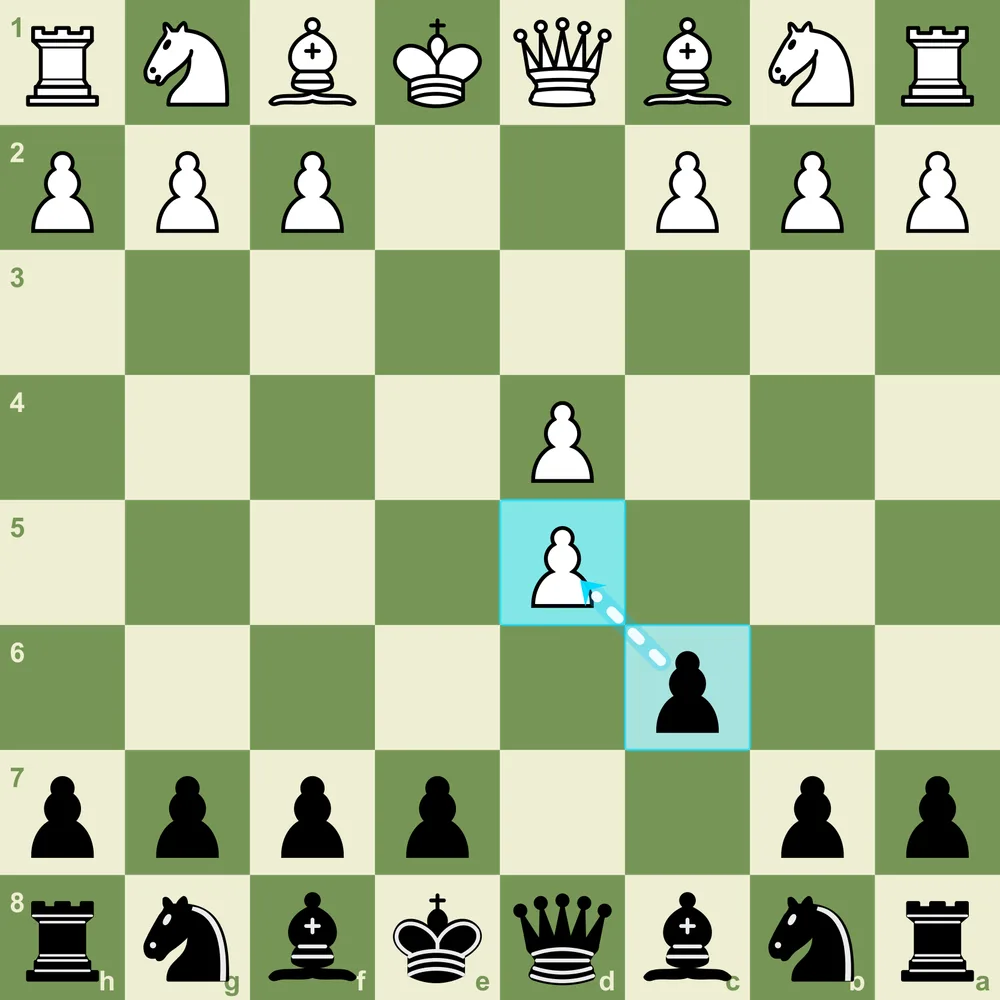
The Exchange Variation arises after 3.exd5 cxd5 when White simply develops without playing c4. This leads to a symmetrical pawn structure where neither side has an obvious advantage. The positions are quiet and strategic, and many players consider the Exchange Variation to be slightly favorable for Black because White has voluntarily released the central tension without gaining anything in return.
Black's plan is straightforward: develop the light-squared bishop actively (to f5 or g4), complete development with ...Nc6, ...e6, ...Nf6, ...Be7 or ...Bd6, and castle. The open c-file provides Black with natural play, and the symmetrical structure means that aggressive attempts from White often rebound. While the Exchange Variation has a reputation for being drawish at the highest levels, at club level it produces instructive games that test both sides' ability to create and exploit small advantages. Do not make the mistake of playing lazily just because the position looks equal.
Famous practitioners: Karpov, Carlsen, So, Aronian
Pros and Cons of the Caro-Kann Defense
Advantages
- •Rock-solid pawn structure - the d5-c6 pawn chain is one of the healthiest structures in chess, providing a stable foundation for the middlegame and endgame
- •Natural bishop development - the light-squared bishop develops freely to f5 or g4, avoiding the "French bishop problem" that plagues other ...d5 defenses
- •Lower theory than the Sicilian - while still requiring study, the Caro-Kann has fewer critical forced lines to memorize than the Najdorf or Dragon
- •Excellent for all levels - from beginners learning sound chess principles to grandmasters in world championship matches, the Caro-Kann delivers consistent results
Disadvantages
- •Can become passive - in the Advance Variation especially, Black can end up cramped if the counterplay with ...c5 is not executed in time
- •Less dynamic than the Sicilian - the winning percentage for Black is slightly lower than in the Sicilian, as the positions tend to be more balanced from the start
- •Exchange Variation can be drawish - well-prepared opponents may steer into the symmetrical Exchange Variation seeking a quick draw, requiring Black to play very precisely for winning chances
- •Panov requires IQP knowledge - the Panov-Botvinnik Attack leads to isolated queen's pawn positions that require specific structural understanding beyond typical Caro-Kann themes
Common Mistakes to Avoid in the Caro-Kann
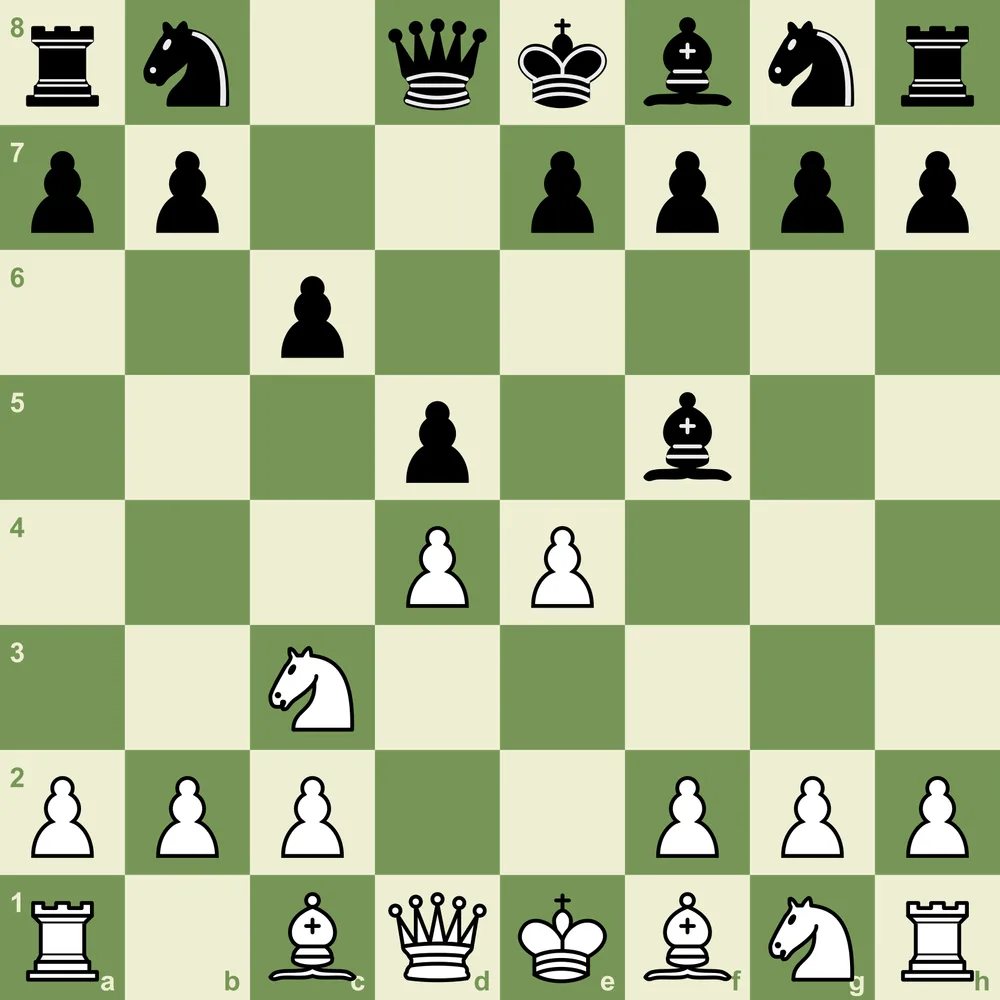
Developing the bishop to d7 instead of f5
The entire point of playing the Caro-Kann over the French Defense is that the light-squared bishop can develop outside the pawn chain. Playing ...Bd7 instead of ...Bf5 in the Classical Variation wastes this advantage and gives you a passive version of the French Defense. Always prioritize getting the bishop to f5 (or occasionally g4) before playing ...e6.
Delaying the ...c5 break in the Advance Variation
In the Advance Variation (3.e5), Black's main source of counterplay is the pawn break ...c5, targeting White's d4 pawn. Spending too many moves on quiet development without preparing this break allows White to consolidate the space advantage and build a crushing kingside attack. Always keep the ...c5 break in mind and execute it at the first reasonable opportunity.
Playing too passively in the Exchange Variation
Just because the Exchange Variation produces a symmetrical position does not mean you should play passively. Many club players drift into autopilot, making quiet developing moves without a plan. Instead, actively seek to exploit the half-open c-file with ...Rc8, place pieces aggressively, and look for opportunities to create weaknesses in White's position. The symmetry slightly favors Black, so play with purpose.
Allowing Nxf6+ gxf6 without preparation
In the Classical Variation, after 4.Nxe4 Bf5 5.Ng3, if Black later plays ...Nf6 and White captures with Nxf6+, Black must be ready for ...gxf6. While this doubled pawn is not necessarily bad (it opens the g-file and controls e5), you need to plan for it. If you are not comfortable with the resulting pawn structure, consider the move order ...Nd7 before ...Ngf6 to retain the option of recapturing with the knight.
How to Practice the Caro-Kann Defense
The Caro-Kann rewards structured, methodical study. Follow these steps to make it a reliable part of your opening repertoire.
Start with the Classical Variation
The Classical line with 4...Bf5 is the most natural starting point for Caro-Kann players. It teaches the fundamental ideas of the opening: develop the bishop outside the pawn chain, maintain a solid center, and play for gradual advantages. Once you understand the Classical, branching into other variations becomes much easier.
Learn the Advance Variation responses
The Advance Variation (3.e5) is extremely popular at club level, so you will face it frequently. Study the key move order: 3...Bf5 4.Nf3 e6 5.Be2 c5. Understand why the ...c5 break is essential and practice the typical middlegame plans that follow. This alone will prepare you for a large percentage of your games as a Caro-Kann player.
Use ChessHelper to analyze your Caro-Kann games
After each game, review the opening phase with ChessHelper's AI analysis. Did you miss the right moment for ...c5? Was there a better square for your bishop? ChessHelper's AI-powered engine will highlight the critical moments in your games and help you build a deeper understanding of the positions you reach in practice.
Study Karpov's Caro-Kann masterpieces
No player has demonstrated the power of the Caro-Kann more convincingly than Anatoly Karpov. Study his games in the Classical Variation to understand how to convert small positional advantages into wins. Pay particular attention to his handling of the endgame, where the Caro-Kann's sound pawn structure often provides a decisive edge.
Play slow time controls to internalize the plans
The Caro-Kann is a strategic opening, and its nuances are best learned in longer games where you have time to think about plans rather than just moves. Play at least some of your practice games at 15+10 or longer time controls, and use the extra time to ask yourself the key questions: where does my bishop go, when do I play ...c5, and how do I create counterplay?
Master the Caro-Kann with ChessHelper
Get real-time AI analysis as you practice the Caro-Kann in your online games. Understand every position, learn from your mistakes, and build an unbreakable repertoire.
Start Practicing for FreeJoin 10,000+ chess players building solid opening repertoires with ChessHelper
Related Openings
If you enjoy the Caro-Kann, these openings share similar strategic themes and will complement your repertoire.
French Defense
The Caro-Kann's closest relative. Black plays 1...e6 and 2...d5, creating strong central control but locking in the light-squared bishop.
1.e4 e6 2.d4 d5
Sicilian Defense
The aggressive alternative to the Caro-Kann against 1.e4. More dynamic and higher-scoring, but requires significantly more theoretical preparation.
1.e4 c5
London System
Love the Caro-Kann's solid, low-theory setups? The London System gives you the same reliable, strategic approach with the white pieces.
1.d4 & 2.Bf4
Caro-Kann Defense: Frequently Asked Questions
Yes, the Caro-Kann is one of the best openings for beginners and improving players. It provides a solid pawn structure with fewer tactical dangers than the Sicilian Defense, and the strategic plans are straightforward: develop the light-squared bishop to f5 or g4, maintain a strong center, and play for a gradual advantage. The Exchange Variation and Classical lines in particular require minimal memorization and reward good positional understanding over rote theory.
Both the Caro-Kann and French Defense are solid responses to 1.e4 that aim for a strong pawn center with ...d5. The critical difference is that in the Caro-Kann (1...c6), Black's light-squared bishop remains free to develop outside the pawn chain, typically to f5 or g6. In the French (1...e6), the light-squared bishop is often blocked behind the e6 pawn and can become passive. The trade-off is that the French creates more immediate central tension and counterplay, while the Caro-Kann is generally considered more solid but slightly slower.
Against the Advance Variation (1.e4 c6 2.d4 d5 3.e5), Black's primary strategy revolves around the pawn break ...c5 and developing the light-squared bishop to f5 before it gets locked in. The standard plan is 3...Bf5 4.Nf3 e6 5.Be2 c5, attacking White's d4 pawn and opening up the position. An increasingly popular alternative is the Short System with 3...c5 immediately, striking at the center right away. In both cases, Black aims to undermine White's space advantage through well-timed pawn breaks.