
What is the Queen's Gambit?
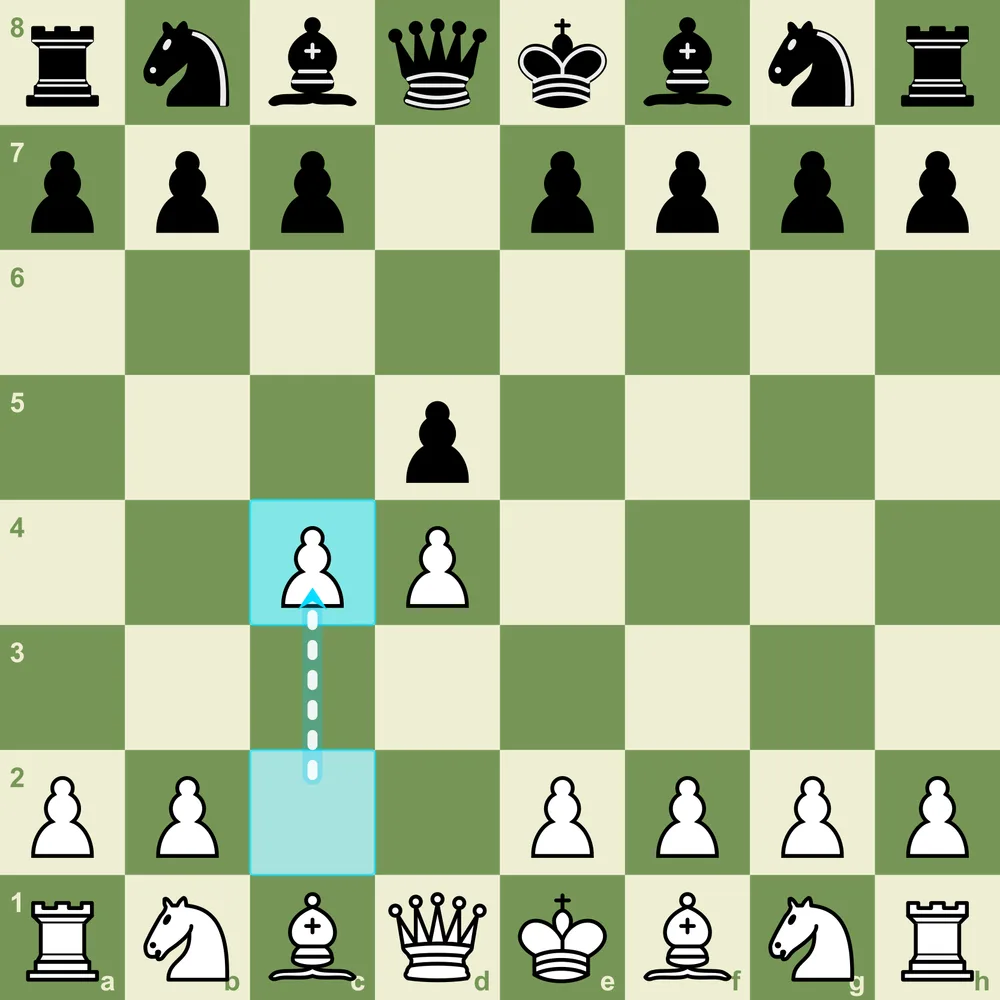
The Queen's Gambit begins with the moves 1.d4 d5 2.c4 and is one of the most classical and enduring openings in all of chess. White offers the c4 pawn not as a genuine sacrifice, but as bait: if Black captures with 2...dxc4, White does not try to win the pawn back immediately but instead builds a powerful pawn center with e4 and develops rapidly. The core idea is to challenge and undermine Black's central d5 pawn, gaining a lasting spatial and developmental edge.
The opening has been known since the 15th century and was analyzed in the earliest chess manuals, but it rose to prominence in the late 19th and early 20th centuries as classical chess theory matured. It became the defining battleground of countless World Championship matches - Capablanca, Alekhine, Botvinnik, and later Kasparov and Karpov all relied on Queen's Gambit structures. Its cultural fame reached a new peak with the popularity of the opening's name in mainstream media, but its real value has always been its soundness.
What makes the Queen's Gambit so appealing is that it rewards understanding over memorization. Each of Black's main replies leads to a distinct, instructive structure: the Queen's Gambit Declined produces a solid, maneuvering game; the Accepted opens the position for active pieces; the Slav keeps Black's bishop free; and the Exchange Variation introduces the famous minority attack. Learning these structures teaches you strategic ideas that recur across the entire game of chess.
In modern practice, the Queen's Gambit remains a mainstay at every level, from club players seeking a principled 1.d4 repertoire to elite grandmasters like Magnus Carlsen, Fabiano Caruana, and Ding Liren, who regularly reach for it in critical games. It is a complete, lifelong opening for the White pieces.
How to Play the Queen's Gambit
The Queen's Gambit starts with 1.d4 d5 2.c4. White's plan is straightforward and principled: pressure the d5 pawn, complete development with Nc3, Nf3, and a kingside fianchetto or Bf4/Bg5, and castle. The battle revolves around the center - White wants to play e4 under favorable circumstances, while Black tries to hold the center or generate counterplay with ...c5 and ...e5 pawn breaks.
Black has three main ways to meet the gambit: 2...e6 (the Queen's Gambit Declined), 2...dxc4 (the Queen's Gambit Accepted), and 2...c6 (the Slav Defense). Each keeps the d5 point defended in a different way, and each leads to fundamentally different middlegames. White's job is to recognize which structure has arisen and apply the correct plan for it.
The strategic philosophy is classical: control the center, develop with purpose, and convert small structural advantages. You will rarely be attacked off the board in the Queen's Gambit; instead, you accumulate positional pluses - better pawn structure, more space, the two bishops - and grind them into a win. This makes it an ideal opening for players who want to improve their long-term strategic understanding.
Main Queen's Gambit Variations
The Queen's Gambit branches by how Black defends the d5 pawn. Here are the four systems every Queen's Gambit player must understand.
The Queen's Gambit Declined
2...e6Intermediate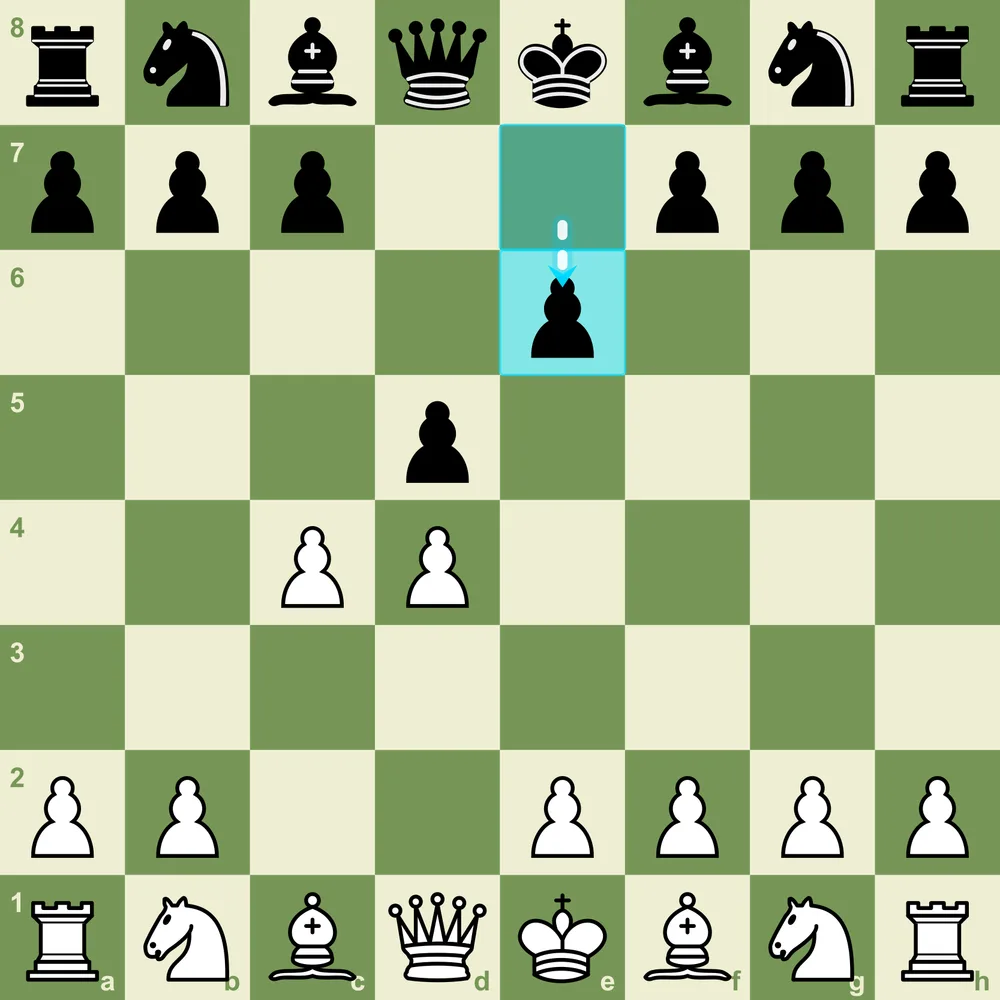
The Queen's Gambit Declined (QGD) is the most solid and classical response. With 2...e6, Black reinforces the d5 pawn and prepares natural development with ...Nf6, ...Be7, and ...O-O. The trade-off is that the e6 pawn temporarily blocks the light-squared bishop, a small concession Black accepts in exchange for a fortress-like structure.
A typical main line runs 3.Nc3 Nf6 4.Bg5 Be7 5.e3 O-O, reaching one of the most heavily analyzed structures in chess history. White often follows with the minority attack on the queenside or a central break with e4, while Black seeks freedom with the ...c5 or ...dxc4 followed by ...c5 breaks. The QGD has been the backbone of World Championship play from Lasker and Capablanca to Kasparov and Carlsen.
Famous practitioners: Capablanca, Karpov, Kasparov, Carlsen
The Queen's Gambit Accepted
2...dxc4Intermediate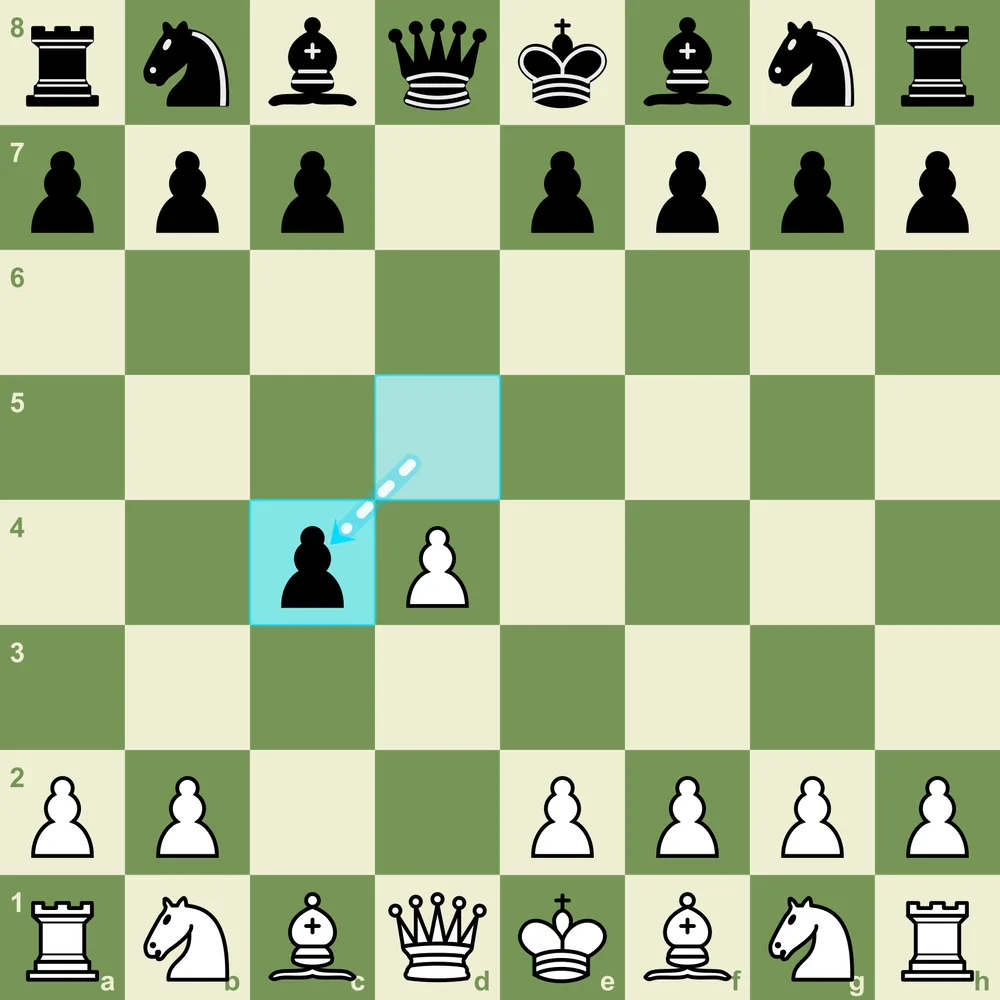
In the Queen's Gambit Accepted (QGA), Black plays 2...dxc4, taking the offered pawn. The point is not to keep it - trying to hold the pawn with ...b5 is refuted - but to surrender the center in exchange for rapid, harmonious development and open lines for the pieces. It is a fully respectable, dynamic way to meet 1.d4.
White typically continues 3.Nf3 Nf6 4.e3 (or 3.e4 for a big center), regaining the c4 pawn with Bxc4 and building a strong pawn duo on d4 and e4. Black's counterplay comes from the freeing breaks ...c5 and ...e5, striking at White's center before it becomes overwhelming. Precise timing of these breaks is the key skill in the QGA for both sides.
Famous practitioners: Anand, Korchnoi, Aronian, Grischuk
The Slav Defense
2...c6Intermediate-Advanced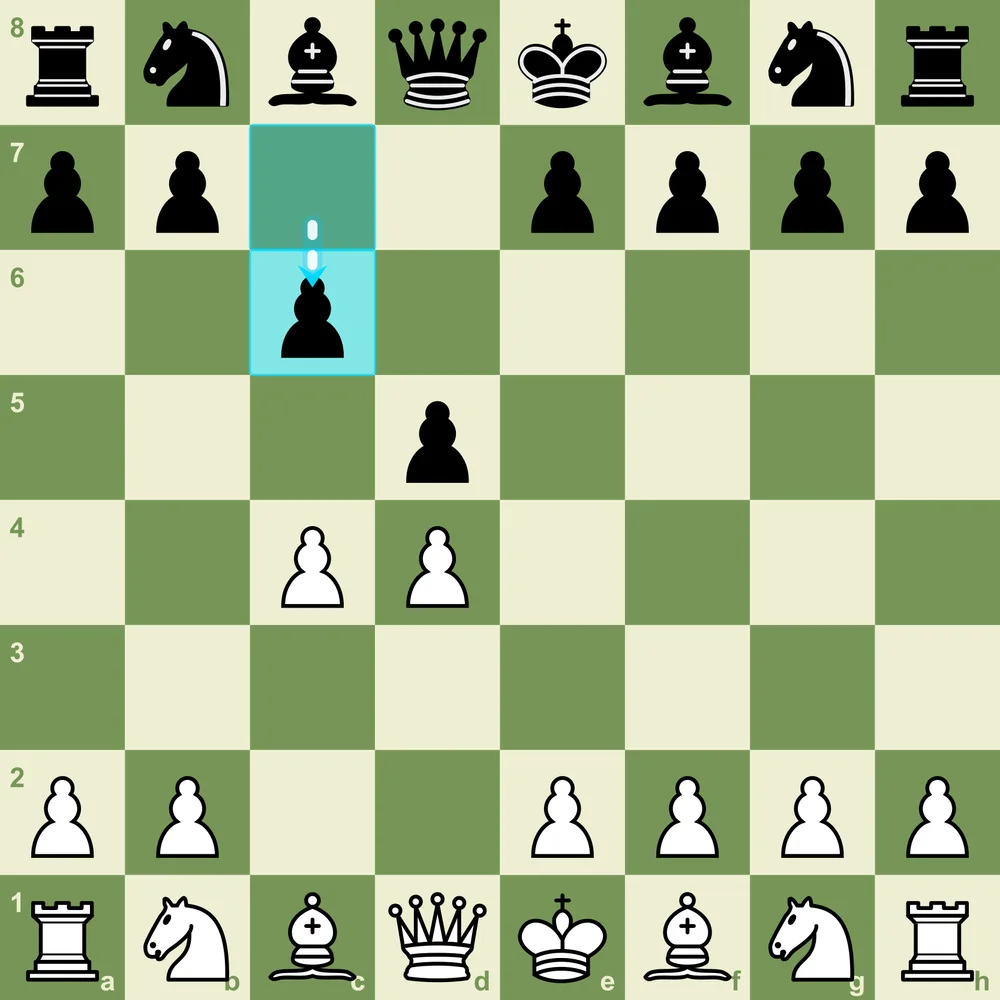
The Slav Defense meets the gambit with 2...c6, defending d5 with the c-pawn rather than the e-pawn. The great advantage over the Queen's Gambit Declined is that Black's light-squared bishop is not shut in behind its own pawns; it can develop actively to f5 or g4 before Black plays ...e6.
After 3.Nf3 Nf6 4.Nc3 dxc4, Black grabs the pawn and prepares ...Bf5 and ...e6 with a comfortable, well-coordinated position. The Slav is extremely resilient and has been a favorite defensive weapon at the top level for decades. As White, treat it patiently: complete development, regain the c4 pawn, and play on the small structural details.
Famous practitioners: Botvinnik, Smyslov, Anand, Kramnik
The Exchange Variation
3.cxd5 exd5Beginner-Intermediate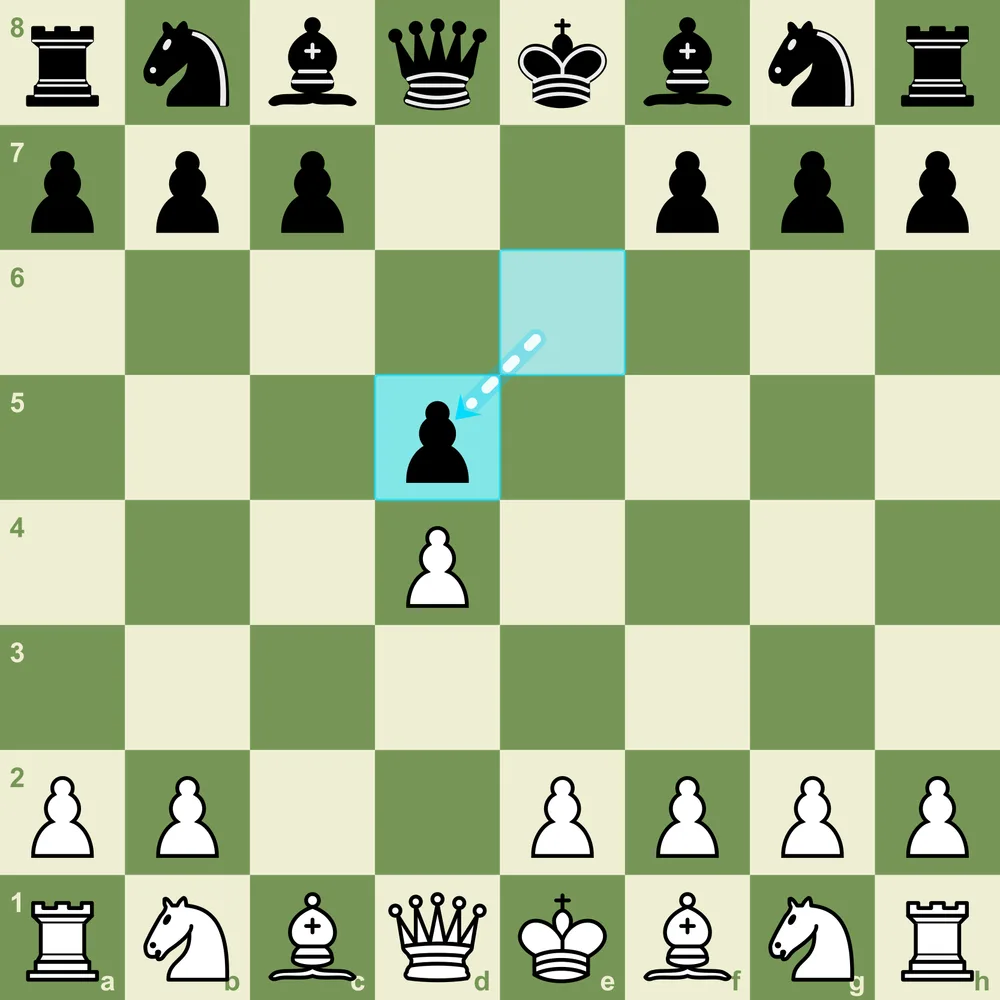
The Exchange Variation arises after 3.cxd5 exd5 (against the QGD), releasing the central tension and fixing the pawn structure. Far from being a drawish simplification, it hands White one of the most instructive plans in chess: the minority attack, where White advances the b-pawn to b4-b5 to create a weakness in Black's queenside pawns.
A standard setup is 4.Nc3 Nf6 5.Bg5 Be7 6.e3 followed by Qc2, O-O-O or O-O, and the b4-b5 push. Black counters with piece play in the center and a possible ...Ne4 or a kingside expansion. The Exchange Variation is a superb choice for players who want a clear, plan-based game where understanding the minority attack does most of the work.
Famous practitioners: Botvinnik, Petrosian, Karpov, Carlsen
Pros and Cons of the Queen's Gambit
Advantages
- •Fights for the center immediately - by challenging d5 on move two, White stakes a claim to the center that shapes the whole game
- •Principle over memorization - the plans are logical and repeatable, so understanding beats rote theory in most lines
- •Teaches essential structures - the isolated queen's pawn, the minority attack, and central majorities recur throughout chess
- •Sound at every level - from club play to World Championship matches, the Queen's Gambit delivers reliable, long-term results
Disadvantages
- •Can be slow to create attacks - the Queen's Gambit is positional by nature, so players who crave early kingside attacks may find it patient
- •Solid Black defenses - the QGD and Slav are very hard to crack, so winning requires patience and accurate technique
- •Many transpositions - the Queen's Gambit family transposes into the Catalan, Nimzo-Indian, and Slav complexes, which takes time to map out
- •IQP positions need study - several lines lead to isolated queen's pawn structures that require specific knowledge to handle on both sides
Common Mistakes to Avoid in the Queen's Gambit
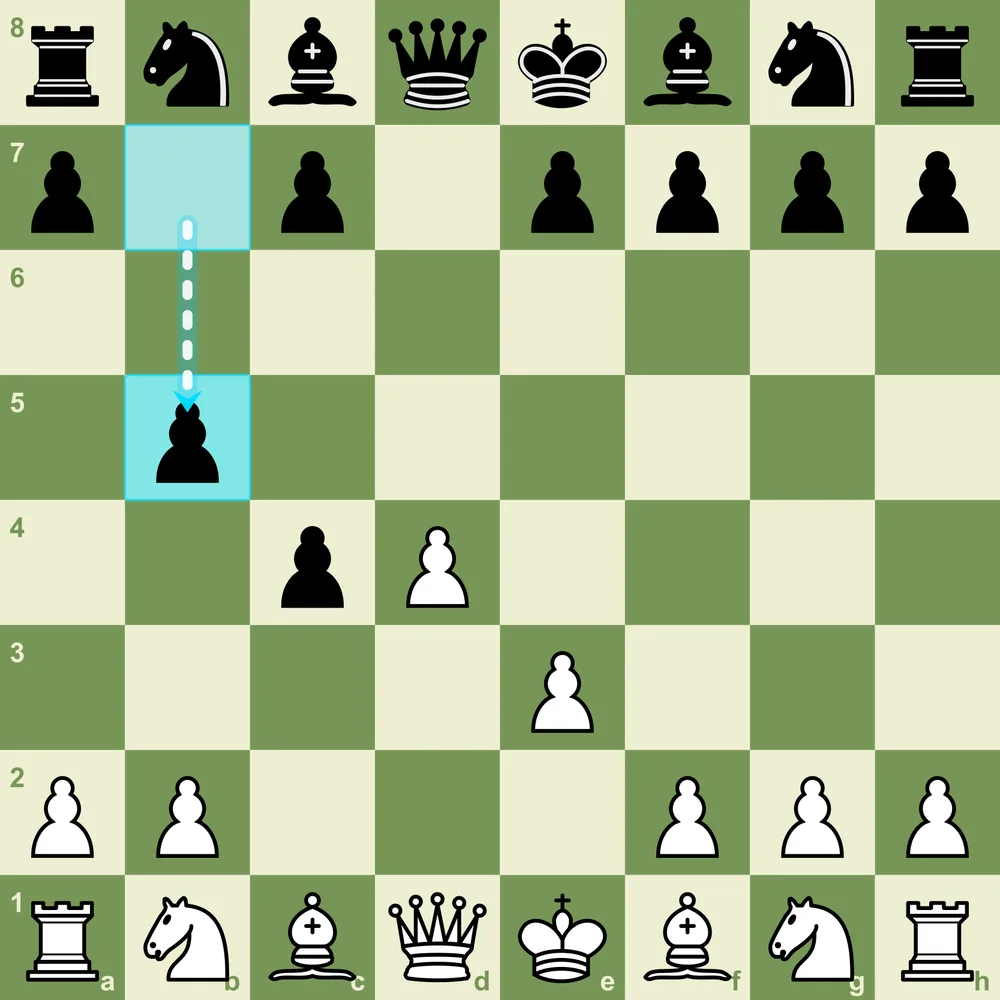
Trying to hold the gambit pawn with ...b5
In the Queen's Gambit Accepted, grabbing the pawn is fine, but clinging to it with ...b5 is a classic error. After 3.e3 b5, White plays 4.a4! c6 5.axb5 cxb5 6.Qf3, winning material or a crushing position. The c4 pawn is bait - take it if you like, but give it back and develop rather than trying to defend it.
Developing the bishop before playing e3 (as White)
A frequent White mistake is locking in the dark-squared bishop by playing e3 too early, or conversely leaving the c1-bishop passive. In many lines the bishop belongs on g5 or f4 before e3 shuts it in. Decide where your dark-squared bishop is going before you commit the e-pawn, or it will spend the game staring at its own pawns.
Forgetting the ...c5 and ...e5 breaks as Black
Black's whole strategy against the Queen's Gambit depends on the freeing pawn breaks ...c5 (and sometimes ...e5). Drifting with passive development and never challenging White's center leaves Black cramped and strategically lost. Always keep the timing of ...c5 in mind - it is the move that frees your position.
Playing the Exchange Variation without a plan
The Exchange Variation looks symmetrical and quiet, which lulls many players into aimless moves. But the position has a clear roadmap: White should prepare the minority attack with b4-b5, and Black should seek central and kingside piece play. Know your plan before you enter the Exchange, or the "simple" structure will quietly turn against you.
How to Practice the Queen's Gambit
The Queen's Gambit rewards structured, plan-based study. Follow these steps to make it a dependable part of your repertoire.
Start with the Queen's Gambit Declined
The QGD teaches the core ideas of the whole opening: pressure d5, develop naturally, and play for structural advantages. Learn the main line with 3.Nc3 Nf6 4.Bg5 Be7 5.e3 O-O and the plans that follow, and you will understand most of what the Queen's Gambit is about.
Master the minority attack
The Exchange Variation's minority attack (advancing b4-b5 to create a backward c-pawn for Black) is one of the most important plans in chess. Study a few model games - Botvinnik's are the classics - until the b4-b5 idea becomes second nature.
Use ChessHelper to analyze your Queen's Gambit games
After each game, review the opening and early middlegame with ChessHelper's AI analysis. Did you find the right moment for e4 or b4-b5? Was your dark-squared bishop well placed? ChessHelper highlights the critical moments so you learn the recurring plans faster.
Study isolated queen's pawn (IQP) structures
Many Queen's Gambit lines lead to IQP positions. Learn both sides of the IQP: the attacker uses the extra space and piece activity, while the defender blockades the pawn and trades into a favorable endgame. This knowledge pays off far beyond the Queen's Gambit.
Play slow time controls to internalize the plans
The Queen's Gambit is strategic, and its ideas sink in best over longer games. Play some practice games at 15+10 or slower, and use the time to ask the key questions: where does each piece belong, when do I break with e4 or b4, and which structure am I steering toward?
Master the Queen's Gambit with ChessHelper
Get real-time AI analysis as you practice the Queen's Gambit in your online games. Understand every structure, learn from your mistakes, and build a complete 1.d4 repertoire.
Start Practicing for FreeJoin 10,000+ chess players building solid opening repertoires with ChessHelper
Related Openings
If you enjoy the Queen's Gambit, these openings share similar strategic themes and will round out your repertoire.
London System
A low-theory 1.d4 system where White develops the bishop to f4 and follows a repeatable setup. Perfect if you like the Queen's Gambit's solidity with even less memorization.
1.d4 & 2.Bf4
English Opening
The flank cousin of the Queen's Gambit. White plays 1.c4, fighting for the center from the wing and often transposing into Queen's Gambit structures.
1.c4
King's Indian Defense
One of the most popular defenses you'll face after 1.d4. Black cedes the center to strike back with ...e5 and a kingside attack - essential to understand as a 1.d4 player.
1.d4 Nf6 2.c4 g6
Queen's Gambit: Frequently Asked Questions
Not in the traditional sense. A true gambit sacrifices a pawn for lasting initiative, but in the Queen's Gambit White almost always regains the c4 pawn. After 1.d4 d5 2.c4, if Black grabs the pawn with 2...dxc4 (the Queen's Gambit Accepted), holding onto it with moves like ...b5 is unsound - White breaks it down with a4 and e4, ending up with a strong center. So the c4 pawn is offered, but it is really bait to deflect Black's d5 pawn and seize the center, not a genuine material sacrifice.
Both are perfectly sound. The Queen's Gambit Declined (2...e6) is the most solid and classical choice, giving Black a rock-hard structure at the cost of temporarily blocking the light-squared bishop. The Queen's Gambit Accepted (2...dxc4) is more dynamic: Black gives up the center to gain quick development and free piece play, aiming to strike back with ...c5 or ...e5. If you like solid, strategic positions, decline; if you prefer active piece play and open lines, accept. The Slav Defense (2...c6) is a third excellent option that keeps the bishop free.
Yes, the Queen's Gambit is one of the best first openings for White. It follows classical principles perfectly: fight for the center, develop pieces to active squares, and castle safely. The plans are logical and repeatable across variations, so you spend less time memorizing forced lines and more time learning sound chess. It also teaches essential structures - the isolated queen's pawn, the minority attack, and central pawn majorities - that appear throughout chess, making it a superb long-term investment.