
What is the Slav Defense?
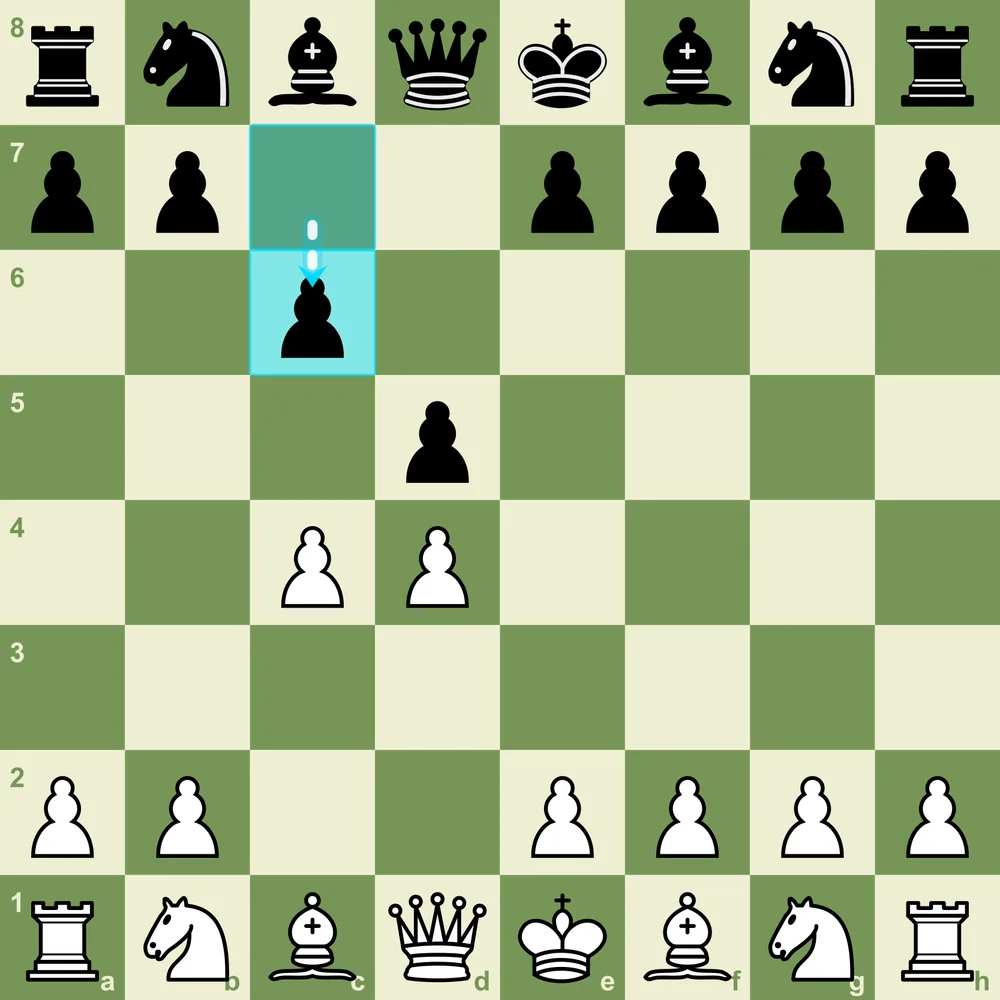
The Slav Defense arises after 1.d4 d5 2.c4 c6 and is one of the two principal ways to decline the Queen's Gambit. The idea behind 2...c6 is elegantly simple: Black bolsters the d5 pawn so that it cannot be undermined, yet does so without shutting in the light-squared bishop. This is the crucial distinction from the Queen's Gambit Declined, where 2...e6 defends d5 at the cost of burying the c8-bishop behind its own pawn chain.
By keeping the c8-h3 diagonal open, the Slav lets Black develop the bishop actively to f5 or g4 before playing ...e6. The result is a pawn structure with no organic weaknesses and pieces that coordinate naturally. Black is rarely forced into passivity, and the central tension between the c4 and d5 pawns gives the position long-term dynamism. It is this combination of soundness and flexibility that earns the Slav its reputation as one of the most resilient defenses in the game.
The opening takes its name from the Slavic masters who developed its ideas in the late nineteenth and early twentieth centuries, and it rose to prominence when it was employed repeatedly in World Championship play. Max Euwe, Mikhail Botvinnik, and Vasily Smyslov all leaned on the Slav in title matches, and later champions and challengers including Anatoly Karpov, Vladimir Kramnik, and Viswanathan Anand kept it at the very top of elite practice. When a player needed a defense that would simply not crack under pressure, the Slav was the tool of choice.
In the modern era the Slav remains a staple of grandmaster repertoires, with Magnus Carlsen, Fabiano Caruana, and Wesley So all turning to it in serious competition. It spans a broad range of characters: the quiet symmetry of the Exchange Variation, the razor-sharp theory of the Semi-Slav, and the flexible modern treatment of the Chebanenko. Few defenses offer such a reliable foundation while still leaving genuine room to play for a win.
How to Play the Slav Defense
The Slav begins with 1.d4 d5 2.c4 c6. Black's second move defends d5 and prepares to meet the pressure on the center without conceding structural weaknesses. The single most important idea to remember is that the c8-bishop must usually be developed to f5 or g4 before Black plays ...e6, because once the e-pawn advances the bishop can become trapped behind its own pawns.
After the natural continuation 3.Nf3 Nf6 4.Nc3, Black reaches the main crossroads of the opening. The classical choice is 4...dxc4, capturing the gambit pawn and then supporting it or developing actively; White typically responds with 5.a4 to recover the pawn and prevent ...b5. Alternatively Black can play 4...e6, entering the Semi-Slav, or 4...a6, the flexible Chebanenko. White may also release the tension early with the Exchange Variation, 3.cxd5 cxd5.
The strategic philosophy of the Slav is consistent across all of these branches: keep the pawn structure healthy, develop the pieces to their most natural squares, and get the light-squared bishop outside the pawn chain whenever possible. Black is content to reach a sound, harmonious middlegame and then outplay the opponent through superior understanding rather than through memorized tactics. Patience, accurate move order, and a feel for when to release the central tension are the hallmarks of a strong Slav player.
Main Slav Defense Variations
The Slav branches into several distinct systems, ranging from quiet and symmetrical to some of the sharpest theory in chess. Here are the variations every Slav player must know.
The Main Line
4...dxc4Intermediate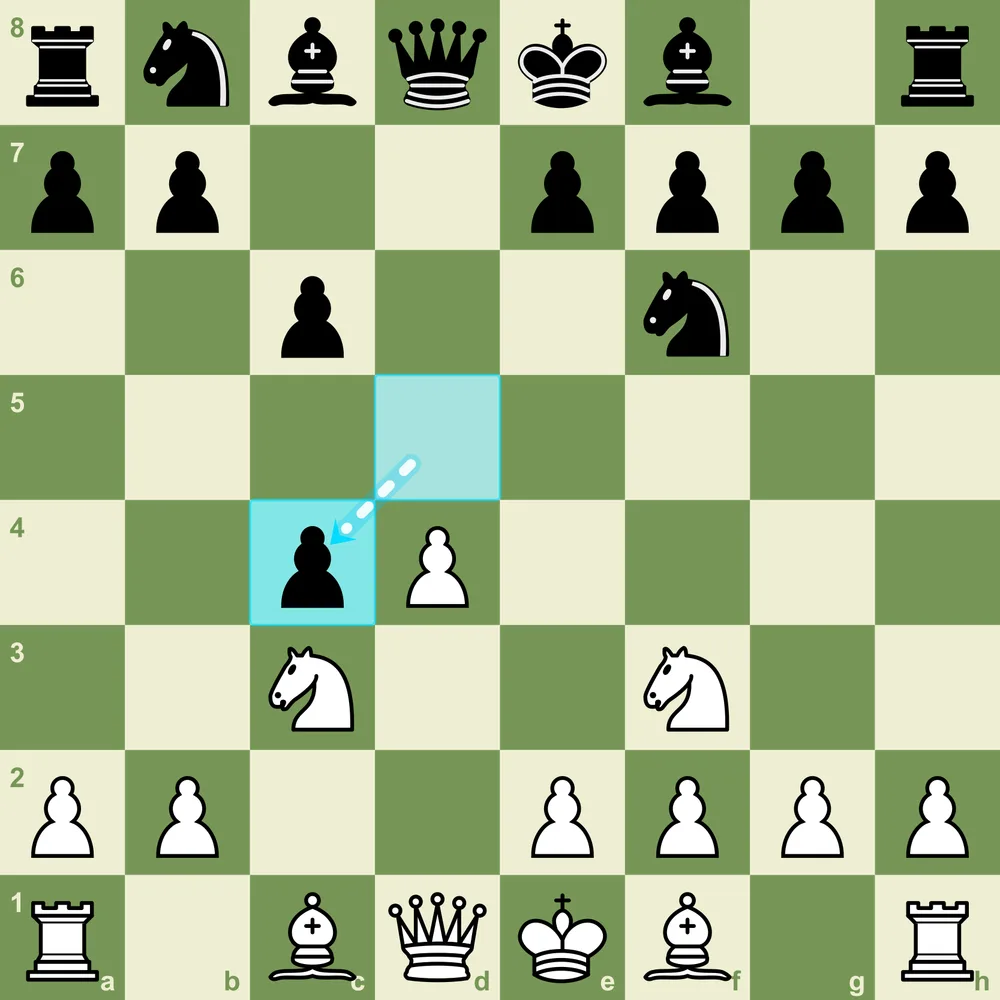
The Main Line, sometimes called the Pure Slav, runs 1.d4 d5 2.c4 c6 3.Nf3 Nf6 4.Nc3 dxc4. Black snaps off the c4 pawn, not to hold it permanently but to gain time and free the position. The point is that ...dxc4 opens the diagonal for the c8-bishop, which can now come to f5 or g4 with tempo before Black plays ...e6.
White's principal reply is 5.a4, which both prepares to recapture the pawn and clamps down on the ...b5 break that would otherwise defend the extra pawn. This concession of the a5-square is the trade-off that defines the entire line. After 5...Bf5, Black completes the classical setup with ...e6, ...Bb4 or ...Be7, ...Nbd7 and castling, reaching a balanced, well-coordinated position that has held up under decades of top-level scrutiny.
Famous practitioners: Smyslov, Kramnik, Anand, Caruana
The Exchange Variation
3.cxd5Beginner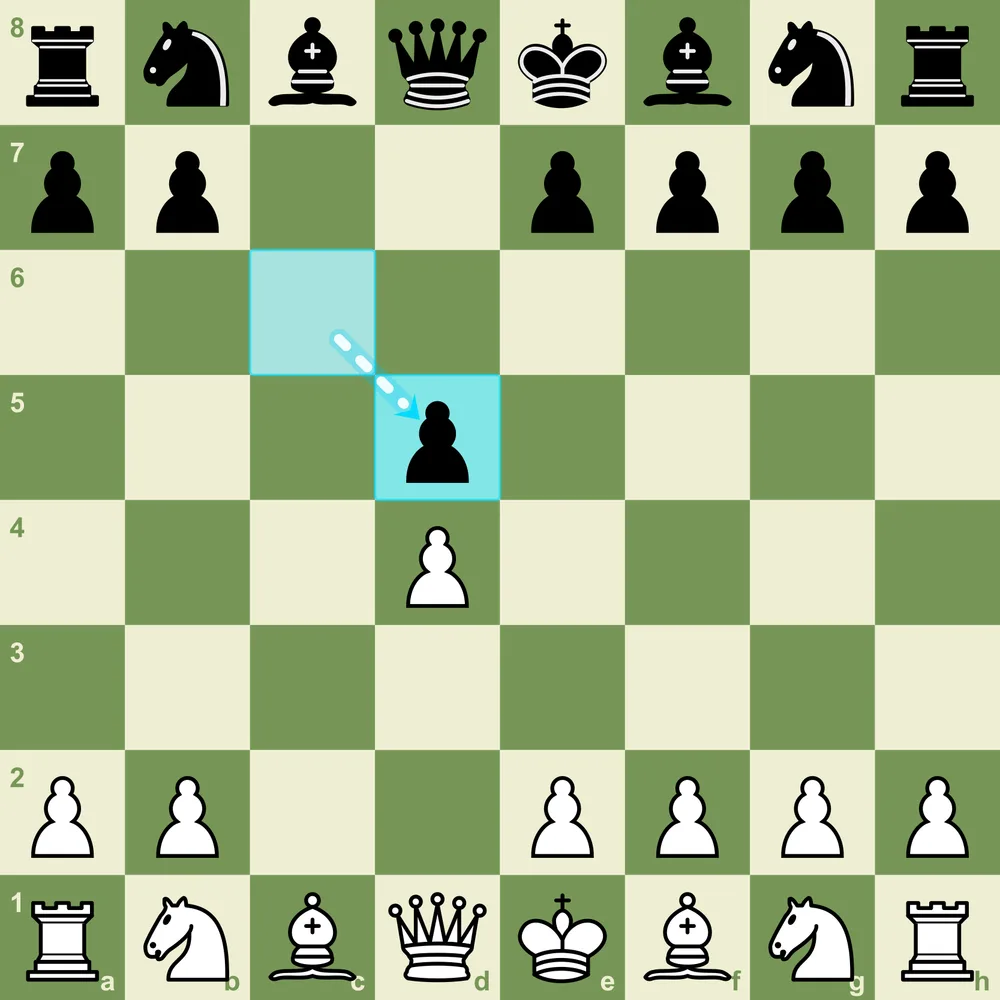
In the Exchange Variation, White releases the central tension at once with 3.cxd5 cxd5, reaching a fully symmetrical pawn structure. The line has a reputation for being drawish, and at the highest level it often is, but that reputation makes it a favorite of players hoping to neutralize an ambitious Slav opponent. Black must be alert rather than complacent.
Black's plan is clear and principled: develop with 3...Nc6 4.Nf3 Nf6, bring the bishop to f5 before playing ...e6, and then complete development with ...Bd6, castling, and pressure down the half-open c-file. Because the position is symmetrical, the initiative is worth a great deal, and Black plays to be the side that first creates something concrete on the queenside. Treating this line as an automatic handshake is the surest way to drift into a worse position.
Famous practitioners: Carlsen, Karpov, So, Rubinstein
The Semi-Slav
4...e6Intermediate-Advanced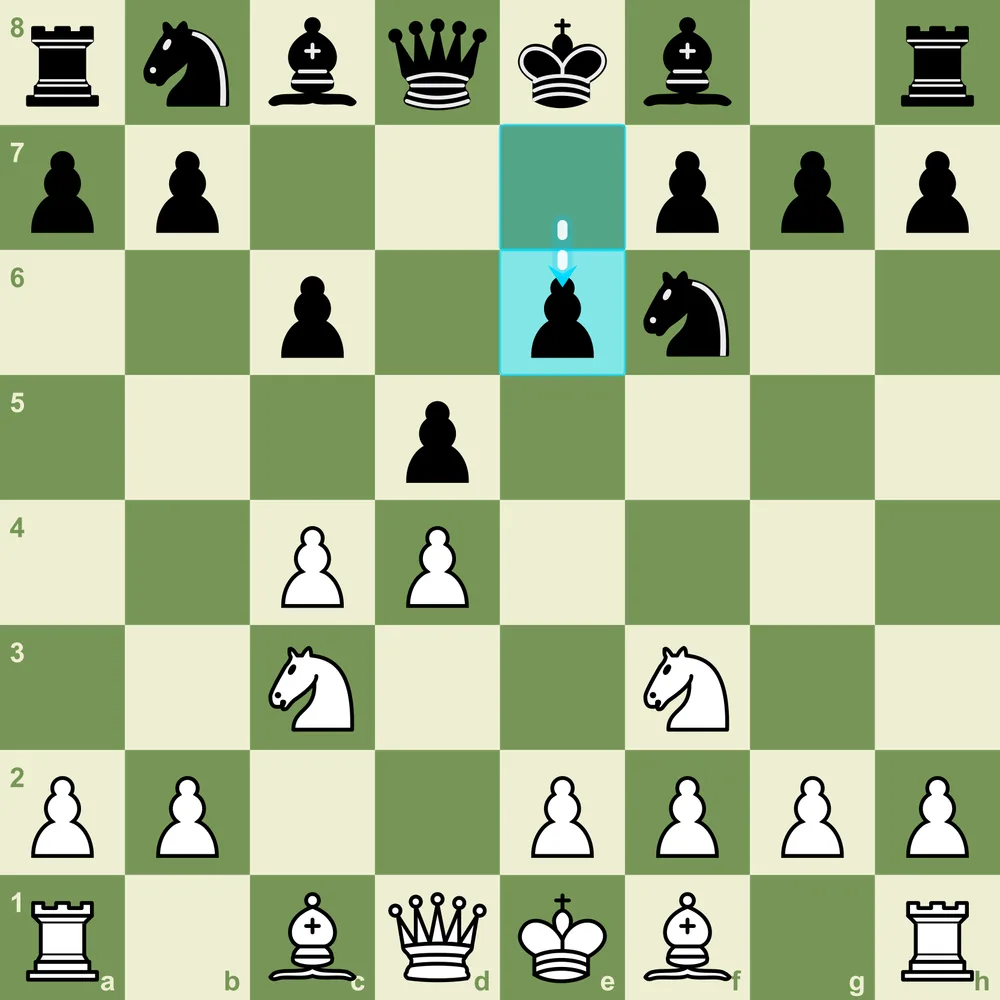
The Semi-Slav arises when Black plays both ...c6 and ...e6, as in 1.d4 d5 2.c4 c6 3.Nf3 Nf6 4.Nc3 e6. This pawn triangle gives up the natural development of the light-squared bishop but builds one of the most bomb-proof center structures in chess. In return, Black obtains rich dynamic resources, and the resulting positions are among the most heavily analyzed in the entire game.
The Semi-Slav is really a family of famous systems. The Meran arises after Black plays ...dxc4 and ...b5, unfurling the queenside with sharp play. The Botvinnik System, reached after 5.Bg5 dxc4, is a legendary tactical battleground where both sides sacrifice material for the initiative. The Moscow and Anti-Moscow lines with 5.Bg5 h6 lead to their own dense theory. This variation rewards players willing to invest serious study time, and it can carry a determined Black player to a win against the strongest opposition.
Famous practitioners: Botvinnik, Anand, Kramnik, Aronian
The Chebanenko Variation
4...a6Intermediate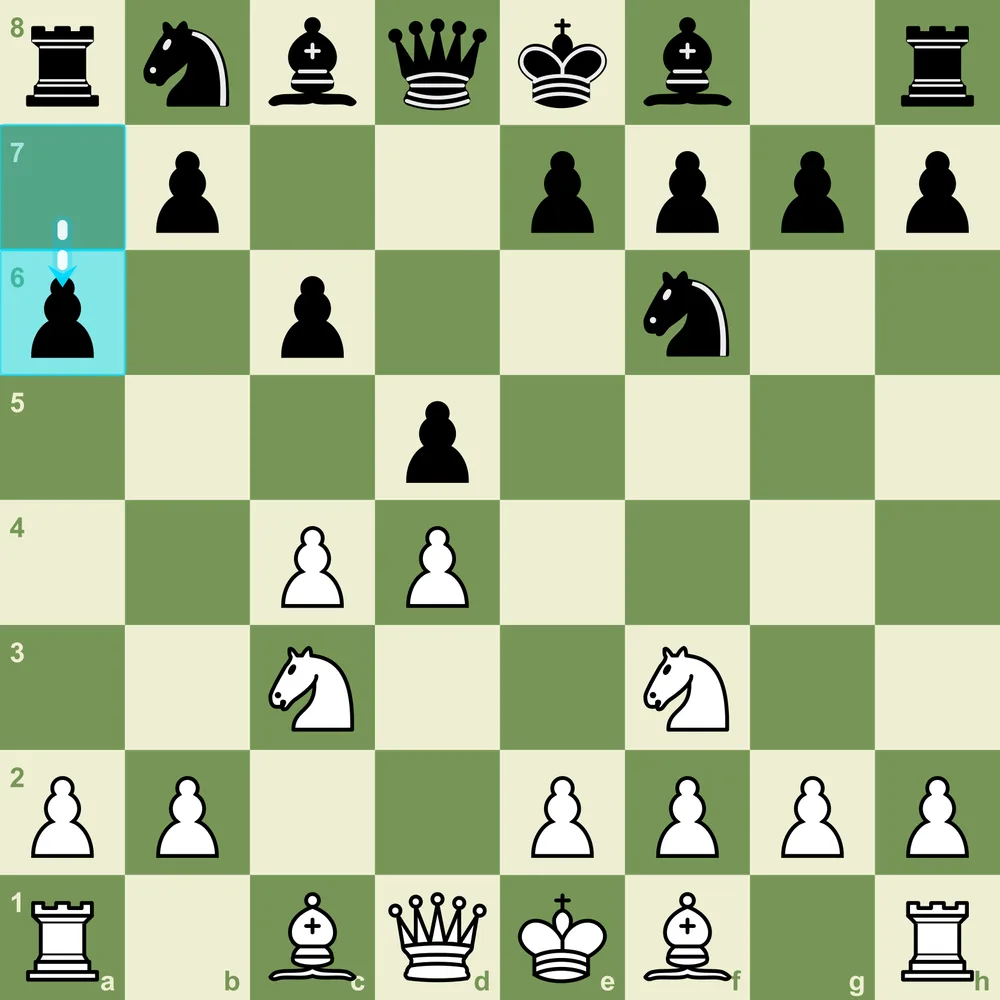
The Chebanenko Variation, also known as the a6 Slav, is defined by 4...a6. Championed by the Moldovan trainer Viacheslav Chebanenko and his students, this modest-looking pawn move is remarkably flexible. It prepares the ...b5 expansion, supports a future ...dxc4 by making ...b5 possible afterward, and keeps White guessing about Black's eventual setup.
Because ...a6 is a useful move in so many structures, Black can delay committing the light-squared bishop and instead react to White's plan. If White plays c5 to gain space, Black has the ...b6 or ...e5 break in reserve; if White allows ...dxc4, the ...b5 advance holds the pawn far more comfortably than in the older main lines. The Chebanenko became hugely popular at the turn of the century precisely because it combines Slav-like solidity with a modern, flexible flavor that sidesteps a great deal of forcing theory.
Famous practitioners: Chebanenko, Bologan, Dreev, Grischuk
Pros and Cons of the Slav Defense
Advantages
- •Rock-solid pawn structure - defending d5 with ...c6 keeps the center healthy and leaves Black with no organic weaknesses to defend
- •Free light-squared bishop - unlike the Queen's Gambit Declined, the c8-bishop develops actively to f5 or g4 rather than being locked behind ...e6
- •Championship pedigree - trusted in World Championship matches for nearly a century, it is a defense you can rely on at every level
- •Flexible range of characters - from the quiet Exchange to the razor-sharp Semi-Slav, you can tailor the opening to your style
Disadvantages
- •Exchange Variation can be drawish - opponents seeking a quick draw can steer into the symmetrical Exchange, so winning chances require precise, energetic play
- •Semi-Slav theory is enormous - the Meran, Botvinnik, and Moscow lines demand a great deal of memorization if you enter the sharpest branches
- •Move order matters - develop the bishop after ...e6 and it can become passive, so the correct sequence must be learned carefully
- •Can be slightly passive - if Black fails to find the right pawn break, the position may become cramped and reactive rather than active
Common Mistakes to Avoid in the Slav
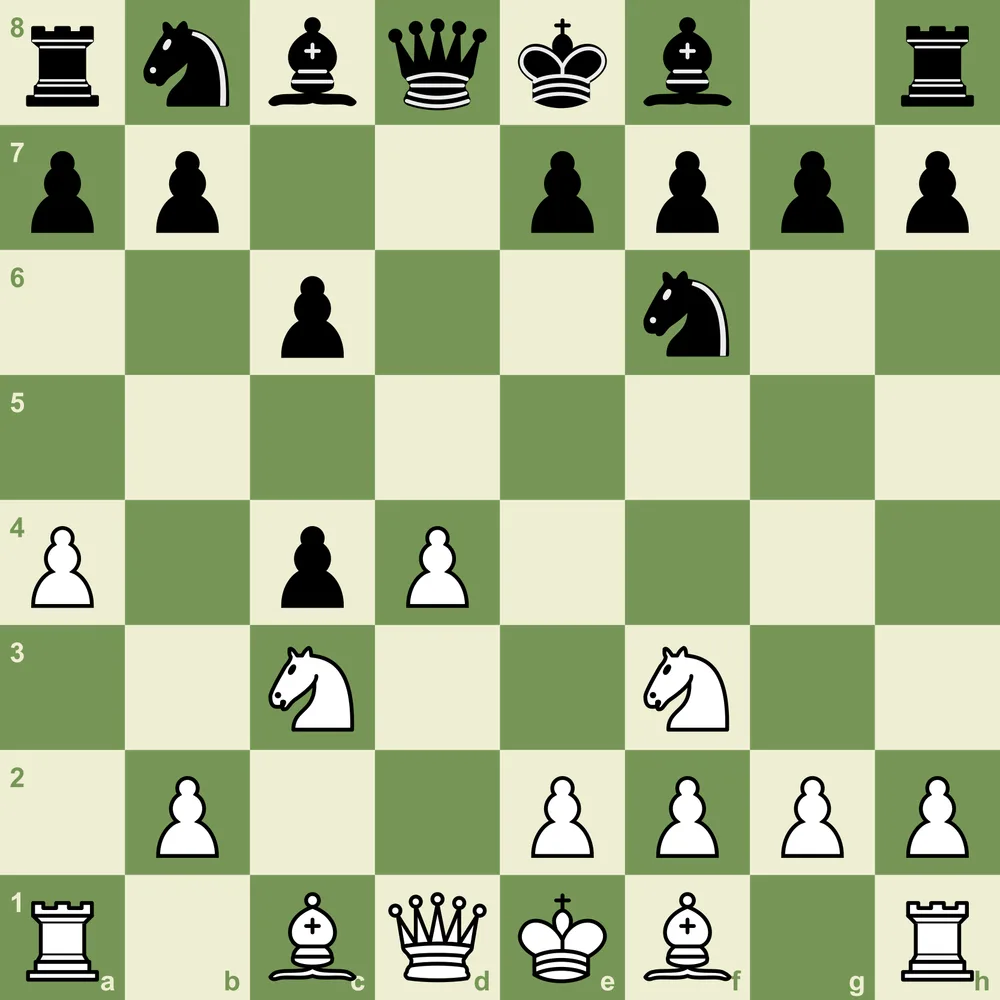
Playing ...e6 before developing the bishop
The whole point of the Slav over the Queen's Gambit Declined is that the light-squared bishop stays free. If you rush ...e6 before playing ...Bf5 or ...Bg4, you shut the bishop in behind its own pawns and end up with a worse version of the QGD. In the pure Slav, get the bishop outside the pawn chain first, then play ...e6.
Trying to cling to the c4 pawn
After 4...dxc4, the extra pawn is not meant to be held at all costs. Once White plays 5.a4, the ...b5 defense is prevented, and attempts to hang on to the pawn with moves like ...b5 anyway usually leave Black's queenside fatally weak. Treat ...dxc4 as a way to free your position and gain time for development, not as a material grab.
Playing passively in the Exchange Variation
A symmetrical structure does not mean a lifeless game. Many players slip into autopilot after 3.cxd5 cxd5 and shuffle pieces without a plan, gradually handing White the initiative. Instead, develop the bishop to f5 before ...e6, contest the half-open c-file with ...Rc8, and be the side that creates the first threat. The symmetry rewards the more active player.
Neglecting the central pawn breaks
The Slav can become cramped if Black never challenges White's center. Depending on the structure, the freeing breaks ...c5, ...e5, or ...b5 are what give Black active play. Keep these breaks in mind and prepare them properly; drifting without a break lets White expand unopposed and squeeze Black off the board.
How to Practice the Slav Defense
The Slav rewards structured, methodical study. Follow these steps to make it a dependable part of your opening repertoire.
Start with the Main Line and ...Bf5
Begin with the classical 4...dxc4 5.a4 Bf5 setup. It teaches the core Slav idea of freeing the light-squared bishop before ...e6 and gives you a sound, natural position against White's most common tries. Once this feels comfortable, the other branches will make far more sense.
Decide between the pure Slav and the Semi-Slav
If you enjoy quieter, structurally clear positions, stick with the pure Slav and its ...Bf5 systems. If you relish sharp, theory-rich battles, invest time in the Semi-Slav with 4...e6, learning the Meran and the ideas behind 5.Bg5. Choosing your lane early keeps your study focused and efficient.
Use ChessHelper to analyze your Slav games
After each game, review the opening phase with ChessHelper's AI analysis. Did you develop the bishop before ...e6? Did you find the right pawn break? ChessHelper's AI-powered engine highlights the critical moments in your games and helps you build a deeper feel for the positions you actually reach.
Study the games of Kramnik and Anand
Few players have shown the Slav's depth better than Vladimir Kramnik and Viswanathan Anand, both of whom relied on it in World Championship play. Work through their games to see how elite players handle the transition from opening to middlegame and how they convert the Slav's sound structure into concrete winning chances.
Play slow time controls to internalize the plans
The Slav is a strategic opening, and its subtleties are best absorbed in longer games where you have time to weigh plans rather than just moves. Play some practice games at 15+10 or slower, and use the extra time to ask the key questions: where does my bishop belong, which pawn break is right, and how do I generate counterplay?
Master the Slav with ChessHelper
Get real-time AI analysis as you practice the Slav in your online games. Understand every position, learn from your mistakes, and build an unbreakable repertoire.
Start Practicing for FreeJoin 10,000+ chess players building solid opening repertoires with ChessHelper
Related Openings
If you enjoy the Slav, these openings share similar strategic themes and will complement your repertoire.
Queen's Gambit
The parent opening the Slav answers. White offers the c-pawn to challenge Black's center - essential context for understanding every Slav structure.
1.d4 d5 2.c4
Caro-Kann Defense
The Slav's cousin against 1.e4. Black again plays ...c6 to build a solid center while keeping the light-squared bishop free to develop.
1.e4 c6
London System
Love the Slav's dependable, low-theory setups? The London System gives you the same reliable, strategic approach with the white pieces.
1.d4 & 2.Bf4
Slav Defense: Frequently Asked Questions
The Slav is solid because Black defends the d5 pawn with 2...c6 rather than 2...e6, which keeps the pawn structure healthy while leaving the c8-bishop free to develop outside the pawn chain to f5 or g4. There are no long-term structural weaknesses, the center is firmly contested, and Black almost never gets attacked off the board. This durability is exactly why the Slav has been a World Championship mainstay for nearly a century, trusted by players such as Euwe, Botvinnik, Smyslov, Anand, and Kramnik when a game simply had to hold.
In the pure Slav, Black plays ...c6 and develops the light-squared bishop actively (usually to f5 or g4) before committing the e-pawn. In the Semi-Slav, Black plays both ...c6 and ...e6, forming a triangle of pawns that gives up the natural bishop development in exchange for a rock-solid center and dynamic counterplay. The Semi-Slav leads to some of the sharpest theory in all of chess, including the Meran, the Botvinnik System, and the Moscow and Anti-Moscow lines. The pure Slav is generally quieter and easier to learn, while the Semi-Slav is richer but far more theory-heavy.
After 3.cxd5 cxd5 the position is symmetrical and has a reputation for being drawish, but Black should not play on autopilot. The correct approach is to develop naturally with ...Nf6, ...Nc6, ...Bf5 (getting the bishop outside the pawn chain before ...e6), ...e6 and ...Bd6, then castle and contest the half-open c-file with ...Rc8. Because the structure is symmetrical, small inaccuracies matter: Black plays for the initiative on the c-file and looks to punish any premature or careless move by White rather than acquiescing to a quick draw.