
What is the Catalan Opening?
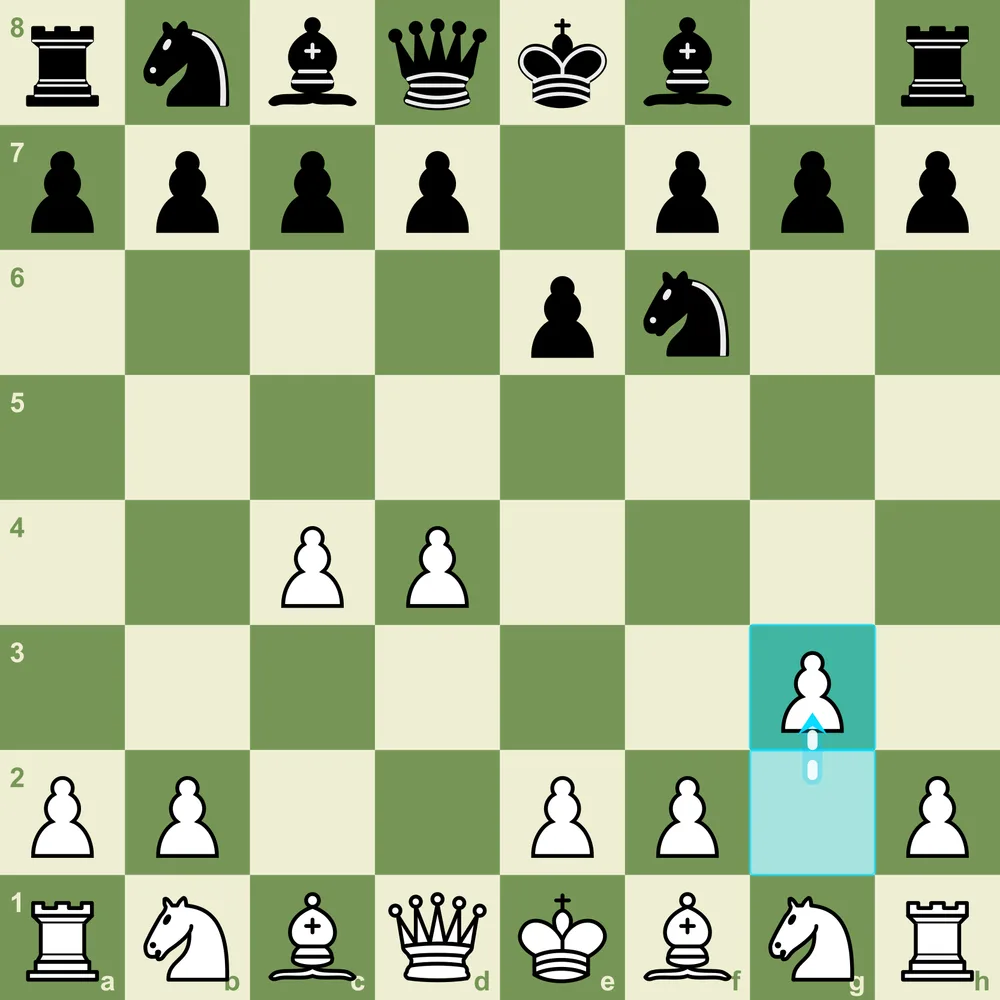
The Catalan Opening arises after the moves 1.d4 Nf6 2.c4 e6 3.g3 and is one of the most respected positional weapons in modern chess. Its concept is elegant: White combines the space-gaining Queen's Gambit pawns on d4 and c4 with a kingside fianchetto, developing the bishop to g2 where it exerts long-term pressure down the long light-squared diagonal. The result is an opening that blends the solidity of a classical center with the piece activity of a flank opening.
The opening takes its name from the Catalonia region of Spain. It is widely credited to Savielly Tartakower, who is said to have unveiled it at the Barcelona tournament of 1929 at the request of organizers who wanted a game played in a distinctly Catalan spirit. For decades the Catalan remained a respected but secondary try, until Vladimir Kramnik elevated it into a genuine main weapon at the elite level, most famously wielding it in his 2006 World Championship match. Today it is a favorite of world-class players including Magnus Carlsen, Fabiano Caruana, and Ding Liren.
The defining strategic feature of the Catalan is the way White treats the c4 pawn. When Black captures with ...dxc4, White frequently declines to recapture immediately, instead investing the pawn in rapid development and a lasting positional bind. The g2 bishop, combined with pressure on the c- and d-files, so thoroughly ties Black down that the pawn is usually regained under favorable circumstances. This is why the Catalan is sometimes described as a "positional gambit": White is willing to part with material temporarily in exchange for a durable, low-risk initiative.
The Catalan is generally regarded as an advanced opening, not because its moves are difficult to remember, but because it demands a deep understanding of pressure, prophylaxis, and long-term compensation. There are few forcing tactics to fall back on; instead, White must patiently accumulate small advantages and convert them over the course of a long game. For players who enjoy squeezing opponents with superior structure and harmonious piece placement, few openings are as rewarding.
How to Play the Catalan Opening
The Catalan begins with 1.d4 Nf6 2.c4 e6 3.g3. The move 3.g3 announces White's intention: rather than developing the knight to c3 as in the classical Queen's Gambit, White will fianchetto the king's bishop to g2. After the natural 3...d5 4.Bg2, we reach the main starting position of the Catalan, where the character of the battle is defined by how Black chooses to handle the c4 pawn and the central tension.
Black has two principal approaches. In the Open Catalan, Black plays 4...dxc4, taking the pawn and trying to make use of the extra tempo or material. In the Closed Catalan, Black keeps the position intact with a move like 4...Be7, castles, and aims for a solid but somewhat cramped setup. A third important option is the immediate 4...Bb4+, a check that disrupts White's development before the fianchetto framework is fully in place.
Regardless of Black's choice, White's plans revolve around a few consistent ideas: castle kingside quickly, bring the queen to c2, develop the b1 knight to d2, and place the rooks on the c- and d-files. The g2 bishop remains the star of the show, and White times the central break e4 or the pawn recovery on c4 to convert pressure into a concrete advantage. Patience and accurate move-order are everything: the Catalan rewards the player who improves the position one move at a time.
Main Catalan Opening Variations
The Catalan branches into a handful of major systems, each defined by how Black meets the g2 bishop and the c4 pawn. Here are the variations every Catalan player must know.
The Open Catalan
4...dxc4Advanced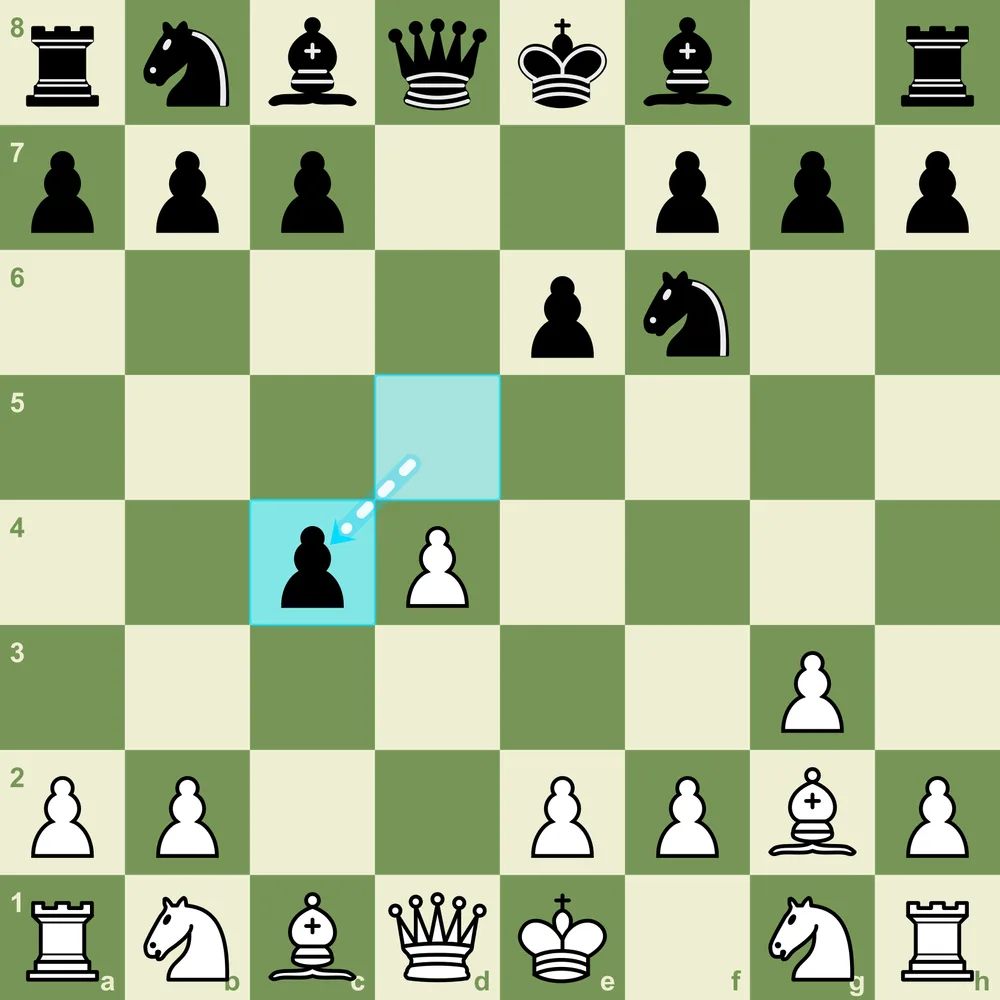
The Open Catalan arises when Black resolves the central tension with 4...dxc4, capturing the c4 pawn. This is the most principled and heavily analyzed way to meet the Catalan. By grabbing the pawn, Black hopes either to hold onto the extra material with ...b5 and ...a6, or to return it later in exchange for smooth development. Either way, the g2 bishop springs to life along the long light-squared diagonal, bearing down on b7 and the entire queenside.
White is rarely in a hurry to recapture. Instead, White completes development with moves such as Nf3, O-O, Qc2, Nbd2, and the powerful Ne5, aiming to round up the c4 pawn under favorable circumstances while retaining a lasting positional bind. The resulting middlegames are prized by strategic players: White enjoys long-term pressure and superior piece coordination, while Black must defend accurately to unravel. Grabbing the pawn is easy; keeping it comfortably is another matter entirely.
Famous practitioners: Kramnik, Carlsen, Caruana, Ding
The Closed Catalan
4...Be7Intermediate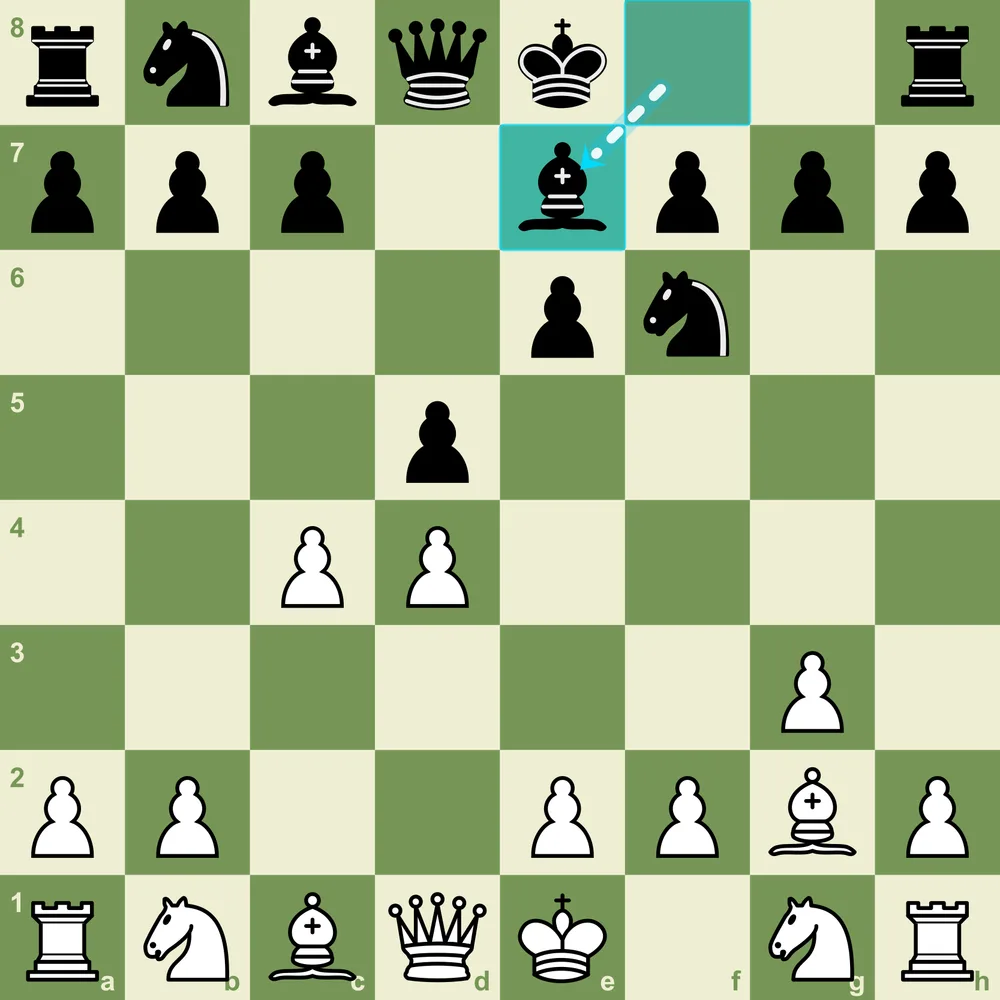
In the Closed Catalan, Black declines to release the tension in the center and instead develops solidly with 4...Be7, preparing to castle and maintain the d5 pawn. Black typically follows with ...O-O, ...c6, and ...Nbd7, building a compact and resilient structure that is hard to break down. The trade-off is that Black's pieces, particularly the light-squared bishop on c8, can remain passive for a long time.
White's plan is to increase the pressure gradually: develop with Nbd2, play Qc2 and b3, and prepare the central break e4 or a slow queenside expansion. Black seeks counterplay with the freeing breaks ...c5 or ...e5, and if these can be achieved under good conditions, the position equalizes. The Closed Catalan is a battle of patience where a single inaccuracy by either side can tip the strategic balance in the opponent's favor.
Famous practitioners: Karpov, Kramnik, Giri, Aronian
The Bb4+ Line
4...Bb4+Advanced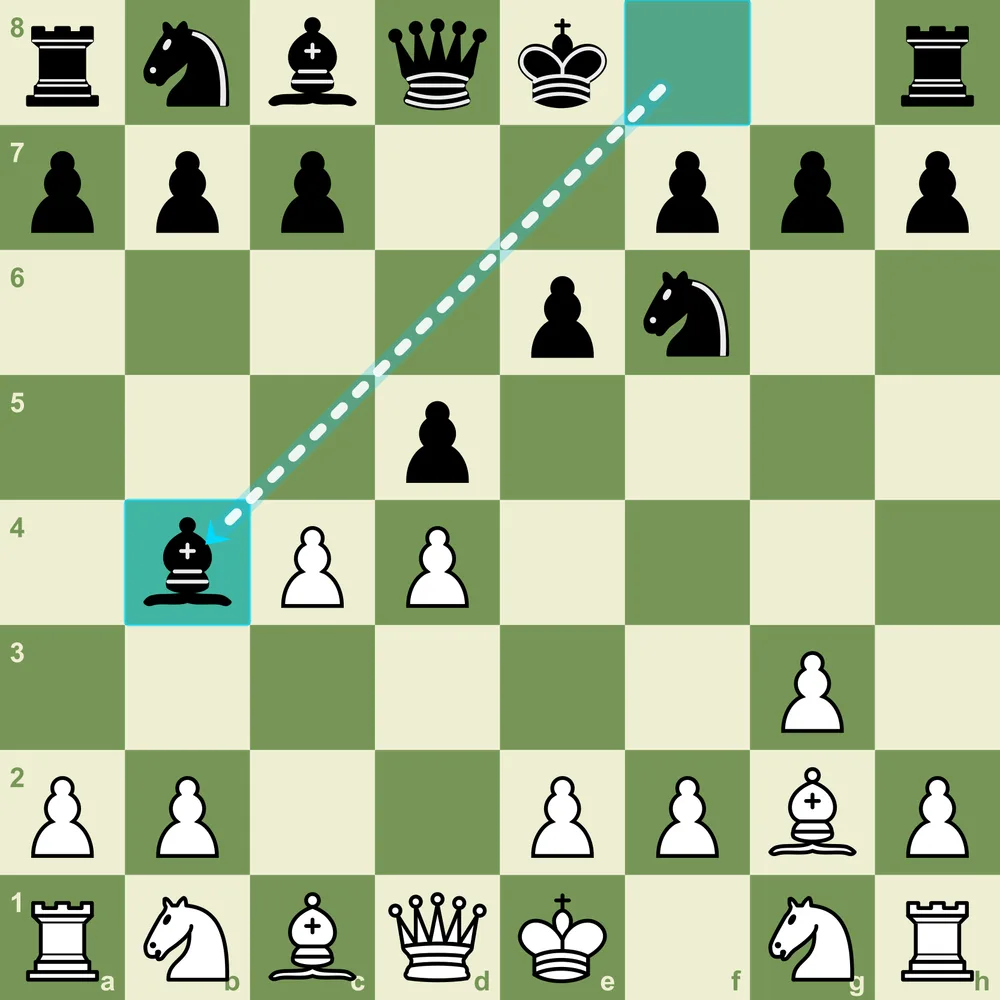
The check with 4...Bb4+ is one of the most respected antidotes to the Catalan. By inserting the check before White has developed the b1 knight, Black forces an immediate decision and disrupts the harmonious setup White is aiming for. White must block the check, and the choice of blocker shapes the entire game.
The main replies are 5.Bd2 and 5.Nd2. After 5.Bd2, Black can retreat with ...Be7, exchange with ...Bxd2+, or keep the tension with ...a5. These lines often let Black either hold the c4 pawn a little more comfortably or trade a pair of pieces to ease the defense. White retains a pleasant, risk-free edge thanks to the fianchettoed bishop, but Black's setup is solid and thoroughly tested at the highest level.
Famous practitioners: Anand, Giri, Nepomniachtchi, So
The Fianchetto Main Line
4.Bg2Intermediate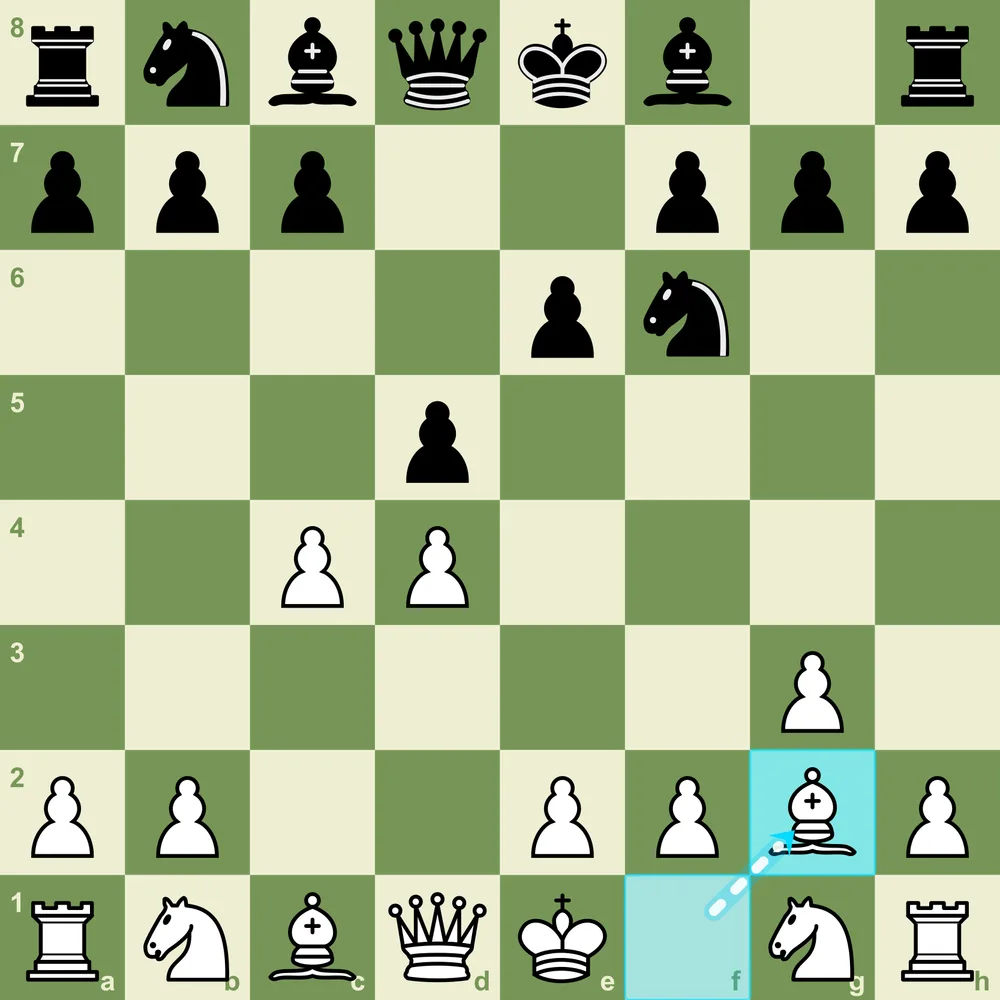
The fianchetto of the king's bishop with 4.Bg2 is the defining move of the entire Catalan and the position every Catalan player is aiming for. After 1.d4 Nf6 2.c4 e6 3.g3 d5 4.Bg2, White combines the classical Queen's Gambit duo of d4 and c4 with a bishop that eyes the long diagonal from g2. This bishop is the soul of the opening: it pressures b7 and d5, supports central breaks, and remains a powerful piece deep into the endgame.
From this tabiya, White's standard plan is to castle kingside, play Qc2 to reinforce the center and eye the c-file, develop the queen's knight to d2, and coordinate the rooks on c1 and d1. Whether Black opts for the Open or Closed treatment, White's setup remains flexible and harmonious, which is exactly why elite players trust the Catalan as a low-risk, high-pressure weapon.
Famous practitioners: Kramnik, Carlsen, Ding, Dubov
Pros and Cons of the Catalan Opening
Advantages
- •Lasting positional bind - the g2 bishop and pressure on the c- and d-files give White a durable initiative that persists well into the endgame
- •Low-risk for White - the solid center and harmonious development mean White is almost never in danger of being attacked, making it ideal for playing safely for a win
- •Repeatable plans - the setup of O-O, Qc2, Nbd2, and rooks to c1 and d1 recurs in almost every game, so understanding transfers naturally from one position to the next
- •Elite pedigree - trusted by world champions from Kramnik to Carlsen, the Catalan scores excellently at the highest levels of chess
Disadvantages
- •Demands patience - the Catalan rewards slow accumulation of advantages, which can frustrate players who prefer sharp, forcing tactics
- •Deep theory in the Open lines - when Black grabs the c4 pawn, the resulting positions require precise knowledge of the pawn-recovery patterns
- •Black has solid antidotes - well-prepared opponents can steer into the Closed Catalan or the 4...Bb4+ line to reach reliable, tested equality
- •Not ideal for beginners - the subtle, plan-based nature of the opening makes it a tougher first choice than the Queen's Gambit or a system opening
Common Mistakes to Avoid in the Catalan
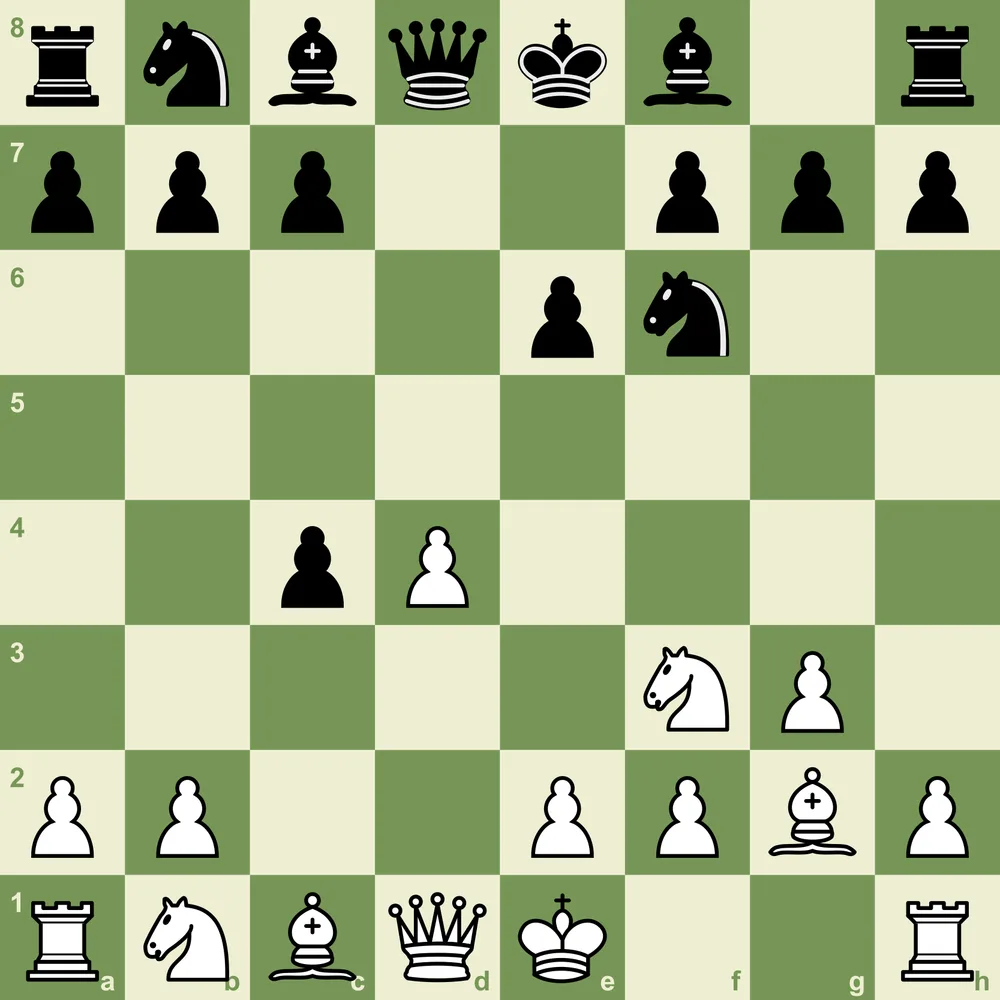
Recapturing the c4 pawn too hastily
In the Open Catalan, grabbing the pawn back at the first opportunity - for example with a premature Na3 or a piece-trading Qa4+ - often releases the very pressure that makes the Catalan strong. The pawn is a long-term lever, not an emergency to solve. Develop first, keep Black tied down, and reclaim the material only when it comes with a positional bonus.
Blocking or trading the g2 bishop without compensation
The light-squared bishop on g2 is the soul of the Catalan. Playing an early e4 that shuts in the bishop, or allowing Black to neutralize it with ...Bb7 and a timely ...Bxg2 without gaining something in return, throws away White's single most important asset. Guard that diagonal and keep the bishop working.
Drifting without a plan in the Closed Catalan
Because the Closed Catalan is quiet, it is tempting to shuffle pieces aimlessly. That lets Black organize the freeing breaks ...c5 or ...e5 and equalize comfortably. White should keep improving with Qc2, Rd1, b3, and Nbd2, and prepare either the e4 break or slow queenside pressure. A plan beats a pretty-looking move.
Mishandling the 4...Bb4+ check
Responding to the check carelessly can hand Black easy equality. Blocking with 5.Nc3 changes the character of the position and can transpose into structures where the Catalan bishop loses its bite. The solid 5.Bd2 keeps White's setup intact, preserves the fianchetto pressure, and often lets White regain the pawn with a comfortable game.
How to Practice the Catalan Opening
The Catalan rewards structured, methodical study. Follow these steps to make it a reliable part of your opening repertoire.
Master the fianchetto tabiya first
Before diving into sidelines, understand the position after 4.Bg2 and the standard plan: castle short, play Qc2, develop the knight to d2, and place your rooks on c1 and d1. Internalizing this template setup makes every Catalan game feel familiar and lets you focus on the ideas rather than memorizing moves.
Learn the pawn-recovery patterns in the Open Catalan
When Black grabs c4 with ...dxc4, study how White typically regains it: ideas with Qc2 and Qa4+, the strong knight jump Ne5, and the timing of a3 and b3 to undermine ...b5. Knowing these motifs keeps you from panicking about the pawn and lets you play the opening with confidence.
Use ChessHelper to analyze your Catalan games
After each game, review the opening and early middlegame with ChessHelper's AI analysis. Did you recapture on c4 too soon? Did you miss a chance to open the long diagonal? ChessHelper's AI-powered engine highlights the critical positional moments in your games and helps you build a deeper feel for the Catalan bind.
Study Kramnik's Catalan masterpieces
No one has done more to popularize the modern Catalan than Vladimir Kramnik. Replay his games to see how a world-class positional player converts the long-diagonal pressure and superior structure into wins, paying particular attention to his handling of the endgame, where the Catalan's edge so often proves decisive.
Play slow time controls to absorb the plans
The Catalan is a strategic opening whose ideas unfold over many moves. Play at least some of your practice games at 15+10 or longer, and use the extra time to ask the key questions: is my g2 bishop working, when do I break with e4, and how do I keep Black tied down?
Master the Catalan with ChessHelper
Get real-time AI analysis as you practice the Catalan in your online games. Understand every position, learn from your mistakes, and build an unbreakable repertoire.
Start Practicing for FreeJoin 10,000+ chess players building solid opening repertoires with ChessHelper
Related Openings
If you enjoy the Catalan, these openings share similar strategic themes and will complement your repertoire.
Queen's Gambit
The Catalan's classical cousin. White plays d4 and c4 to fight for the center; the Catalan simply adds the g3 fianchetto to this time-tested setup.
1.d4 d5 2.c4
Slav Defense
A rock-solid way for Black to meet d4 and c4, supporting ...d5 with ...c6. Catalan players often face Slav-like structures when Black avoids the main lines.
1.d4 d5 2.c4 c6
English Opening
Prefer flank play and long-diagonal pressure? The English shares the Catalan's love of the fianchettoed bishop and slow, strategic squeezes with the white pieces.
1.c4
Catalan Opening: Frequently Asked Questions
The Catalan is generally considered an advanced opening. Its moves are not hard to memorize, but the ideas are subtle: White gambits the c4 pawn for long-term pressure and must convert small positional advantages over a long game rather than relying on quick tactics. That said, the plans are logical and repeatable, so ambitious improvers who enjoy strategic chess can absolutely learn it. Beginners looking for their first 1.d4 weapon are often better served by the Queen's Gambit or London System before graduating to the Catalan.
The difference comes down to how Black treats the c4 pawn after 1.d4 Nf6 2.c4 e6 3.g3 d5 4.Bg2. In the Open Catalan, Black captures with 4...dxc4, either trying to hold the extra pawn with ...b5 and ...a6 or returning it for smooth development, which immediately activates the g2 bishop on the long diagonal. In the Closed Catalan, Black declines to release the tension, plays a solid move like 4...Be7, castles, and keeps the d5 pawn, accepting a more cramped but very sturdy structure. Open lines tend to be sharper and more theoretical, while Closed lines are quieter positional battles.
White is rarely in a hurry to win the c4 pawn back. Instead White completes development with Nf3, O-O, Qc2, Nbd2, and the strong knight jump Ne5, using the fianchettoed g2 bishop and pressure on the c- and d-files to tie Black down. Once Black is passive, White typically recovers the pawn under favorable conditions, often with Qa4+, Qc2, or by undermining ...b5 with a3 and b3. This is why the Catalan is described as a positional gambit: the material is a temporary investment in a lasting bind.