
What is the Pirc Defense?
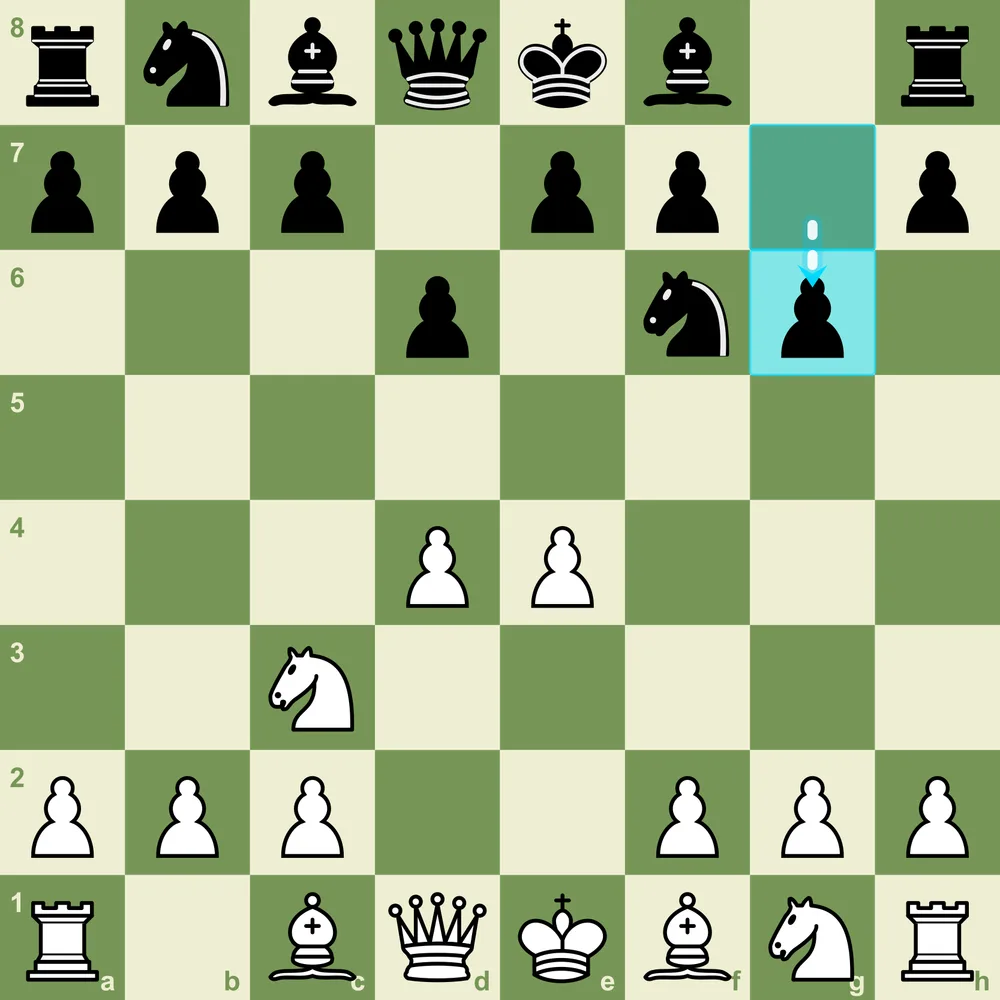
The Pirc Defense arises after 1.e4 d6 2.d4 Nf6 3.Nc3 g6 and is one of the most distinctive hypermodern responses to 1.e4. Instead of contesting the center directly with a pawn like 1...e5 or 1...c5, Black invites White to occupy the center with pawns on e4 and d4, planning to undermine and attack that center later with the pieces and with pawn breaks. The knight on f6 pressures e4, the bishop will fianchetto to g7 to rake the long diagonal, and Black keeps the position flexible while White commits.
The opening is named after the Slovenian grandmaster Vasja Pirc, who championed the defense in the mid-20th century and helped establish its theoretical respectability. For a long time such an approach was considered dubious - classical principles insisted that giving up the center was simply bad - but the hypermodern school, led by players like Nimzowitsch and Reti, showed that a big pawn center can also become a target. The Pirc is a pure expression of that idea: Black's pieces attack from a distance, and the moment White's center overextends, Black strikes.
The Pirc is closely related to two other fianchetto systems. Against 1.d4 and 2.c4, the same ...Nf6, ...g6, ...Bg7, ...d6 setup becomes the King's Indian Defense; and the Modern Defense reaches similar positions by delaying ...Nf6 in favor of an immediate ...g6 and ...Bg7. Because the setup is so consistent, many players adopt the Pirc as part of a universal repertoire, meeting almost anything White throws at them with the same familiar structure and plans.
Although it is often used as a fighting surprise weapon rather than a main-line workhorse, the Pirc has been employed by strong grandmasters throughout its history. Perhaps its most famous moment came in Kasparov versus Topalov, Wijk aan Zee 1999, where a Pirc structure gave rise to one of the greatest attacking games ever played. That game captures the Pirc's dual nature: sharp, double-edged, and full of chances for both sides.
How to Play the Pirc Defense
The Pirc begins with 1.e4 d6, a modest move that keeps options open and prepares to develop the kingside. After 2.d4 Nf6, Black immediately puts a question to the e4 pawn, and 3.Nc3 defends it. Black then completes the signature setup with 3...g6, intending ...Bg7 and ...O-O. The resulting formation is easy to remember because Black plays nearly the same moves against every White system.
From this position White chooses a plan. The most aggressive is 4.f4 (the Austrian Attack), grabbing maximum central space. Quieter and more flexible is 4.Nf3 (the Classical System). Attacking players favor 4.Be3 followed by Qd2, f3, and long castling (the 150 Attack), while 4.Bg5 (the Byrne Variation) develops the bishop actively against the f6 knight. Each choice defines the character of the game, so a Pirc player must be ready for very different types of positions.
The strategic philosophy is consistent throughout: complete development quickly, fianchetto the dark-squared bishop, castle kingside, and then challenge White's center at exactly the right moment with ...c5 or ...e5. The bishop on g7 is the heart of the position - it must not be traded off cheaply, and its diagonal often becomes decisive once the center opens. Patience with the counterattack, not passivity, is the key to playing the Pirc well.
Main Pirc Defense Variations
The Pirc branches according to how White treats the center on move four. Here are the four systems every Pirc player must understand.
The Austrian Attack
4.f4Intermediate-Advanced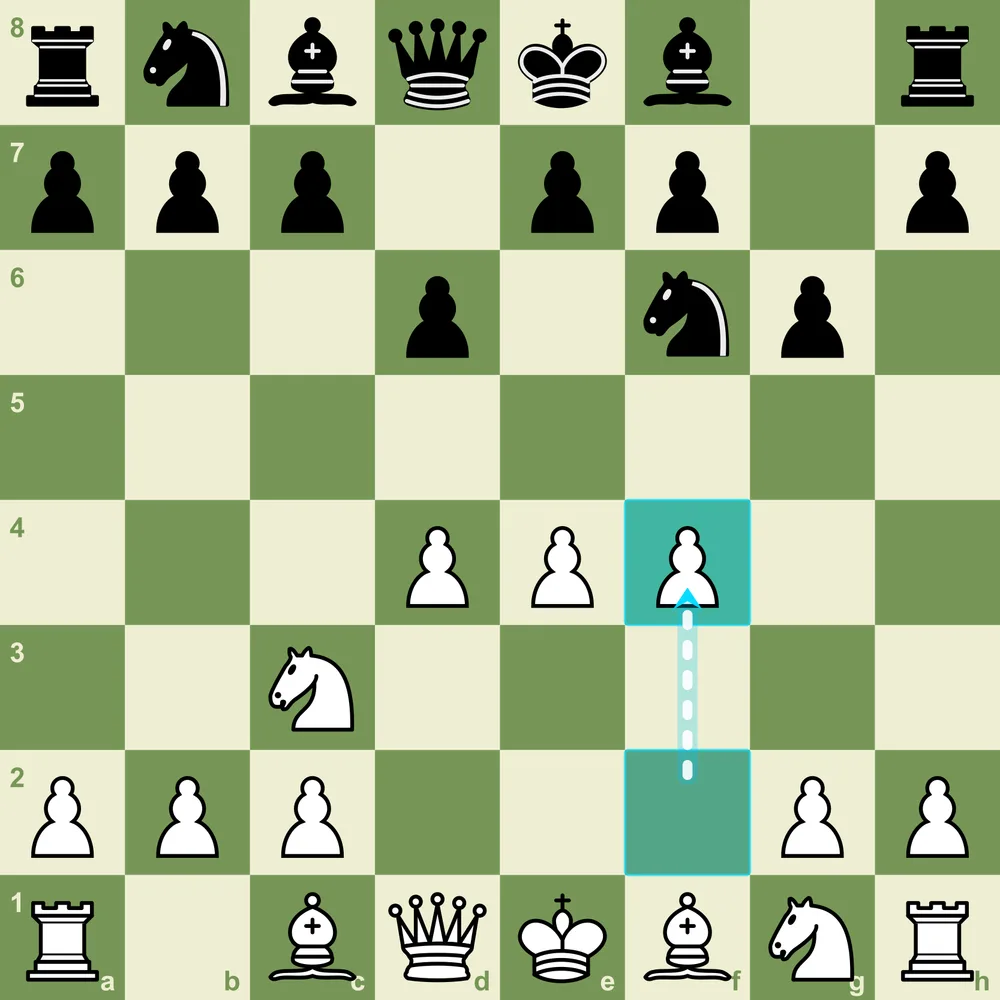
The Austrian Attack is White's most ambitious and testing response. With 4.f4, White establishes an imposing three-pawn center on e4, d4, and f4, aiming to play e5 at the right moment and launch a direct kingside assault. This is the line that puts Black's hypermodern strategy to its sternest test: if the center is allowed to advance unchallenged, Black can simply be swept off the board.
Black meets the challenge with energetic counterplay. After 4...Bg7 5.Nf3 O-O, the two principal breaks are ...c5, striking at d4 immediately, and the ...e5 push once Black has arranged the necessary support with ...Nc6. A typical continuation is 6.Bd3 Nc6 7.O-O e5, forcing White to resolve the central tension. The Austrian Attack leads to some of the sharpest, most concrete positions in all of the Pirc, and both sides must play accurately.
Famous practitioners: Spassky, Ljubojevic, Short, Nakamura
The Classical System
4.Nf3Intermediate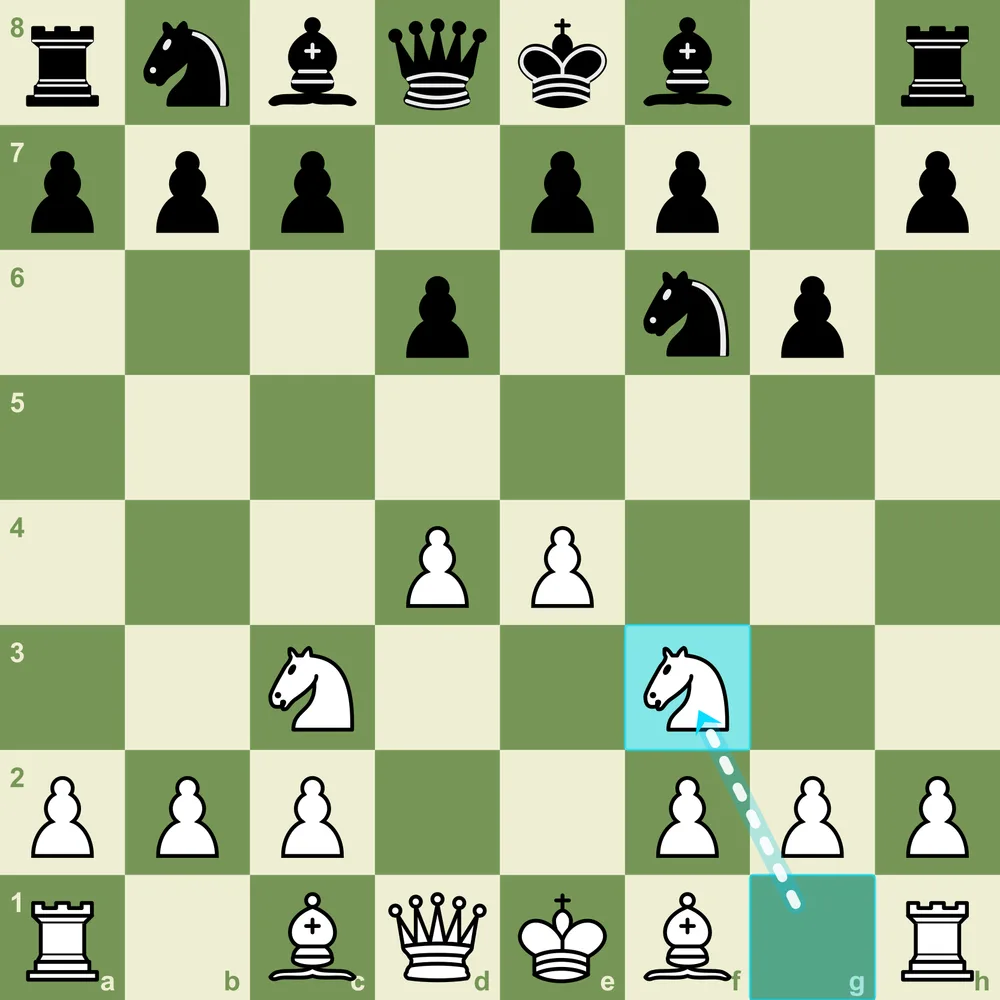
The Classical System, also called the Two Knights setup, begins with the natural developing move 4.Nf3. Rather than committing to an early pawn storm, White simply develops the pieces to sensible squares - often Be2 and O-O - and keeps a solid, flexible center. This is the most positionally sound approach and the one Black is most likely to face from well-rounded opponents.
Against the Classical, Black continues 4...Bg7 5.Be2 O-O 6.O-O and then chooses a counterplay plan. A common idea is ...Bg4, pinning the f3 knight to add pressure on d4 before breaking with ...Nc6 and ...e5. Alternatively, Black can prepare ...c5 to open lines on the queenside. Because White is not attacking directly, these positions are more strategic and maneuvering in nature, rewarding a good understanding of when and how to challenge the center.
Famous practitioners: Karpov, Timman, Beliavsky, Azmaiparashvili
The 150 Attack
4.Be3 & Qd2Intermediate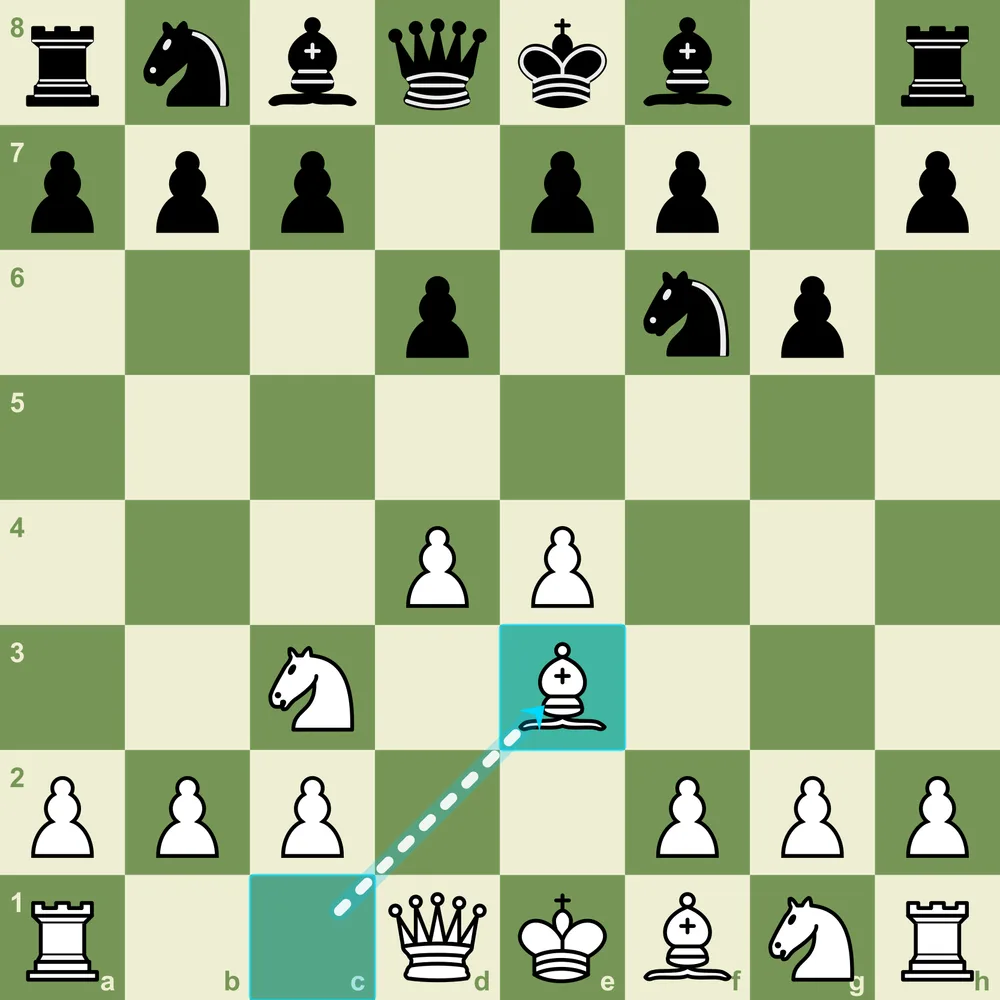
The 150 Attack is a straightforward and dangerous plan built around the moves 4.Be3 and Qd2, usually followed by f3, Bh6 to trade off Black's important fianchettoed bishop, queenside castling, and a pawn storm with h4-h5. The name comes from English club chess, where a player rated around 150 on the old BCF scale could wheel out this scheme and generate a fierce attack without deep theoretical knowledge.
The plan is easy to execute but genuinely threatening: after 4...Bg7 5.Qd2 c6 6.f3, White intends Bh6, O-O-O, and h4-h5, prying open the kingside where Black has castled. Black's antidote is a race - counterattacking on the queenside with ...b5, ...a5, ...Qa5, and ...Rb8 before White's pawns crash through. Whoever's attack arrives first usually wins, which makes accurate move-order and fearless play essential for Black.
Famous practitioners: Adams, Nunn, Shirov, Carlsen
The Byrne Variation
4.Bg5Intermediate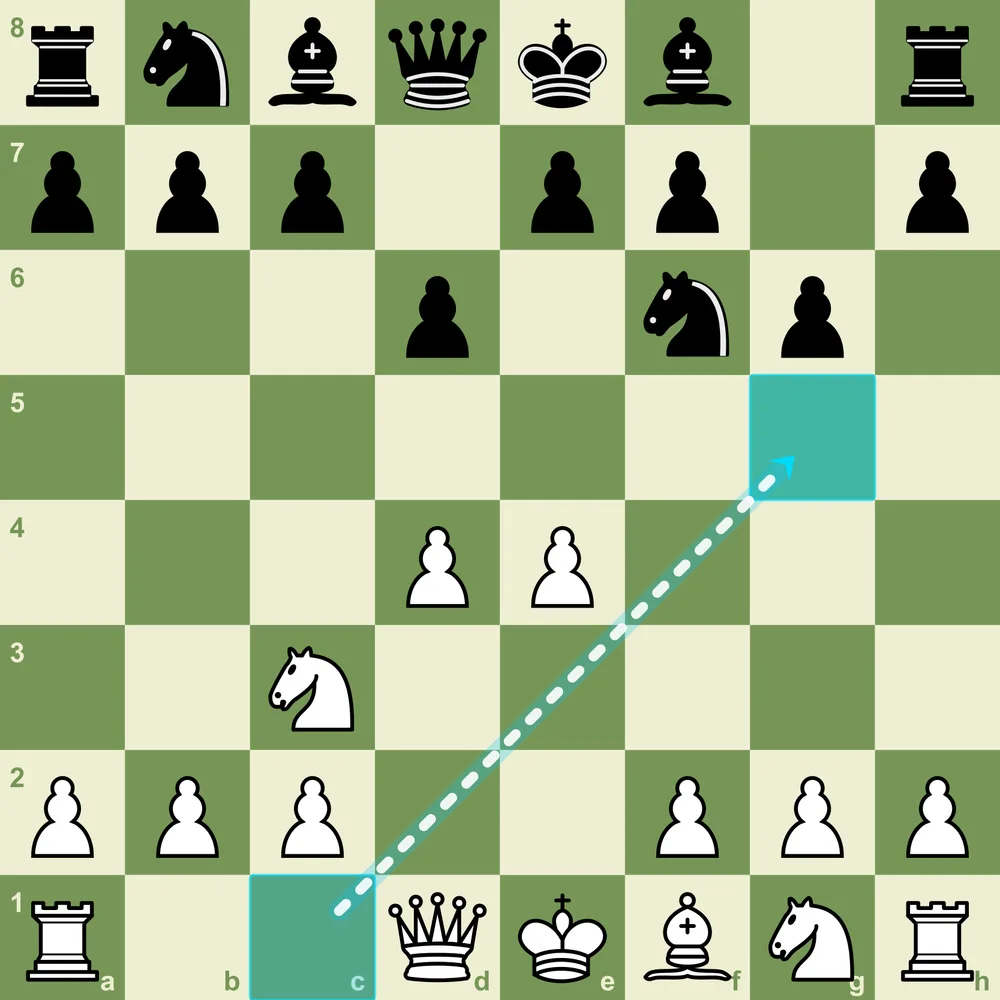
The Byrne Variation, named after the American grandmaster Robert Byrne, is characterized by the immediate 4.Bg5. The bishop develops actively and eyes the f6 knight, preparing ideas such as Qd2 and a possible Bh6, or the doubling of Black's pawns with Bxf6 if Black provokes it with ...h6. It is a flexible, slightly offbeat try that avoids the heaviest main lines while still posing concrete questions.
Black has several reasonable replies. The solid 4...Bg7 simply continues development, when Black can meet Qd2 with ...h6 and ...c6, or aim for the usual central breaks. The sharper 4...h6 asks the bishop its intentions at once: after 5.Bh4 g5 6.Bg3 Nh5, Black fights for the dark squares directly. As with the rest of the Pirc, the recurring theme is that Black keeps the g7 bishop healthy and looks for the right moment to hit the center with ...c5 or ...e5.
Famous practitioners: Byrne, Spassky, Vaganian, Morozevich
Pros and Cons of the Pirc Defense
Advantages
- •Easy-to-learn setup - Black plays almost the same moves (...d6, ...Nf6, ...g6, ...Bg7, ...O-O) against nearly everything, reducing the amount of forced theory to memorize
- •Rich counterattacking chances - by letting White overextend, Black creates dynamic, unbalanced positions with real winning prospects rather than a passive equality
- •Excellent surprise weapon - many 1.e4 players spend their time preparing against the Sicilian and are far less comfortable facing the Pirc's hypermodern structures
- •Transfers to the King's Indian - the same fianchetto plan works against 1.d4, giving you a coherent, universal repertoire against both main first moves
Disadvantages
- •Concedes the center - handing White a big pawn center is a real commitment; if Black's counterplay is mistimed, that center becomes a crushing attacking force
- •Punishing against passive play - the Pirc demands active, precise counterattack; drifting without a plan is far more dangerous here than in solid openings like the Caro-Kann
- •The Austrian Attack is sharp - White's most critical line leads to concrete, forcing positions where a single inaccuracy can be fatal, requiring genuine preparation
- •Slightly worse statistics - at the top level the Pirc scores a little below the very best defenses, which is why it is more often used as a fighting or surprise weapon
Common Mistakes to Avoid in the Pirc
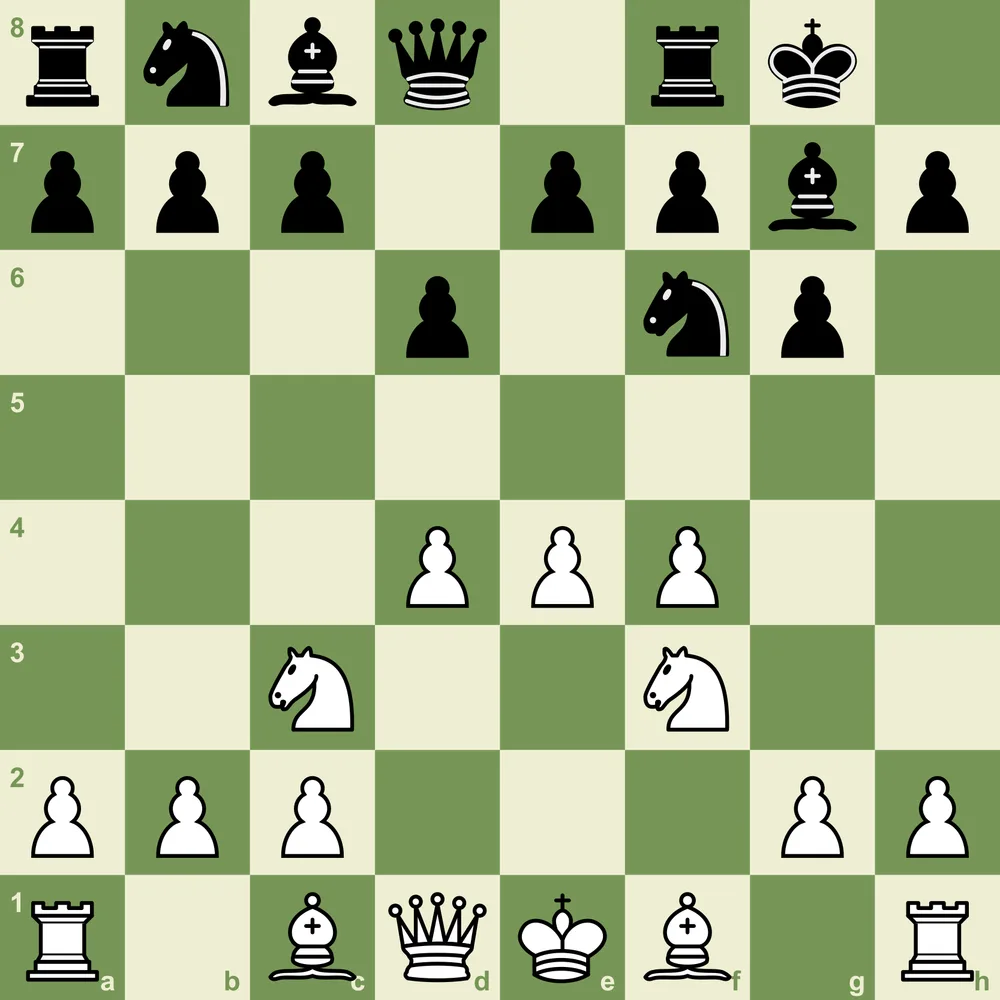
Never striking at the center
This is the cardinal sin of the Pirc. In the diagram above, Black has just castled into the Austrian Attack and must immediately turn to counterplay with ...c5 or, after ...Nc6, the break ...e5. Players who treat the Pirc as a passive defense and never challenge the pawns simply hand White a free hand to play e5 and f5, rolling the center forward into a winning attack. Always have your central break planned before White consolidates.
Allowing the g7 bishop to be traded cheaply
The fianchettoed bishop on g7 is the soul of Black's position, controlling the long diagonal and shielding the king. In lines with Be3 and Qd2, White often plays Bh6 precisely to swap this bishop and expose the dark squares around Black's king. Do not permit this trade for free - meet Bh6 with ...Bxh6 only when the resulting structure is acceptable, and where possible sidestep it entirely with ...c6, ...Re8, or a timely ...Nc6 so that your best minor piece stays on the board.
Reacting passively to the 150 Attack
When White sets up the 150 Attack with Be3, Qd2, f3, and long castling, the game becomes a race of opposite-side attacks. Black cannot afford to defend passively while White pushes h4-h5 into the kingside. Instead, launch your own counterattack with ...b5, ...a5, ...Qa5, and ...Rb8 against White's king. Slow, non-committal moves let White's pawn storm arrive first, so play with urgency and open lines toward the enemy king.
Blocking your own counterplay with ...Nbd7
Developing the queenside knight to d7 feels natural, but it frequently gets in the way of Black's plans: it blocks the c-pawn from supporting a ...c5 break and can leave the knight passively placed. In many Pirc positions the knight belongs on c6, where it pressures d4 and supports ...e5. Choose the square for this knight based on which central break you are aiming for, rather than developing it automatically to d7.
How to Practice the Pirc Defense
The Pirc rewards an understanding of plans far more than rote memorization. Follow these steps to make it a reliable and dangerous part of your repertoire.
Master the core setup and its two breaks
Start by internalizing the standard formation - ...d6, ...Nf6, ...g6, ...Bg7, ...O-O - and, most importantly, the two pawn breaks that give it life: ...c5 and ...e5. Understand which break suits which White setup. Getting comfortable with this framework means you can play the opening confidently against almost anything, even lines you have never specifically studied.
Prepare thoroughly for the Austrian Attack
The Austrian Attack (4.f4) is White's most testing line and the one that punishes imprecision hardest, so give it extra attention. Learn the key move orders after 4...Bg7 5.Nf3, understand exactly when to play ...c5 versus ...e5, and study the resulting middlegame structures. Solid preparation here will carry you through your most dangerous games.
Use ChessHelper to analyze your Pirc games
After each game, review the opening and early middlegame with ChessHelper's AI analysis. Did you time your ...c5 or ...e5 break correctly? Did you keep your g7 bishop, or let it be traded? ChessHelper's AI-powered engine pinpoints the critical moments where your counterattack succeeded or stalled, helping you learn the delicate timing the Pirc depends on.
Study model attacking games
Play through classic Pirc battles to absorb the typical plans for both sides. Kasparov versus Topalov, Wijk aan Zee 1999, is essential viewing for its breathtaking attack, and the games of Pirc specialists reveal how Black converts a conceded center into active counterplay. Pay attention to how strong players choose between ...c5 and ...e5 and how they handle opposite-side castling.
Play slow time controls to feel the timing
Because the Pirc is all about striking at the right moment, its ideas are best learned in longer games. Play at least some practice games at 15+10 or slower, and use the time to ask the crucial questions: has White overextended yet, is my counterattack ready, and which break opens the position in my favor? This deliberate practice builds the judgment that makes the Pirc thrive.
Master the Pirc with ChessHelper
Get real-time AI analysis as you practice the Pirc in your online games. Learn the perfect timing for your counterattacks, keep your key pieces active, and turn White's big center into a target.
Start Practicing for FreeJoin 10,000+ chess players building sharp opening repertoires with ChessHelper
Related Openings
If you enjoy the Pirc, these openings share similar hypermodern themes or offer another reliable answer to 1.e4 for your repertoire.
King's Indian Defense
The Pirc's twin against 1.d4. The same ...Nf6, ...g6, ...Bg7 fianchetto setup, letting White build a center that Black attacks with ...e5 or ...c5.
1.d4 Nf6 2.c4 g6
Caro-Kann Defense
The solid alternative to the Pirc against 1.e4. Black builds a rock-solid pawn structure and develops the light-squared bishop actively instead of conceding the center.
1.e4 c6
Sicilian Defense
The most popular fighting answer to 1.e4. Like the Pirc, it plays for imbalance and counterattack, but through direct queenside expansion rather than a fianchetto.
1.e4 c5
Pirc Defense: Frequently Asked Questions
The Pirc Defense is best suited to intermediate players rather than absolute beginners. Its setup is easy to learn - Black almost always plays ...d6, ...Nf6, ...g6, and ...Bg7 regardless of what White does - but the ideas behind it are subtle. Black deliberately hands White a large pawn center and must know exactly when to strike back with ...c5 or ...e5. A player who understands that the Pirc is about counterattack rather than passive defense can score very well with it, but a beginner who simply shuffles pieces without a plan can end up steamrolled by White's central pawns.
The two openings share the same fianchetto setup - ...Nf6, ...g6, ...Bg7, ...d6 - but they arise against different first moves and lead to different structures. The King's Indian is played against 1.d4 and 2.c4, so White has pawns on c4 and d4 and no early e4. The Pirc is played against 1.e4, so White typically ends up with pawns on e4 and d4 and no c4 pawn. Because White has not committed the c-pawn in the Pirc, the ...c5 break is often more effective, while in the King's Indian Black more often strikes with ...e5 against the c4-d4 center. Many players use both as a matched pair to meet both of White's main first moves with the same familiar structure.
The Austrian Attack (4.f4) is White's most ambitious try, building a broad e4-d4-f4 pawn center. Black should not sit still. After 4...Bg7 5.Nf3, the main counterattacking plans are ...c5, hitting d4 immediately, or ...O-O followed by ...Nc6 and a well-timed ...e5. The key is to challenge the center before White plays e5 and rolls the f-pawn forward. If Black delays counterplay and castles kingside without a plan, White's pawns can become a crushing avalanche, so timing the central break is the single most important skill in this line.