
What is the Reti Opening?
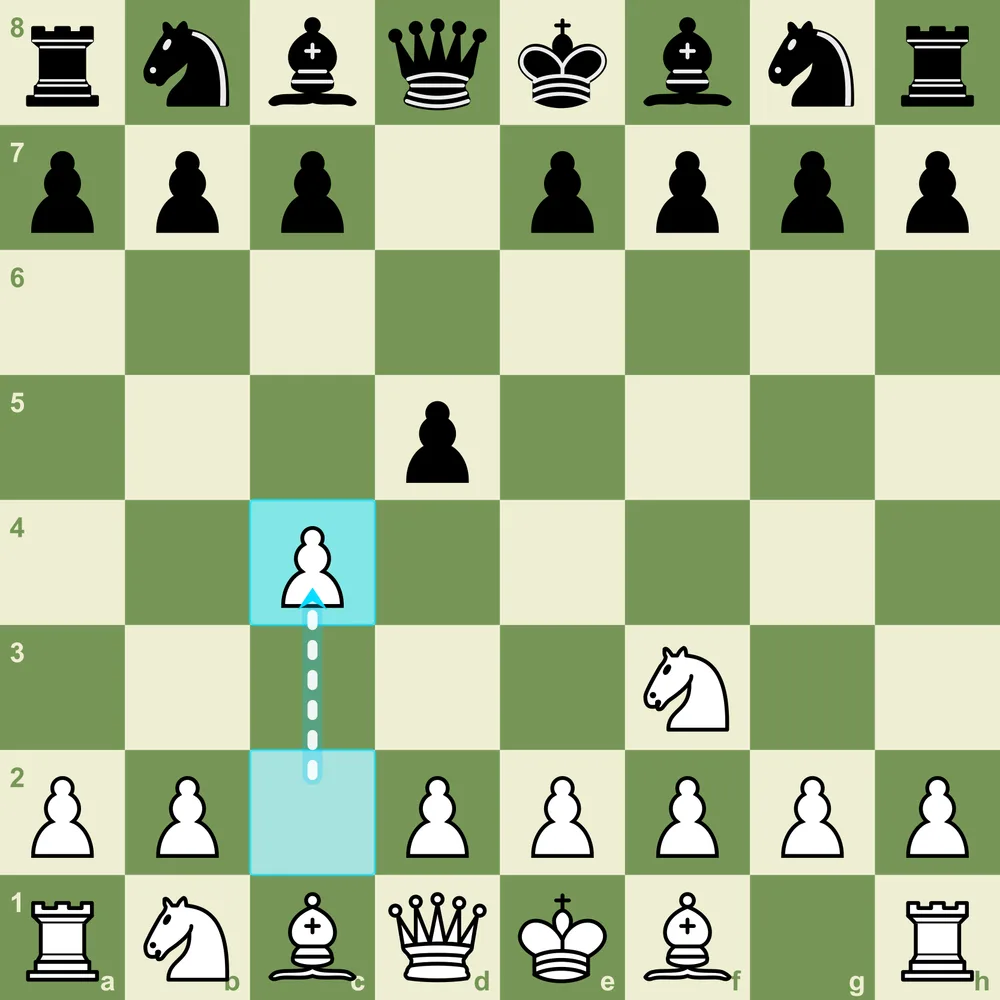
The Reti Opening begins with the moves 1.Nf3 d5 2.c4 and is one of the purest expressions of hypermodern strategy. Rather than planting pawns in the center with 1.e4 or 1.d4, White develops a piece first and then invites Black to overextend by challenging the d5 pawn from the wing. The philosophy is deceptively simple: let Black build a broad center, then attack and undermine it with pieces and flank pawns rather than trying to match it head-on.
The opening is named after Richard Reti, the Czechoslovak grandmaster who, alongside Aron Nimzowitsch, helped lead the hypermodern revolution of the 1920s. Reti stunned the chess world when he used the opening to defeat Jose Raul Capablanca at New York 1924, handing the reigning World Champion his first tournament loss in eight years. That game became a manifesto for the new school of thought: the center could be dominated by long-range pieces and well-timed pawn breaks, not only by occupying it directly.
The signature idea of the Reti is the kingside fianchetto. White almost always follows up with g3 and Bg2, aiming the bishop straight down the long light-squared diagonal at Black's queenside and center. Combined with the c4 pawn pressing against d5, White generates a coordinated attack on Black's central foothold without committing pawns of his own to d4 or e4 early on. This flexibility is the Reti's greatest strength: White keeps his structure fluid and reacts to what Black does.
Perhaps the most important practical feature of the Reti is its transpositional richness. Depending on how both sides continue, the game can flow into the English Opening, the Catalan, the Queen's Gambit Declined, or a King's Indian Attack structure. This makes the Reti a superb choice for players who want a low-theory, understanding-based repertoire and who are comfortable navigating a variety of pawn structures. It remains a favorite of elite grandmasters, prized for putting opponents on their own resources rather than into memorized theory.
How to Play the Reti Opening
The Reti begins with 1.Nf3, a flexible developing move that controls the central e5 and d4 squares while committing to nothing. After the natural 1...d5, White plays the defining 2.c4, immediately questioning Black's central pawn from the flank. Black must now decide how to treat the tension on d5, and each choice leads to a distinct type of game.
Black has four principal replies: 2...d4 (the Advance, grabbing space), 2...dxc4 (the Reti Accepted, giving up the center to grab a pawn), 2...e6 followed by White's 3.g3 (a solid, Catalan-like fianchetto setup), and 2...c6 (a Slav-like reinforcement of d5). Understanding White's plan against each of these is the core of playing the Reti well.
Whatever Black chooses, White's strategic blueprint is consistent: fianchetto the light-squared bishop with g3 and Bg2, castle kingside, and build pressure against the center and queenside with pieces and the c- and b-pawns. White is rarely in a hurry to play d4 or e4; instead he waits for the right moment to strike, often only advancing a central pawn once it can be supported by an overwhelming array of pieces. Patience, harmonious development, and a feel for pawn structure are the qualities the Reti rewards.
Main Reti Opening Variations
The Reti branches according to how Black meets the c4 challenge. Here are the four systems every Reti player must understand.
The Advance
2...d4Intermediate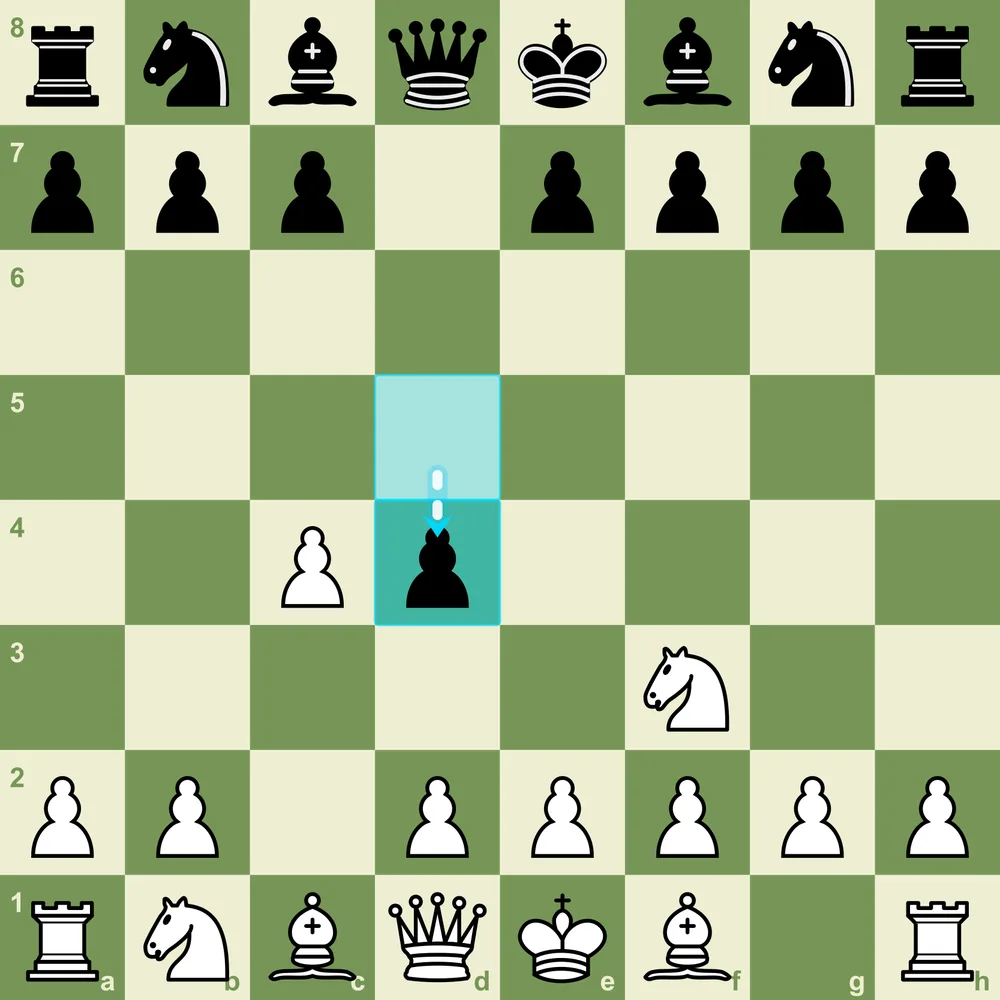
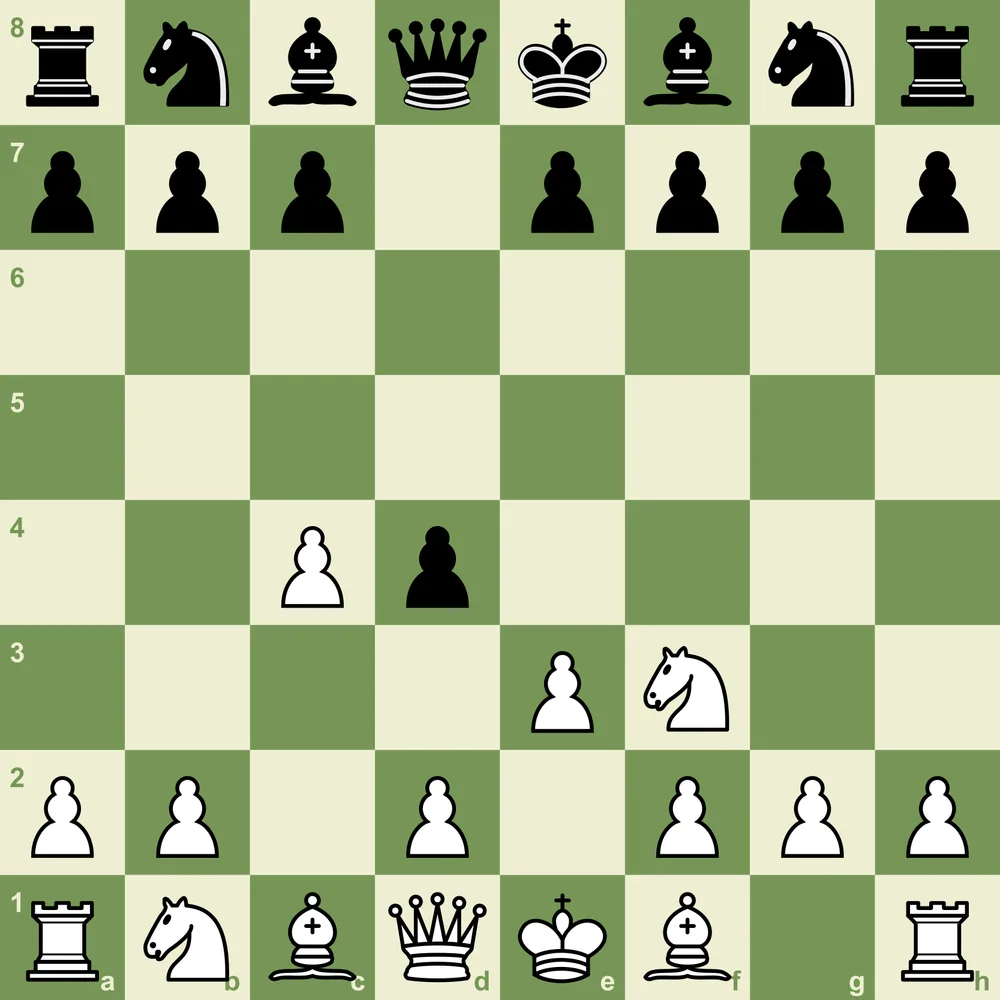
In the Advance, Black answers 2.c4 with 2...d4, pushing the pawn forward to claim space and refuse the exchange. The resulting structure resembles a reversed Benoni, with White enjoying an extra tempo and a natural plan against the advanced pawn. The key point is that d4 is not a threat so much as an object of attack.
White has two attractive treatments. The direct method is 3.e3, undermining the pawn at once and opening lines for rapid development. The positional method is the fianchetto with 3.g3 followed by Bg2, O-O, and queenside expansion with b4 (often supported by a3 or Rb1), squeezing the d4 pawn from the side. In both cases White plays around Black's space grab and looks to prove the pawn overextended.
Key idea: treat the d4 pawn as a target, undermine with e3 or press with b4.
Reti Accepted
2...dxc4Intermediate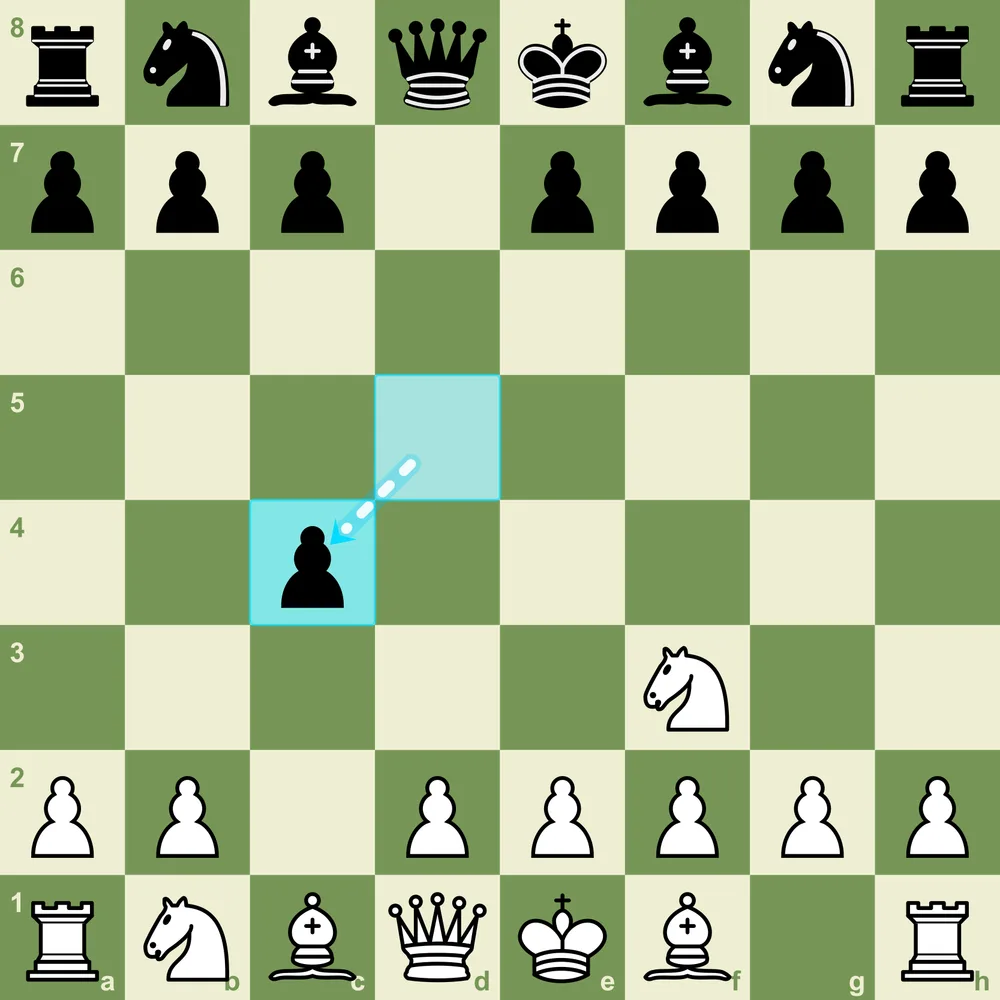
When Black plays 2...dxc4, he surrenders the center in return for a pawn. Unlike a true gambit, however, White recovers the pawn almost effortlessly, and in doing so gains a lead in development and free rein over the center. The most reliable recapturing plan is 3.e3, opening the bishop's path and preparing Bxc4 with a comfortable, harmonious position.
White can also try 3.Na3, rerouting the knight to collect the pawn on c4, or 3.Qa4+ to win it back immediately. The simplest and most flexible route is usually the calm e3 followed by Bxc4, g3, Bg2 and O-O, after which White has a small but pleasant edge thanks to superior central control. Black's decision to grab the pawn rarely causes White any real problems.
Key idea: recapture calmly with e3 and Bxc4; enjoy the lead in development.
The e6 Fianchetto Setup
2...e6 3.g3Intermediate-Advanced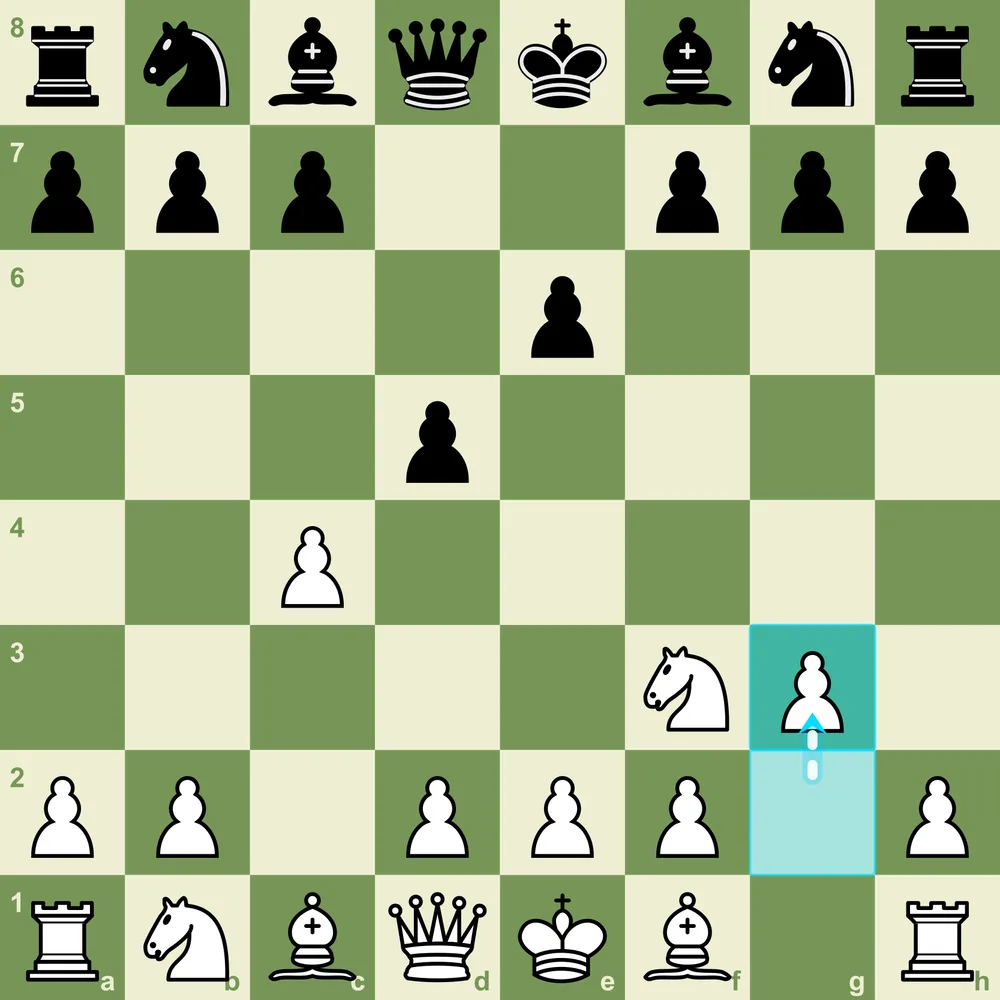
Against the solid 2...e6, White plays the thematic 3.g3, preparing to fianchetto the bishop to g2. This is the heart of the Reti: the light-squared bishop takes aim at d5 and the long diagonal, reinforcing the pressure created by the c4 pawn. Black usually continues with ...Nf6 and ...Be7, reaching a flexible Queen's Gambit Declined structure with reversed-color ideas.
This setup is a transpositional crossroads. If White later plays d4, the game frequently becomes a Catalan, one of the most respected and dangerous openings at the top level. If White holds back the d-pawn, a pure Reti unfolds, with plans such as cxd5, b4, Bb2, and pressure down the c-file. Mastering this variation means being comfortable in both Catalan and Reti pawn structures, which is why it carries the most strategic depth of the four systems.
Key idea: fianchetto with Bg2 and choose between a pure Reti or a Catalan with d4.
The c6 Setup
2...c6Beginner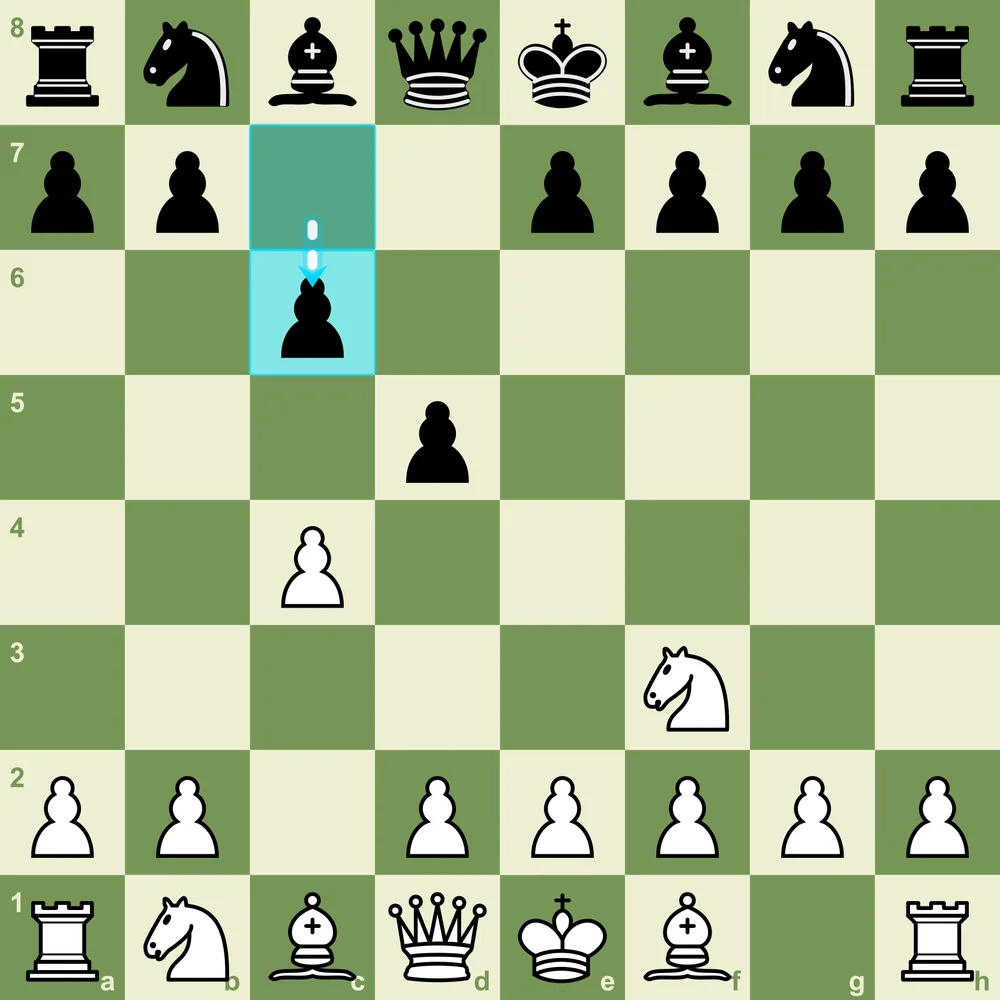
With 2...c6, Black reinforces the d5 pawn in Slav Defense style, declining to release the central tension and building a compact, resilient structure. This is one of the soundest ways to meet the Reti, and it often transposes directly into Slav or Semi-Slav territory should White answer with d4 at some point.
White continues in true Reti fashion with g3, Bg2, O-O, and often b3 and Bb2, developing a second fianchetto to double up on the long diagonals. The plans revolve around the timely break cxd5 or a slow queenside buildup with b4. Because Black's structure is so solid, White should play for a small, lasting positional edge rather than an early knockout, patiently improving his pieces before opening the position.
Key idea: develop the double fianchetto and probe the solid Slav-like center patiently.
Pros and Cons of the Reti Opening
Advantages
- •Maximum flexibility - by delaying central commitments, White keeps his structure fluid and reacts to Black's setup rather than the other way around
- •Rich transpositions - the Reti can flow into the English, Catalan, or Queen's Gambit, letting you steer toward the structures you know best
- •Low forcing theory - success depends on understanding hypermodern plans rather than memorizing long, forced lines
- •Practical surprise value - many opponents are far less prepared against the Reti than against 1.e4 or 1.d4, forcing them to think for themselves early
Disadvantages
- •Demands broad understanding - because the Reti transposes so freely, you must be at home in English, Catalan, and Slav structures alike
- •Cedes the center early - a well-prepared opponent can seize space with ...d4 or set up a solid ...c6/...e6 wall and equalize with accurate play
- •Can become slow - the quiet, maneuvering nature of the opening offers fewer forced tactical chances, and passive play can drift toward a draw
- •Modest opening edge - the theoretical advantage from a flank opening is small, so White must outplay the opponent in the middlegame rather than rely on the opening alone
Common Mistakes to Avoid in the Reti
Abandoning the hypermodern plan too early
The point of the Reti is to control the center from the flank. Rushing to occupy it with an early e4 or an unprepared d4 often surrenders the very flexibility that makes the opening dangerous, and can hand Black an easy target or a comfortable classical structure. Complete the fianchetto and development first, and only advance a central pawn when it is fully supported.
Letting the d4 pawn sit unchallenged
After 2...d4, some White players treat the advanced pawn as a permanent fixture and drift without a plan, allowing Black to gain space and cramp the position. The pawn must be pressured. Either undermine it directly with e3 or work against it with the fianchetto and a b4 expansion. A d4 pawn that is left alone becomes a strength for Black rather than the weakness it should be.
Chasing the pawn too eagerly in the Reti Accepted
When Black plays 2...dxc4, there is no need to lunge after the pawn with awkward moves. The pawn is not going anywhere, and over-committing with an early queen sortie or a clumsy knight tour can waste time and misplace pieces. The calm 3.e3 followed by Bxc4 recovers the pawn while completing development, giving White a smooth, pleasant position with the center under control.
Neglecting the g2 bishop
The fianchettoed bishop on g2 is the soul of the Reti, exerting long-range pressure down the light-squared diagonal. Blocking its view with your own pawns, or trading it off without good reason, throws away the strategic core of the opening. Keep the long diagonal open, support the bishop with moves like b3 and Bb2 when appropriate, and remember that the light squares are where your advantage lives.
How to Practice the Reti Opening
The Reti rewards understanding over memorization. Follow these steps to make it a reliable part of your opening repertoire.
Master the fianchetto setup first
Begin by learning the core Reti formation: Nf3, c4, g3, Bg2, and O-O. This setup is the backbone of nearly every line, and once it is second nature you can play the opening on autopilot for the first several moves while focusing your attention on Black's specific plan. Understanding why the bishop belongs on g2 is more valuable than memorizing any single variation.
Learn how to meet 2...d4
The Advance with 2...d4 is the reply that troubles unprepared White players the most. Study both responses: the direct undermining with e3 and the positional squeeze with g3, Bg2, and b4. Play out the resulting reversed-Benoni structures until you understand how to make the advanced pawn a weakness. This single line will decide a large share of your Reti games.
Use ChessHelper to analyze your Reti games
After each game, review the opening and early middlegame with ChessHelper's AI analysis. Did you fianchetto at the right moment? Was there a stronger way to challenge Black's center? ChessHelper's AI-powered engine highlights the critical decisions in your games and helps you build the pattern recognition that hypermodern play demands.
Study Reti's classic games
Go back to the source. Richard Reti's famous win over Capablanca at New York 1924 remains the finest illustration of the opening's ideas, and his other model games show how flank pressure and piece activity can outweigh a broad pawn center. Replaying these games teaches the timing of the central breaks and the maneuvers that give the Reti its bite.
Embrace the transpositions
Because the Reti so often becomes an English, Catalan, or Slav, spend time learning the typical plans in those structures too. The more of these related systems you understand, the more confidently you can steer the game toward positions that suit your style. Play slower time controls so you have time to weigh the transpositional choices at each branching point.
Master the Reti Opening with ChessHelper
Get real-time AI analysis as you practice the Reti in your online games. Understand every position, learn from your mistakes, and build a flexible, transposition-ready repertoire.
Start Practicing for FreeJoin 10,000+ chess players building strong opening repertoires with ChessHelper
Related Openings
If you enjoy the Reti, these openings share similar strategic themes and will complement your repertoire.
English Opening
The Reti's closest cousin. White starts with 1.c4 to fight for the center from the flank, and the two openings frequently transpose into one another.
1.c4
London System
Love the Reti's low-theory, system-based approach? The London gives you a solid, easy-to-learn setup with the white pieces and clear middlegame plans.
1.d4 & 2.Bf4
Queen's Gambit
The classical way to pressure Black's center with 1.d4 and 2.c4. Many Reti lines transpose here, so it pairs naturally with a hypermodern repertoire.
1.d4 d5 2.c4
Reti Opening: Frequently Asked Questions
The Reti is best suited to intermediate players who enjoy strategic, maneuvering chess. It is not difficult to start playing because the moves are natural and the theory is light compared with mainline 1.e4 openings, but getting the most out of it requires an understanding of hypermodern ideas: controlling the center from the flank, fianchettoing the king's bishop to g2, and steering the game into favorable structures. Beginners who prefer clear-cut attacking plans may find it slow at first, but it is an excellent choice for developing positional understanding.
Both are flexible flank openings, and they frequently transpose into one another. The English begins with 1.c4, immediately staking a claim on the light central squares, while the Reti begins with 1.Nf3 and only follows up with 2.c4 after Black has committed to ...d5. The move order matters: by playing 1.Nf3 first, White keeps the option of many setups open and often lures Black into a specific structure before revealing the plan. In practice a Reti player must be comfortable transposing to English, Catalan, and Queen's Gambit positions, because the game rarely stays in pure Reti territory for long.
After 1.Nf3 d5 2.c4 d4, Black grabs central space by advancing the pawn. White has two main plans. The first is to undermine the pawn with 3.e3, challenging d4 directly and inviting Black to open the position, after which White develops quickly and targets the slightly overextended pawn. The second is to play around it with a kingside fianchetto (g3 and Bg2) combined with queenside expansion via b4, gaining space and pressuring the d4 pawn from multiple directions. Both approaches treat the advanced pawn as a long-term target rather than a threat.