
What is the Dutch Defense?
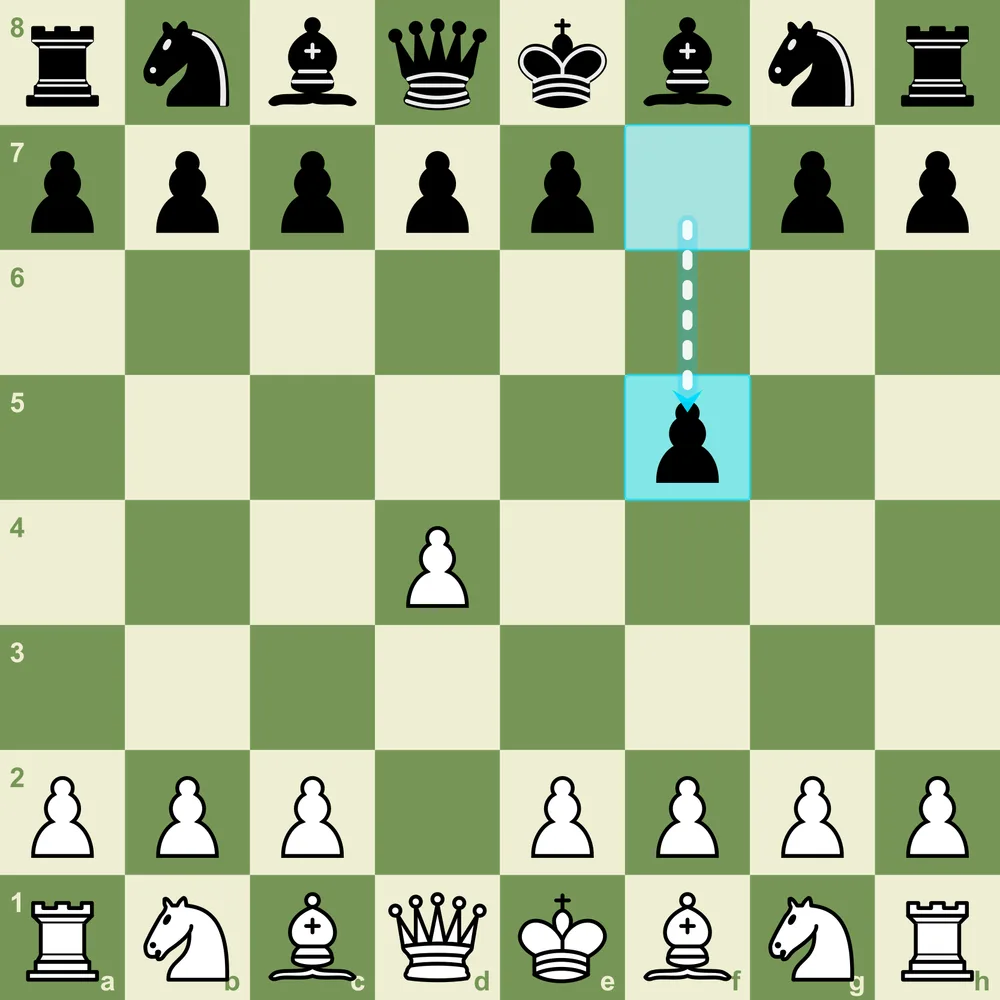
The Dutch Defense begins with the moves 1.d4 f5 and is the most combative way for Black to meet 1.d4. With this bold first move Black immediately fights for the e4-square and stakes out space on the kingside, signaling ambitions of a middlegame attack rather than the quiet equality that other queen's pawn defenses often seek. The trade-off is that 1...f5 slightly loosens Black's own king, particularly along the a2-g8 diagonal and the e8-h5 line, so the Dutch is an opening for players who want to seize the initiative and are willing to accept some risk to do it.
The opening takes its name from Elias Stein, a master based in the Netherlands who recommended 1...f5 as Black's best answer to 1.d4 in a treatise published in 1789. Over the centuries it has attracted bold, attacking players. World Champion Mikhail Botvinnik employed the Stonewall formation, Alexander Alekhine used the Classical setup, and in the modern era the Leningrad variation owes much of its theory to Vladimir Malaniuk, who played it almost exclusively for decades. Today it is a favorite surprise weapon of aggressive grandmasters such as Simon Williams and Hikaru Nakamura.
Compared with mainstream 1.d4 defenses like the Queen's Gambit Declined or the Nimzo-Indian, which prioritize solidity and central control, the Dutch is far more combative from move one. Black willingly accepts a small structural concession in exchange for kingside space and a set of clear attacking plans - typically the maneuver ...Qe8-h5, the pawn push ...f4, and a storm against a castled white king. This makes the Dutch a superb practical weapon at club level, where the resulting attacks are often very difficult to defend accurately.
In modern practice the Dutch remains a respected surprise weapon and a full-time repertoire choice for ambitious players. Its three main systems - the Leningrad, the Stonewall, and the Classical - give Black a range of positions to suit different tastes, from sharp fianchetto attacks to rigid pawn walls. White's most testing tries are the fianchetto lines with g3 and Bg2, along with a family of second-move gambits such as the Staunton Gambit (2.e4) designed to exploit the weakening of Black's kingside.
How to Play the Dutch Defense
The Dutch begins with 1.d4 f5. The point of 1...f5 is to control the e4-square with a pawn and to gain space for a future kingside initiative. Because the move does nothing to develop a piece and slightly weakens the king, Black must follow up energetically and with care, completing development and castling before committing fully to the attack.
White's most principled reply is to fianchetto the king's bishop with 2.g3 and 3.Bg2, contesting the long light-squared diagonal that Black's ...f5 has just weakened. Against this main line Black must choose a structure. Alternatively, White can sidestep the main lines with anti-Dutch systems: the Staunton Gambit (2.e4), sacrificing a pawn for rapid development; 2.Bg5, aiming at the kingside with pinning ideas; or quiet setups with 2.Nc3 and 2.c4.
Black's choice of setup defines the character of the game. The Leningrad (with ...g6 and ...Bg7) is the most aggressive, combining the Dutch with a King's Indian-style fianchetto and the thematic ...e5 break. The Stonewall (with ...d5, ...e6, and ...c6) builds a rigid pawn wall that grips the e4-square and supports a direct kingside attack. The Classical (with ...e6, ...Be7, and ...d6) is the most flexible, keeping the central structure fluid while preparing ...e5. Whichever you choose, the strategic thread is the same: use the kingside space to generate an attack while keeping the king safe enough to survive the middlegame.
Main Dutch Defense Variations
The Dutch branches into three main systems for Black, plus White's sharpest gambit try. Here are the variations every Dutch player must know.
The Leningrad Dutch
3...g6Intermediate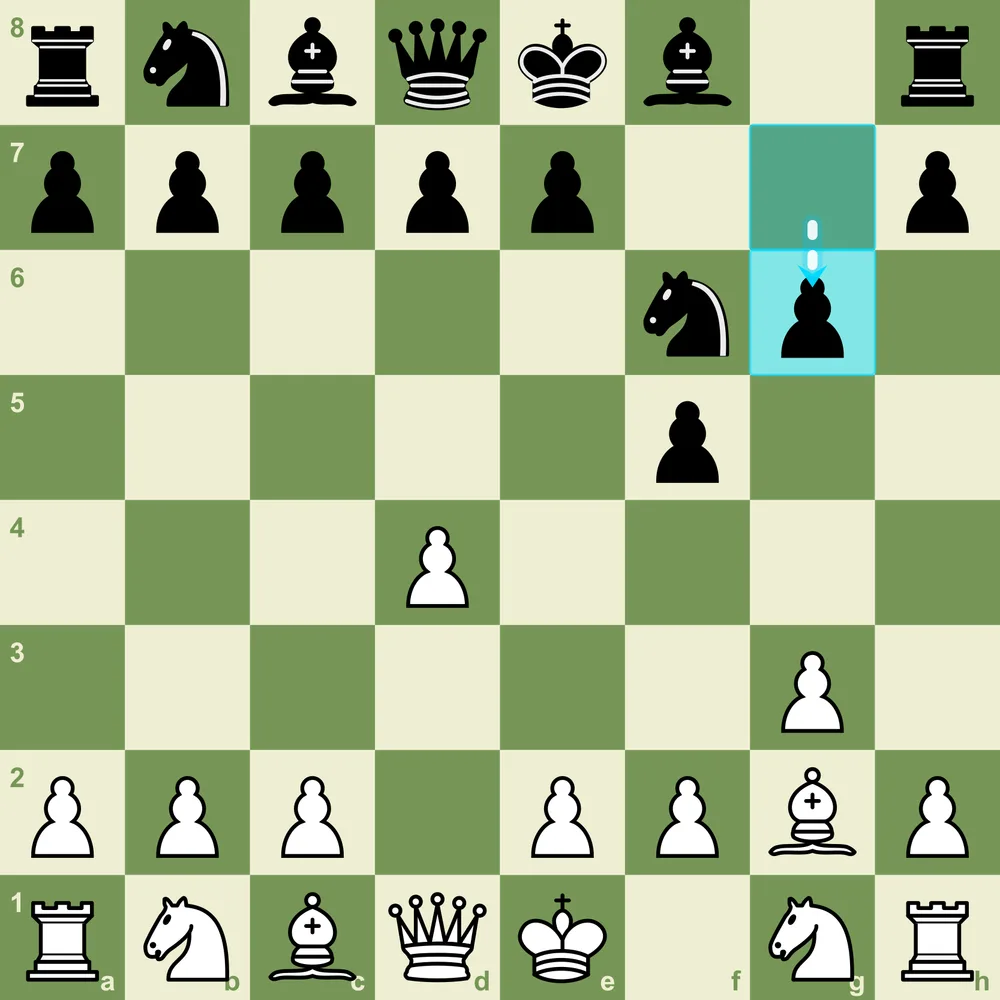
The Leningrad Variation arises after 1.d4 f5 2.g3 Nf6 3.Bg2 g6, when Black prepares ...Bg7, ...O-O, and ...d6. It fuses the Dutch's ...f5 with a King's Indian-style kingside fianchetto, producing the sharpest and most ambitious of Black's Dutch setups. The dark-squared bishop on g7 rakes the long diagonal while the f5-pawn and the coming ...e5 break generate play in the center and on the kingside.
After completing development, Black typically aims for the ...e5 break, sometimes prepared by ...Nc6 or the maneuver ...Qe8, to open lines toward White's king. The variation is named after the Leningrad school of Soviet chess and owes much of its modern theory to Vladimir Malaniuk, who played it almost exclusively across his career. It is a favorite of attacking players who are comfortable with the double-edged, King's Indian-flavored positions it produces.
Famous practitioners: Malaniuk, Nakamura, Williams, Kindermann
The Stonewall Dutch
...d5 & ...e6Intermediate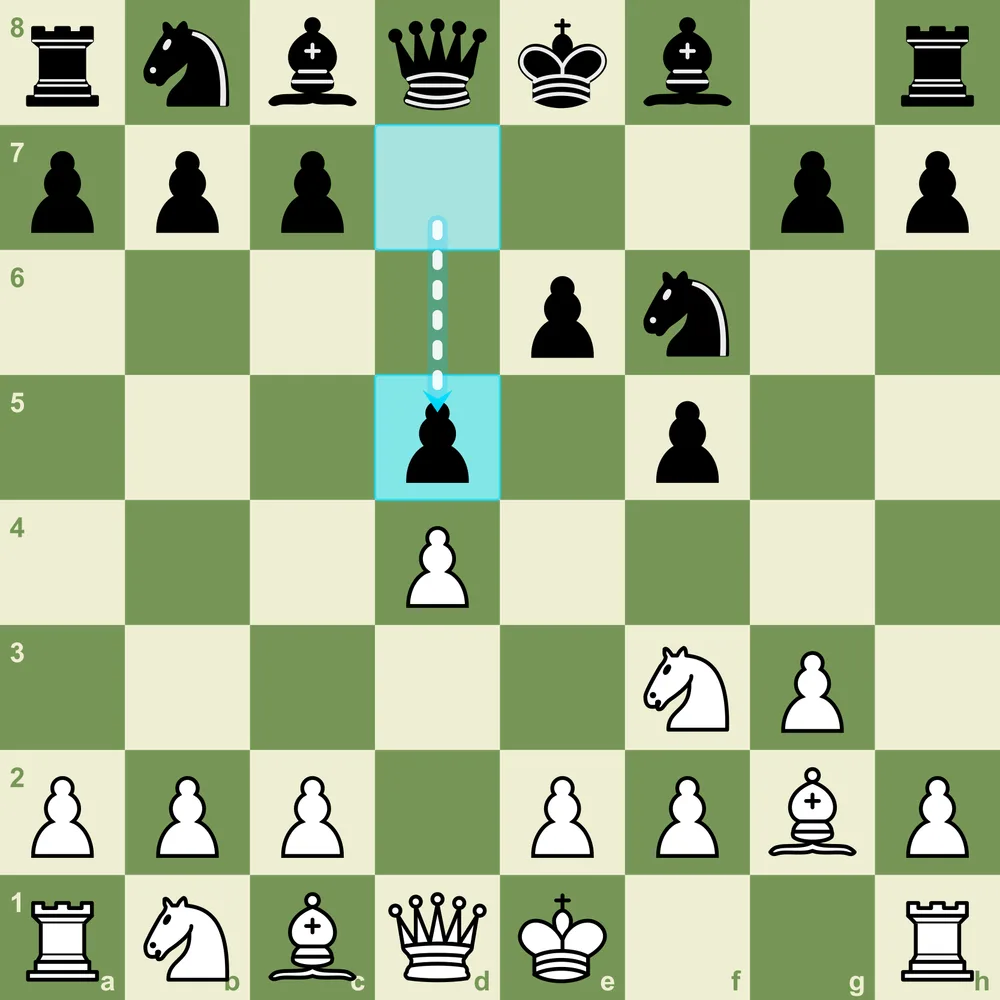
In the Stonewall, Black erects a pawn wall with ...d5, ...e6, and ...f5 (usually supported by ...c6), taking a permanent grip on the e4-square. Reaching a typical position after 1.d4 f5 2.g3 Nf6 3.Bg2 e6 4.Nf3 d5, Black follows up with ...Bd6, ...O-O and ...c6, then swings the queen to the kingside with ...Qe8-h5 to fuel an attack. The structure is famously resilient and easy to play once you know the plan.
The Stonewall's drawback is well known: the light-squared bishop on c8 is hemmed in by its own pawns and can become a long-term liability, while the e5-square is a permanent outpost for White. Modern practice solves this bad-bishop problem by rerouting the piece via ...b6 and ...Bb7, or through the maneuver ...Bd7-e8-h5. World-class players including Magnus Carlsen and Nigel Short have used the Stonewall to score powerful attacking wins.
Famous practitioners: Botvinnik, Short, Carlsen, Nikolic
The Classical Dutch
...e6 & ...Be7Intermediate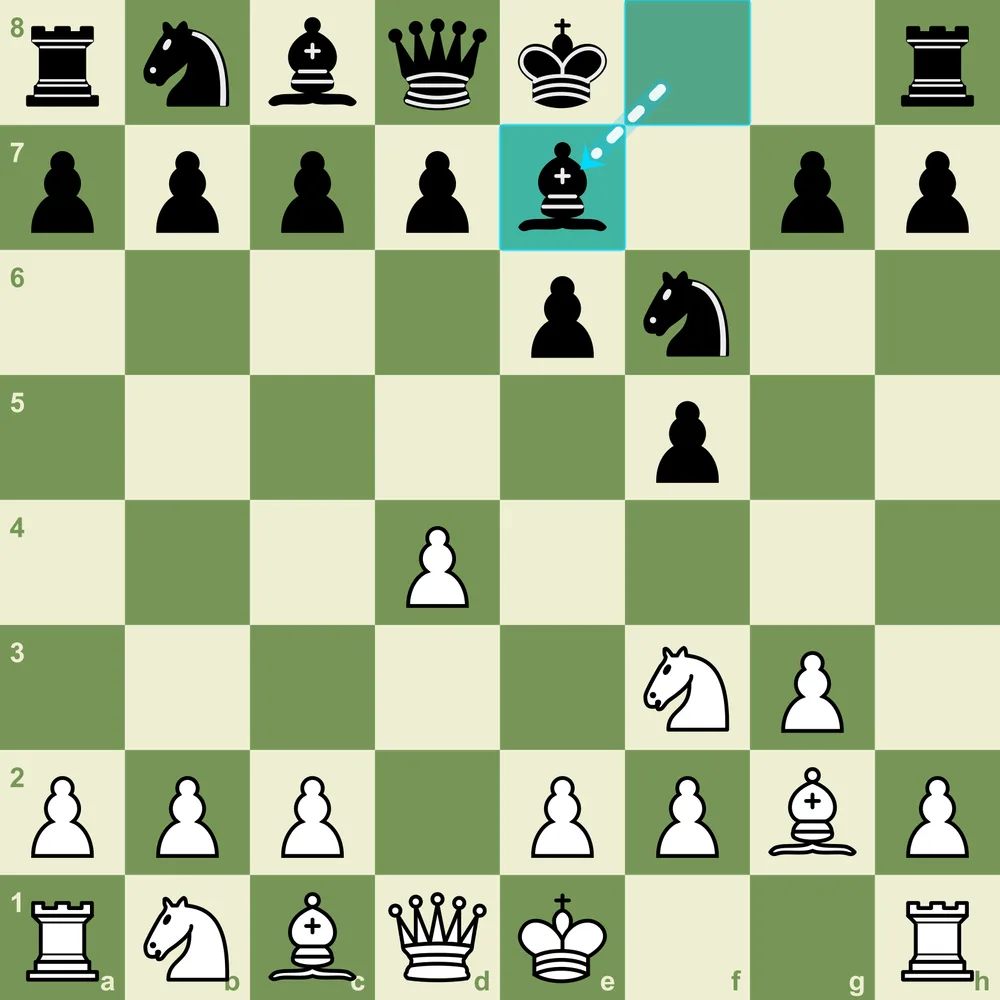
The Classical Dutch is the oldest and most flexible treatment, with Black playing ...e6, ...Be7, ...d6 and ...O-O before committing the central pawns. Reaching a position such as 1.d4 f5 2.g3 Nf6 3.Bg2 e6 4.Nf3 Be7, Black keeps the option of the freeing ...e5 break rather than locking the structure as in the Stonewall. This makes it a good choice for players who prefer a fight based on piece play and well-timed pawn breaks over a single fixed plan.
A key branch is the Ilyin-Zhenevsky system, in which Black plays ...d6 and prepares ...e5, aiming to open the position for the pieces and mount a kingside initiative. Because the central pawns stay flexible, the light-squared bishop is not shut in the way it is in the Stonewall, giving Black a more harmonious deployment at the cost of a less immediate grip on the e4-square.
Famous practitioners: Alekhine, Ilyin-Zhenevsky, Botvinnik, Larsen
The Staunton Gambit
2.e4Intermediate-Advanced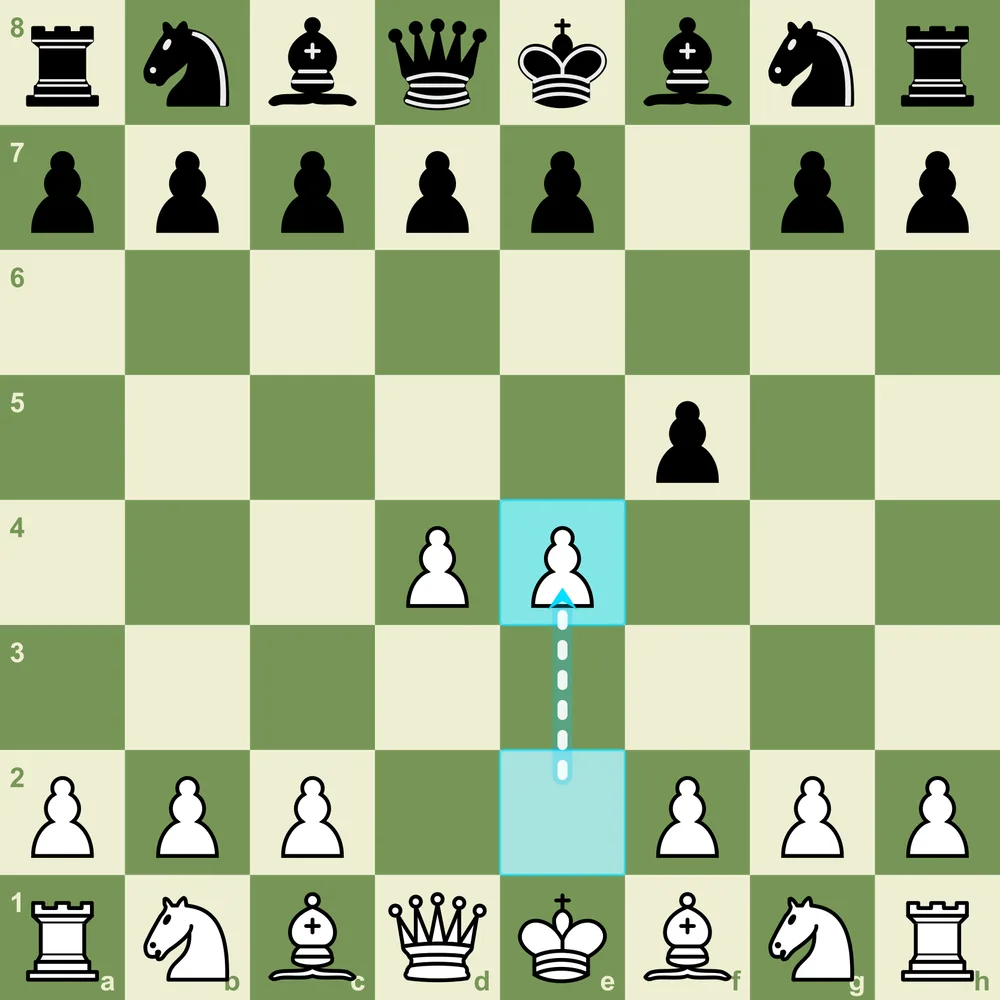
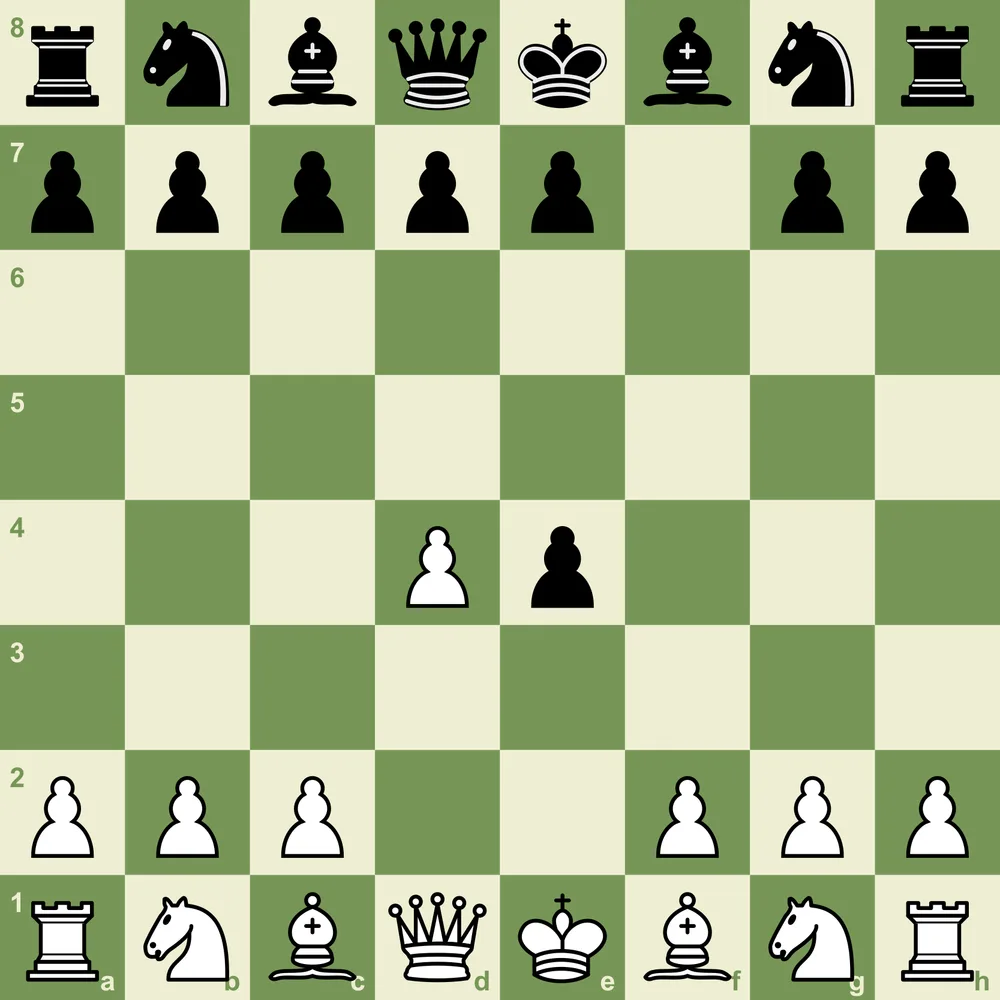
The Staunton Gambit is White's most aggressive attempt to punish the Dutch: after 1.d4 f5 2.e4, White offers the e-pawn to open lines and exploit the slight weakening of Black's kingside. Following 2...fxe4 3.Nc3 Nf6 4.Bg5, White develops rapidly and pressures the knight, hoping to whip up an attack before Black can complete development.
While dangerous for an unprepared opponent, modern theory holds that Black can accept the pawn and defend accurately. A common plan is ...Nc6 or ...g6 followed by returning the extra pawn at the right moment to complete development and blunt White's initiative. The gambit is rare at the top level today, but it remains a genuine test at club level and a good reason for every Dutch player to prepare a concrete answer to 2.e4.
Famous practitioners: Staunton, Tartakower, Blackburne
Pros and Cons of the Dutch Defense
Advantages
- •Kingside space and attacking chances - 1...f5 grabs space and points Black toward an early kingside initiative, offering winning chances against 1.d4 that solid defenses rarely provide
- •Clear, transferable plans - the thematic ideas (...Qe8-h5, ...f4, ...e5, and a kingside pawn storm) recur across all three systems, so the opening rewards understanding over rote memorization
- •Sidesteps heavy main-line theory - the Dutch avoids the vast bodies of theory in the Queen's Gambit and the Indian defenses, letting Black steer the game into structures they know well
- •A genuine surprise weapon - because 1...f5 is far less common than 1...d5 or 1...Nf6, many 1.d4 players are underprepared and end up in unfamiliar, double-edged positions
Disadvantages
- •Weakens the king - 1...f5 loosens the a2-g8 diagonal and the e8-h5 line; if Black neglects development, the exposed king can be punished quickly
- •Vulnerable to early gambits - anti-Dutch tries such as the Staunton Gambit (2.e4) and 2.Bg5 aim straight at the weakened kingside and require specific preparation
- •The Stonewall's bad bishop - in the Stonewall the light-squared bishop can become a long-term problem piece, and the e5-square is left as a permanent hole for White
- •Higher risk than solid defenses - the sharp, imbalanced positions cut both ways, and a mishandled attack can leave Black worse off than in a more restrained opening
Common Mistakes to Avoid in the Dutch Defense
Attacking before the king is safe
Because 1...f5 loosens the kingside, launching a pawn storm or committing pieces to the attack before castling and finishing development often backfires. Complete your development first, tuck the king safely away, and only then throw the kingside pawns forward. Patience with the preparation is what makes the eventual attack sound.
Letting the Stonewall bishop rot on c8
In the Stonewall the light-squared bishop is the problem piece. Playing on autopilot without a plan to activate it - via ...b6 and ...Bb7, or the ...Bd7-e8-h5 maneuver - leaves Black with a bad bishop and a lifeless position. Always have a concrete route in mind for that bishop before the pawn wall locks it in for good.
Being unprepared for the anti-Dutch sidelines
Many players study only the main fianchetto lines and get caught by second-move surprises like the Staunton Gambit (2.e4), 2.Bg5, or 2.Nc3. Prepare a concrete answer to 2.e4 in particular: accepting the pawn and then returning it at the right moment to complete development is the key to neutralizing the gambit and reaching a healthy position.
Forgetting the central break
The Dutch is not only a kingside attack; the ...e5 break (or occasionally ...c5) is what frees Black's position and opens lines for the pieces. In the Leningrad especially, delaying ...e5 for too long lets White clamp down with e4 or d5 and leaves Black passive and cramped. Keep the freeing break firmly in mind and play for it at the right moment.
How to Practice the Dutch Defense
The Dutch rewards focused, plan-based study. Follow these steps to make it a reliable and dangerous part of your opening repertoire.
Pick one main setup to start
Rather than learning all three systems at once, commit to a single setup first. The Leningrad suits aggressive fianchetto players, the Stonewall rewards those who like a clear attacking plan, and the Classical fits players who prefer flexible, piece-based play. Master one thoroughly before branching out to the others.
Prepare your anti-Dutch answers
Before you play the Dutch in serious games, work out a concrete response to the sidelines, especially the Staunton Gambit (2.e4) and 2.Bg5. Knowing how to meet these second-move tries will save you from early disasters and let you reliably reach the middlegame positions you actually want to play.
Analyze your Dutch games with ChessHelper
After each game, review the opening and early middlegame with ChessHelper's AI analysis. Did you break with ...e5 at the right moment? Was your king safe when you started the attack? ChessHelper's AI-powered engine pinpoints the critical moments in your games and helps you internalize the recurring plans of your chosen Dutch system.
Study model games by Dutch specialists
Learn the plans from the players who know them best: Vladimir Malaniuk in the Leningrad, and classical exponents such as Alexander Alekhine and Mikhail Botvinnik. Watching how experts time the ...e5 break and bring their pieces to the kingside teaches the underlying ideas far faster than memorizing raw move orders.
Play longer time controls to internalize the attack
The Dutch is a strategic attacking opening whose plans unfold over many moves. Play at least some of your practice games at 15+10 or slower time controls, and use the extra time to ask the key questions: is my king safe, when do I break in the center, and how do I bring the queen and rooks into the kingside assault?
Master the Dutch Defense with ChessHelper
Get real-time AI analysis as you practice the Dutch in your online games. Understand every position, learn from your mistakes, and build an aggressive, dangerous repertoire against 1.d4.
Start Practicing for FreeJoin 10,000+ chess players building aggressive opening repertoires with ChessHelper
Related Openings
If you enjoy the Dutch, these openings share similar strategic themes and will complement your repertoire against 1.d4.
King's Indian Defense
Like the Leningrad Dutch, Black fianchettoes the king's bishop and plays for a kingside attack, allowing White a big center before striking back with ...e5.
1.d4 Nf6 2.c4 g6
Queen's Gambit
The classical, solid way to fight for the center as White. A great counterpoint to the Dutch for players who want to understand both sides of 1.d4 openings.
1.d4 d5 2.c4
Grunfeld Defense
A hypermodern defense where Black invites a big white center and then attacks it with pieces and pawn breaks - dynamic, ambitious play in the spirit of the Dutch.
1.d4 Nf6 2.c4 g6 3.Nc3 d5
Dutch Defense: Frequently Asked Questions
The Dutch Defense is best suited to intermediate players and above rather than complete beginners. Its plans are clear and attacking, which makes it appealing, but the move 1...f5 slightly weakens Black's king and demands accurate handling against sharp gambits like the Staunton Gambit. Beginners can certainly play it to learn attacking chess, but they should expect to lose some quick games to tactics while they learn to keep the king safe. Once you understand the importance of finishing development before attacking, the Dutch becomes a rewarding and combative weapon against 1.d4.
The Leningrad and Stonewall are the two most popular Dutch setups, and they lead to very different games. In the Leningrad, Black fianchettoes the bishop with ...g6 and ...Bg7 and keeps the center fluid, aiming for the ...e5 break and a dynamic, King's Indian-style attack. In the Stonewall, Black builds a rigid pawn wall with ...d5, ...e6, ...f5 and ...c6 that permanently controls e4 and supports a direct kingside assault with ...Qe8-h5, at the cost of a passive light-squared bishop and a hole on e5. Choose the Leningrad if you like piece play and open positions, and the Stonewall if you prefer a clear, structure-based attacking plan.
Against the Staunton Gambit (1.d4 f5 2.e4), the modern verdict is that Black can safely accept the pawn with 2...fxe4 and then develop carefully. After 3.Nc3 Nf6 4.Bg5, a reliable approach is to develop with moves like ...Nc6 or ...g6 and return the extra pawn at the right moment to complete development and defuse White's initiative. The key is not to cling greedily to the pawn: White's compensation comes from rapid development and pressure on the weakened kingside, so giving the material back to catch up in development usually leaves Black with a sound and slightly better position.