
What is the Queen's Indian Defense?
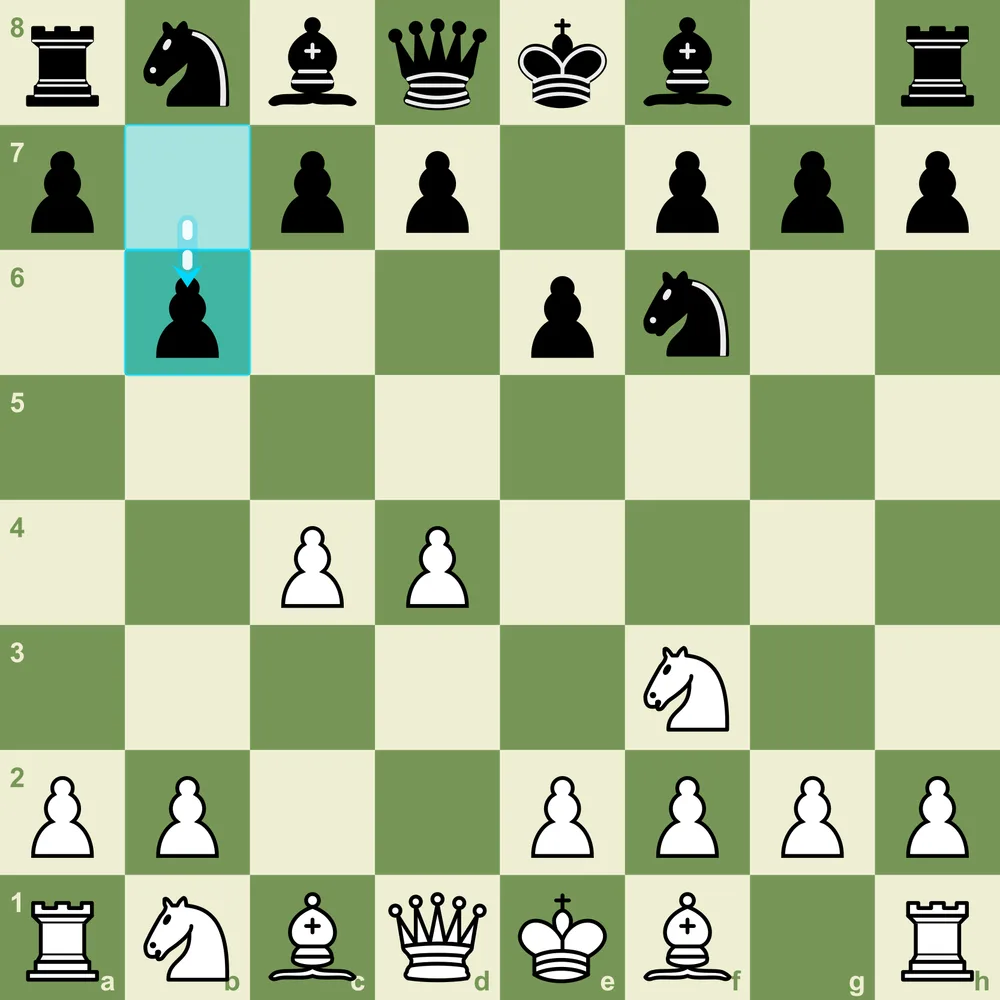
The Queen's Indian Defense arises after 1.d4 Nf6 2.c4 e6 3.Nf3 b6 and is one of the soundest strategic defenses in all of chess. The idea behind 3...b6 is precise: Black intends to develop the light-squared bishop to b7, where it rakes down the long a8-h1 diagonal and joins the knight on f6 in fighting for control of the e4 square. Rather than staking an early claim in the center with pawns, Black exerts pressure from a distance, keeping the structure flexible and remarkably difficult to attack.
The opening owes its modern shape to the hypermodern school of the 1920s, and above all to Aron Nimzowitsch, who championed the idea that the center could be controlled by pieces from the flanks rather than occupied by pawns. The Queen's Indian became a staple of elite practice throughout the 20th century, and no player is more closely associated with it than Anatoly Karpov, whose crystalline handling of these positions turned the defense into a formidable weapon at the very highest level. Garry Kasparov, Viswanathan Anand, and Vladimir Kramnik all leaned on it during their world championship careers.
The Queen's Indian is best understood as the natural partner of the Nimzo-Indian Defense. Both begin with 1.d4 Nf6 2.c4 e6. If White develops with 3.Nc3, Black pins the knight with 3...Bb4 and plays the Nimzo-Indian. But 3.Nf3 is a common way for White to avoid that pin, and it is precisely then that Black turns to 3...b6, entering the Queen's Indian. Because the two openings dovetail so cleanly, most 1...Nf6 players study them as a single, coherent repertoire against 1.d4.
Strategically, the defense is defined by the battle for the light squares and especially e4. Black's b7-bishop, the f6-knight, and often a well-timed ...Ne4 or ...d5 combine to neutralize White's central ambitions. The resulting positions are quiet on the surface but rich in maneuvering, and Black enjoys a durable structure that yields very few weaknesses. This is why the Queen's Indian has a reputation as one of the most reliable ways to equalize against 1.d4 while retaining full winning chances in a long game.
How to Play the Queen's Indian Defense
The Queen's Indian begins with 1.d4 Nf6 2.c4 e6 3.Nf3 b6. The move order matters: by first playing ...Nf6 and ...e6, Black keeps the option of the Nimzo-Indian alive, and only commits to ...b6 once White has blocked the c3-square with 3.Nf3. The point of 3...b6 is to prepare 4...Bb7 (or the modern 4...Ba6), placing the bishop on the long diagonal where it fights for e4 and supports future central breaks with ...d5 or ...c5.
White has several respected setups. The main line is 4.g3, meeting Black's fianchetto with a fianchetto of White's own, after which Black chooses between the classical 4...Bb7 and the sharp 4...Ba6 hitting the c4 pawn. The prophylactic 4.a3 is the Petrosian System, ruling out ...Bb4 ideas before building a big center with Nc3 and e4. White can also play the modest 4.e3, a flexible Classical setup that keeps the position solid and low-risk.
Black's plans are consistent across these lines: complete the fianchetto, contest the e4 square with pieces, castle short, and choose the right moment for a central break. Depending on White's structure, Black may liberate the position with ...d5, strike at the center with ...c5, or maneuver a knight to e4 to force exchanges. The defense rewards patience and accurate piece placement far more than memorized tactics, which is why it is prized by positional players and considered an advanced but deeply instructive opening to learn.
Main Queen's Indian Defense Variations
The Queen's Indian branches into four major systems, each with its own strategic character. Here are the variations every Queen's Indian player must know.
The Fianchetto Main Line
4.g3 Bb7Advanced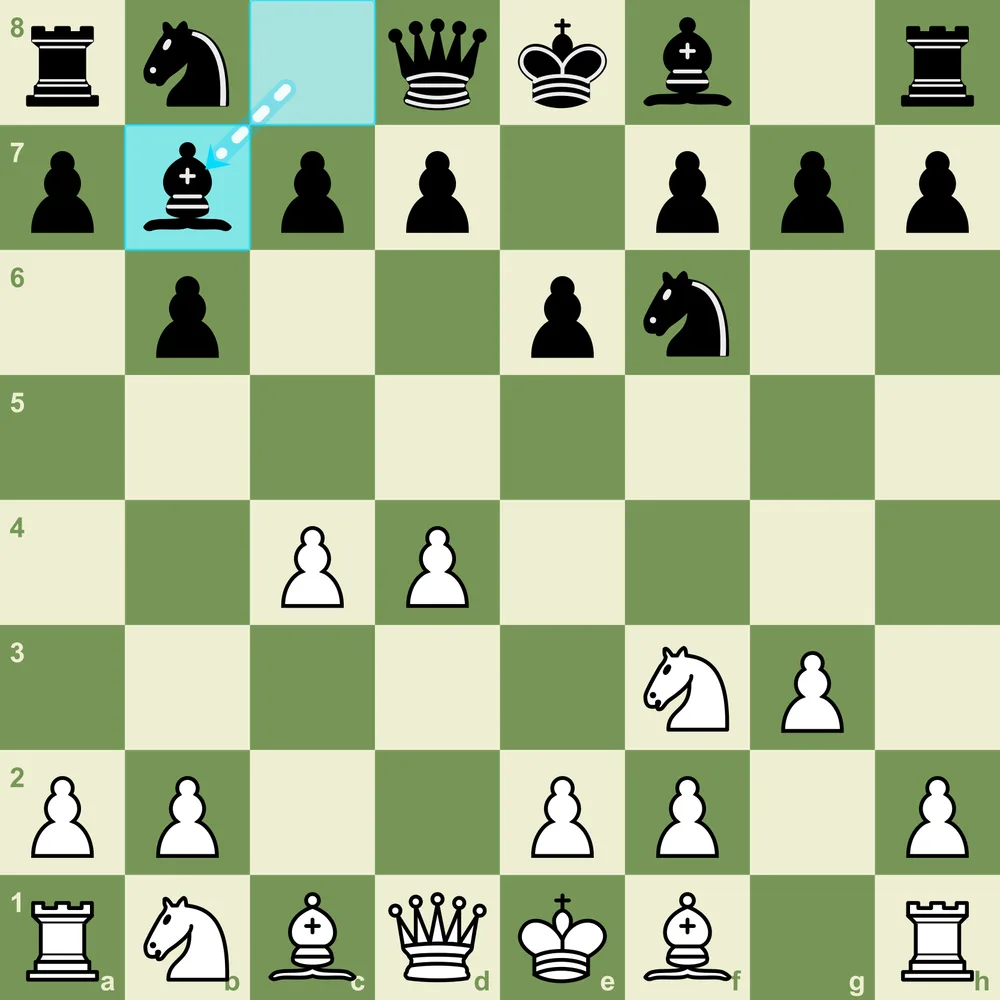
The Fianchetto Variation, 4.g3, is White's most principled and popular try. White prepares Bg2 to meet Black's bishop head-on, contesting the very long diagonal that gives the Queen's Indian its identity. After the classical 4...Bb7 5.Bg2 Be7 6.O-O O-O, both sides complete a harmonious setup and the game becomes a subtle struggle over the e4 and d5 squares.
Black's typical plans include the freeing break ...d5, the maneuver ...Ne4 to trade off White's well-placed fianchetto bishop, and, in some lines, the more ambitious ...c5. Because the two light-squared bishops often stare at each other down the same diagonal, exchanges frequently define who has emerged with the better minor pieces. This is the purest expression of the Queen's Indian's central philosophy, and understanding it unlocks the whole opening.
Famous practitioners: Karpov, Kasparov, Kramnik, Anand
The Petrosian System
4.a3Advanced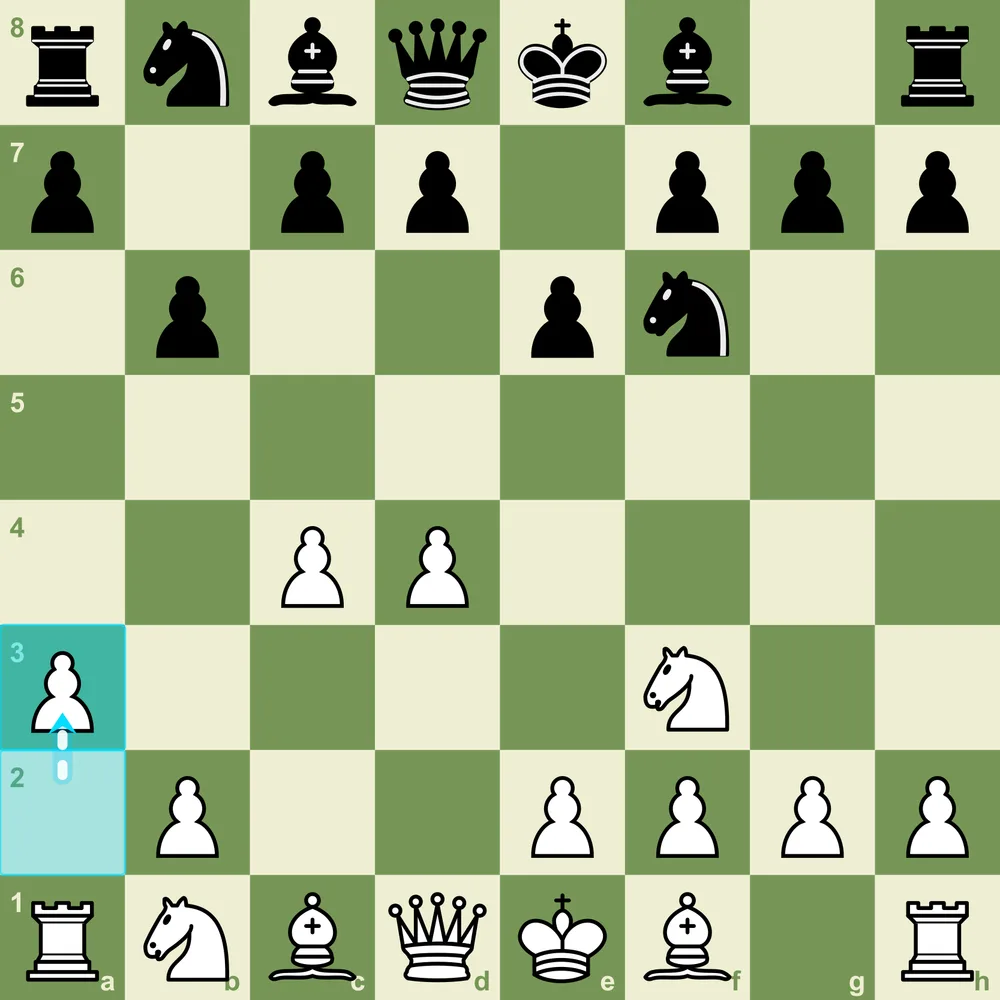
The Petrosian System, 4.a3, is a deceptively quiet prophylactic move introduced by the ninth World Champion, Tigran Petrosian, and later refined by Kasparov. By spending a tempo on a3, White prevents any ...Bb4 pin and clears the way to build a powerful pawn center with Nc3 and e4 without interference. It transformed the theory of the Queen's Indian in the 1980s.
Black usually replies 4...Bb7 5.Nc3 d5, striking at the center before White can complete the e4 push, or reroutes with ...Ba6 and ...c5 to pressure c4. The critical battle is whether White's broad center becomes a strength or a target: if Black can undermine it with well-timed pawn breaks, the extra tempo spent on a3 can tell in the endgame. It is one of the most theoretically demanding lines in the entire opening.
Famous practitioners: Petrosian, Kasparov, Karpov, Gelfand
The Ba6 Line
4.g3 Ba6Advanced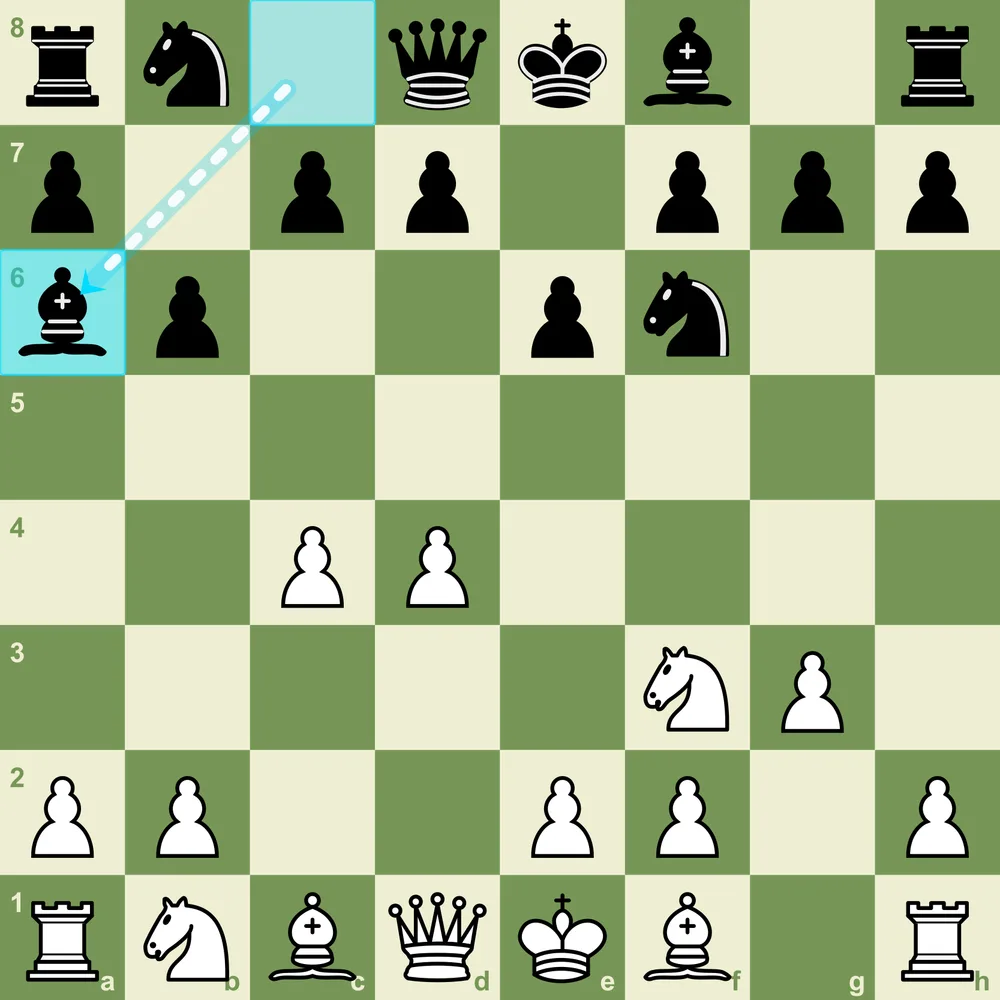
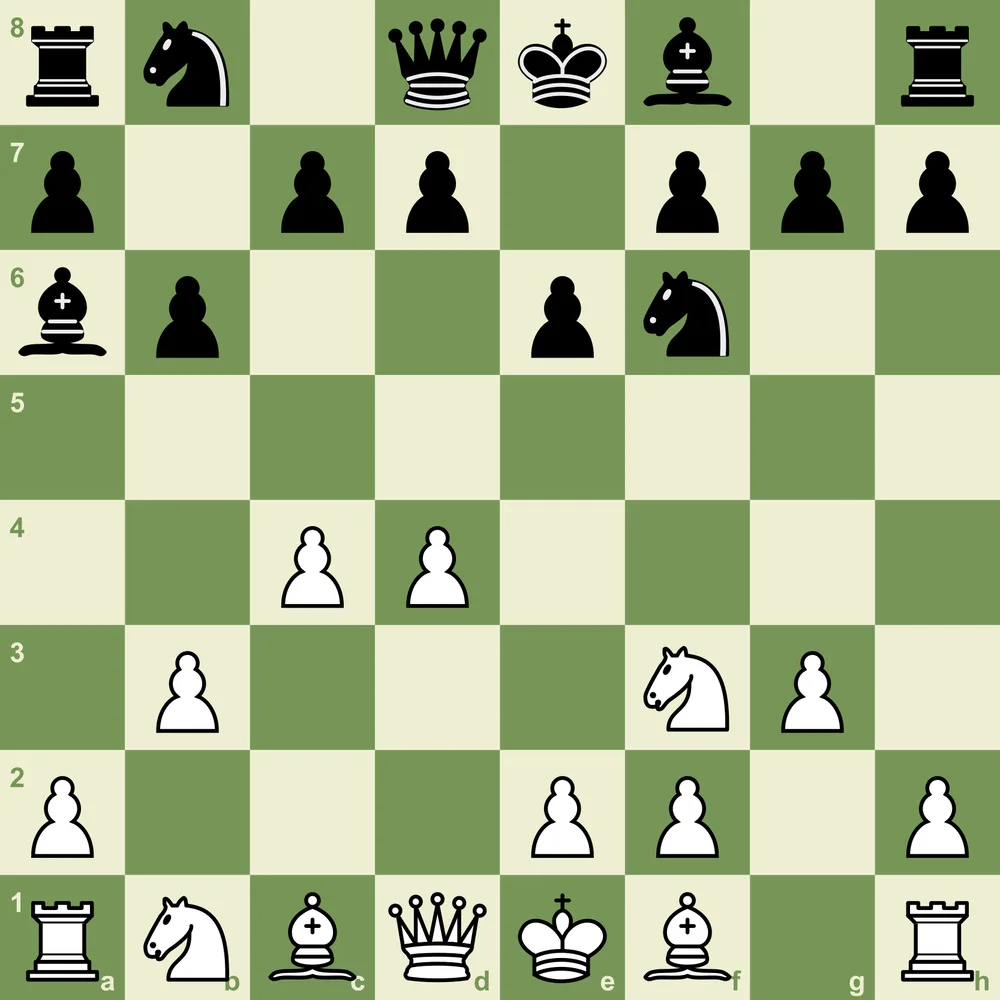
Instead of the routine ...Bb7, the modern main line answers 4.g3 with the aggressive 4...Ba6. The bishop steps to an unusual square with concrete purpose: it attacks the c4 pawn, which, after g3, is defended only by White's queen. White is forced to make an immediate decision, and Black gains time and initiative on the queenside light squares rather than settling for a symmetrical fianchetto standoff.
White's most common reactions are 5.b3, propping up c4 at the cost of a small structural concession, and 5.Qc2 or 5.Nbd2, defending the pawn more flexibly. Black often follows with ...Bb4+ or ...c5, keeping the position sharp and unbalanced. This line became the theoretical battleground of the Queen's Indian in top-level play precisely because it forces both sides to fight for concrete advantages from an early stage.
Famous practitioners: Kasparov, Anand, Aronian, Carlsen
The Classical Variation
4.e3Intermediate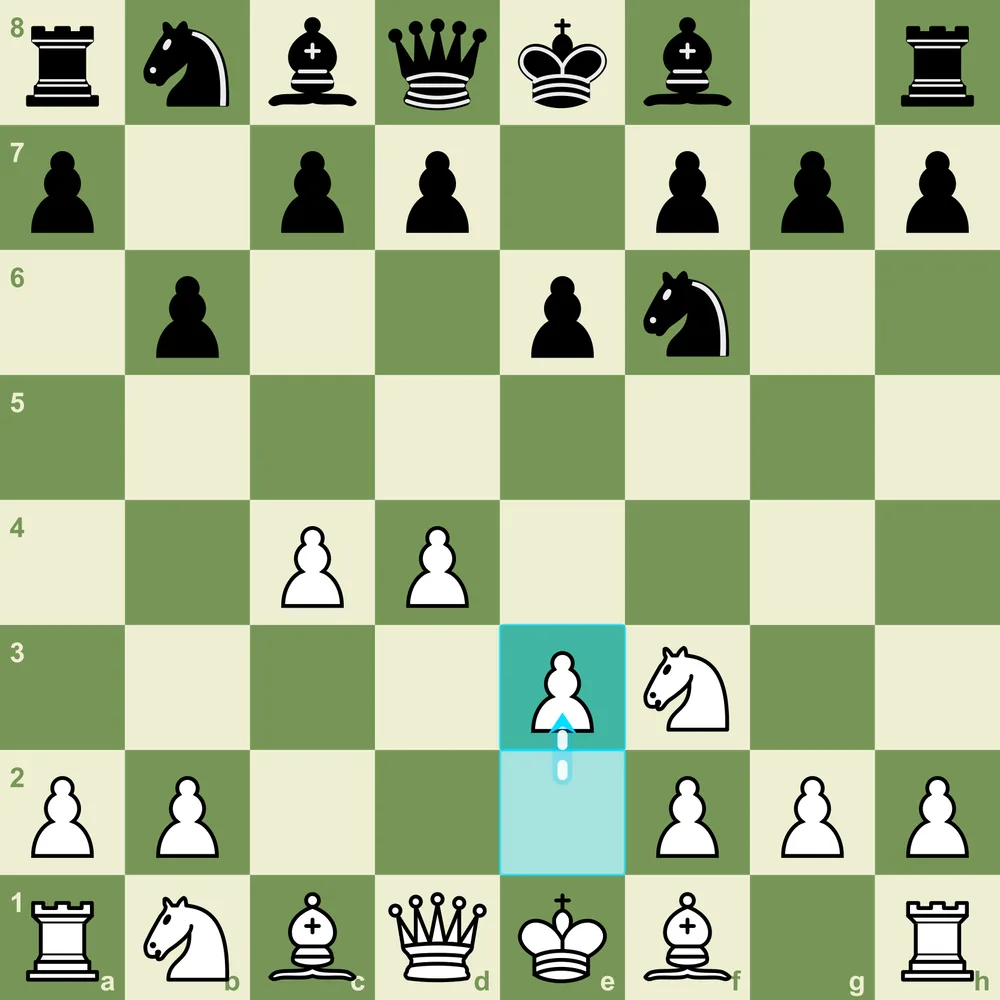
The Classical Variation, 4.e3, is a restrained and flexible approach in which White forgoes an early fianchetto in favor of a compact, solid structure. White plans natural development with Bd3, O-O, and often Nc3 or b3, keeping the position free of weaknesses and inviting a slow strategic contest. It is a favorite of players who want a low-theory, low-risk way to handle the Queen's Indian.
Black responds with the standard 4...Bb7 5.Bd3 Be7 (or 5...Bb4+), completing development smoothly and preparing ...d5 or ...c5 to challenge the center. Because neither side commits to a sharp structure early, the middlegame often revolves around who can generate play on the c-file or in the center first. The line is less critical than 4.g3, but it is important to know because club-level opponents reach for it frequently in search of a quiet, comfortable game.
Famous practitioners: Rubinstein, Karpov, Andersson, Adams
Pros and Cons of the Queen's Indian Defense
Advantages
- •Exceptionally solid - the ...b6 and ...e6 structure yields very few pawn weaknesses, making Black extremely hard to attack or break down
- •Strong control of the light squares - the b7-bishop and f6-knight combine to fight for e4, neutralizing White's central ambitions
- •Perfect partner to the Nimzo-Indian - together they form a complete, coherent repertoire against 1.d4 with shared ideas and move orders
- •Flexible pawn breaks - Black can equalize with ...d5 or play for an edge with ...c5 depending on how White commits, keeping options open
Disadvantages
- •Can be passive - if Black fails to find the right pawn break, the position can drift into a cramped, purely defensive game with little counterplay
- •Demands deep positional understanding - the plans are subtle and the mistakes are quiet, so it is an advanced opening that punishes superficial play
- •Fewer forcing winning chances - the defense aims first for equality, so creating imbalances to play for a win against solid White play can be difficult
- •Heavy theory in the critical lines - the ...Ba6 line and the Petrosian System are theoretically dense and require ongoing study to play accurately
Common Mistakes to Avoid in the Queen's Indian
Playing ...b6 too early against 3.Nc3
The Queen's Indian move order matters. The ...b6 fianchetto is designed against 3.Nf3, not 3.Nc3. If White plays 3.Nc3, the strongest reply is the Nimzo-Indian with 3...Bb4, pinning the knight and fighting for e4 directly. Committing to ...b6 against 3.Nc3 lets White build an ideal center with e4, so learn the two openings together and choose the right one based on White's third move.
Automatically developing the bishop to b7 against 4.g3
After 4.g3, the routine 4...Bb7 is perfectly playable, but it often leads to a passive standoff where both bishops neutralize each other on the long diagonal. The modern, more ambitious choice is 4...Ba6, immediately attacking the c4 pawn while White's bishop has left the queen as its only defender. Do not develop on autopilot: consider whether ...Ba6 lets you seize the initiative before settling for ...Bb7.
Neglecting the central pawn breaks
The Queen's Indian is not a purely passive opening. Black must strike at the center at the right moment with ...d5 to free the position or ...c5 to challenge White's pawns. Players who simply shuffle pieces without ever committing to a break allow White to expand unopposed and slowly squeeze the life out of the position. Always keep both breaks on your radar and calculate when to unleash them.
Misplaying the fight for the e4 square
Control of e4 is the strategic heartbeat of the Queen's Indian. A common error is exchanging the b7-bishop or the f6-knight carelessly, surrendering the light squares and letting White plant a pawn or knight on e4 with a lasting bind. Before trading a piece that guards e4, ask what will replace its influence. The ...Ne4 maneuver, in particular, is often best used to trade off White's active fianchetto bishop rather than thrown away for nothing.
How to Practice the Queen's Indian Defense
The Queen's Indian rewards structured, methodical study of plans over memorized lines. Follow these steps to make it a reliable part of your repertoire.
Learn it alongside the Nimzo-Indian
Because the Queen's Indian only arises after 3.Nf3, you should pair it with the Nimzo-Indian against 3.Nc3. Study the shared move order first so you always know which opening to play on move three. This gives you a complete, coherent answer to 1.d4 and prevents the most common practical mistake of playing ...b6 into the wrong position.
Master the Fianchetto main line first
The 4.g3 lines are the most important and the most instructive. Begin with the classical 4...Bb7 setup to understand the fight for e4 and the typical ...d5 and ...Ne4 ideas, then add the sharper 4...Ba6 once you are comfortable. Everything else in the Queen's Indian becomes easier once these core structures make sense to you.
Use ChessHelper to analyze your Queen's Indian games
After each game, review the opening and early middlegame with ChessHelper's AI analysis. Did you miss the right moment for ...d5 or ...c5? Did you give up the fight for e4 too cheaply? ChessHelper's AI-powered engine highlights the critical positional decisions in your games and helps you build the deep understanding this opening demands.
Study Karpov's and Kramnik's classic games
No players have demonstrated the power of the Queen's Indian more convincingly than Anatoly Karpov and Vladimir Kramnik. Work through their games to see how to nurse a small edge, when to exchange pieces on the long diagonal, and how the defense's sound structure so often prevails in the endgame. Model your own plans on their patient, precise technique.
Play slow time controls to internalize the plans
The Queen's Indian is a strategic opening whose nuances only reveal themselves when you have time to think. Play at least some practice games at 15+10 or longer, and use the extra time to ask the key questions: where does my counterplay come from, when do I break with ...d5 or ...c5, and who is winning the fight for the light squares?
Master the Queen's Indian with ChessHelper
Get real-time AI analysis as you practice the Queen's Indian in your online games. Understand every position, learn from your mistakes, and build an unbreakable repertoire against 1.d4.
Start Practicing for FreeJoin 10,000+ chess players building solid opening repertoires with ChessHelper
Related Openings
If you enjoy the Queen's Indian, these openings share similar strategic themes and will complement your repertoire.
Nimzo-Indian Defense
The Queen's Indian's essential partner. Against 3.Nc3, Black pins the knight with 3...Bb4 to fight for e4 in the sharpest, most respected of the Indian defenses.
1.d4 Nf6 2.c4 e6 3.Nc3 Bb4
King's Indian Defense
The aggressive counterpart to the Queen's Indian. Black cedes the center early, then strikes back with ...e5 or ...c5 for a dynamic, attacking game.
1.d4 Nf6 2.c4 g6
Queen's Gambit
Want to play the White side of these structures? The Queen's Gambit is the classical way to fight for the center with 1.d4 and 2.c4.
1.d4 d5 2.c4
Queen's Indian Defense: Frequently Asked Questions
The Queen's Indian is best suited to intermediate and advanced players rather than complete beginners. Its ideas are strategic rather than tactical: Black fianchettoes the light-squared bishop to b7, fights for control of the e4 square, and often accepts a slightly passive but extremely solid position that must be nursed patiently toward equality and beyond. Beginners can certainly play it and will learn excellent lessons about piece placement and the light squares, but the payoff comes from understanding long-term plans rather than memorizing forcing lines, so many improving players adopt it once they have a feel for closed, maneuvering positions.
The two openings are natural partners and are almost always learned together. Both begin with 1.d4 Nf6 2.c4 e6. If White plays 3.Nc3, Black pins the knight with 3...Bb4 and enters the sharp, highly regarded Nimzo-Indian. If White instead sidesteps the pin with 3.Nf3, Black plays 3...b6 and reaches the Queen's Indian. Because 3.Nf3 is one of White's most popular ways to avoid the Nimzo-Indian, a player who wants the Nimzo essentially needs the Queen's Indian as its companion. Together they give Black a complete, coherent response to 1.d4 built around the e6 and ...b6 structures and control of the central light squares.
After 4.g3, the modern main line 4...Ba6 develops the bishop to an unusual square in order to attack White's c4 pawn directly. Because White has committed the bishop to the long diagonal with g3, the c4 pawn is defended only by the queen, so Black's ...Ba6 pressures it immediately and forces White to react, most often with 5.b3, 5.Nbd2, or 5.Qc2. The point is concrete: rather than passively placing the bishop on b7 where it stares into White's own fianchetto, Black provokes small concessions in White's setup and fights for the initiative on the queenside light squares. It is the sharpest and most theoretically important way to handle the Fianchetto Variation.